The Gift of Sacrifice: Understanding Leviticus 7:4
“And the two kidneys, and the fat that is on them, which is by the flanks, and the caul that is above the liver, with the kidneys, it shall he take away:” — Leviticus 7:4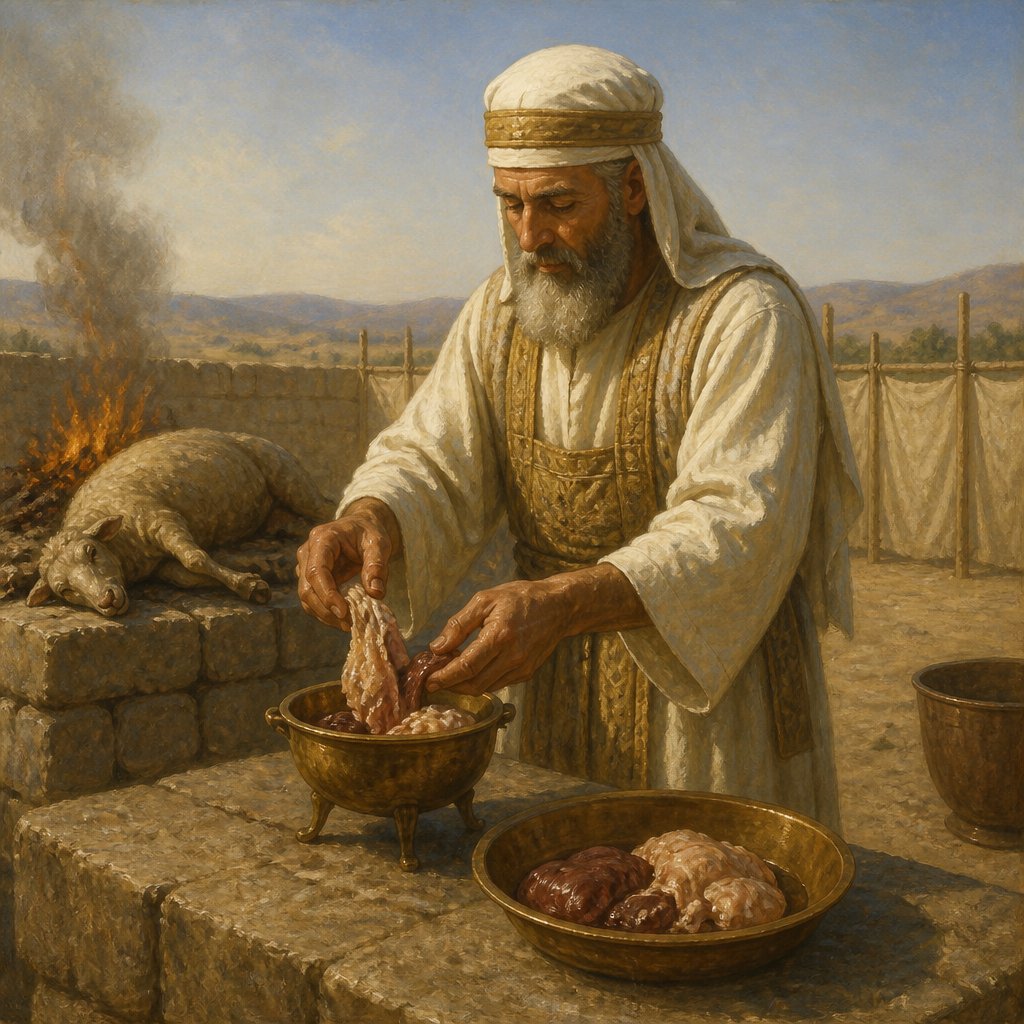
Leviticus 7:4 states, "And the two kidneys, and the fat that is on them, which is by the flanks, and the caul that is above the liver, with the kidneys, it shall he take away." At first glance, this verse may seem like an obscure and archaic instruction riddled with scientific details about animal parts. However, when we delve deeper into its context, we uncover profound spiritual truths about sacrifice, holiness, and God’s desire for intimate fellowship with His people.
The book of Leviticus is often seen as a manual for holiness, a guide designed to lead the Israelites in living a life that honors God. Each sacrificial instruction, from the type of animal to the portions to be offered, carries a symbolic weight that transcends mere ritualism. In this verse, we note God’s request for specific inner organs—the kidneys, liver, and their associated fats—which were among the most valuable parts of the sacrificial animal. This was no arbitrary choice. Each component is significant in understanding the nature of our relationship with God.
The kidneys, in biblical thought, often symbolize the seat of emotions, desires, and intentions. In modern terminology, we might think of them as the heart of a person. God commands the removal of the kidneys before the offering is made, which can be interpreted as a divine request that we bring our innermost selves to Him. In sacrifice, it is not enough to simply present the external; God is after our very being. In the New Testament, this concept is echoed in Romans 12:1, where Paul implores believers to present their bodies as living sacrifices, holy and acceptable to God.
The fat, represented here, is another essential element. Throughout the Scriptures, fat often symbolizes abundance and richness (as seen, for example, in Psalm 36:8, where the goodness of God is likened to the fatness of His house). In this context of sacrifice, fat represents the best portions—the very best we have to offer. When God asks for the fat to be taken away with the kidneys, He teaches us that our sacrifices must come from a place of offering our best to Him. Our worship should be rich and fulfilling, reflecting our deepest gratitude and reverence.
The caul above the liver is an unusual detail, highlighting God's minute attention to what might seem insignificant. This attention to detail demonstrates that there is no part of ourselves—down to the seemingly small, often overlooked details—that God does not care for. In our daily lives, we must recognize that even our small actions, choices, and moments of worship matter enormously to God. They contribute to the larger picture of our relationship with Him and our capacity to reflect His love.
As we explore Leviticus 7:4, we see that God desires a holistic sacrifice. He desires that we bring both what is precious and what is personal. Holiness in sacrifice requires authenticity; it is not enough to simply conform to expectations. God longs for a connection that is deep, heartfelt, and true, one that reflects a genuine commitment to live out His words in our lives. He wants our emotional pain, our joys, our best efforts, and our intentional dedication.
In daily practice, consider assessing your sacrifices to God. Are they authentic and heartfelt? Are you offering not just the surface but also your innermost desires and intentions? And in doing so, are you withholding the best of yourself, the richness of your life? God's call in Leviticus is a reminder—our lives are living testimonies of worship, where both the large and small are valuable to Him. Let us therefore approach Him with our kidneys and the fat, offering ourselves fully in love and devotion.
In conclusion, Leviticus 7:4, while a detailed scientific instruction, invites us into a deeper walk with God. It challenges us to embrace the weight of our own sacrifices and to understand that He desires our whole selves—our best offerings, our thoughts, our emotions, and our genuine love towards Him. May we learn from the lessons of the sacrifices outlined in Leviticus and strive to live lives that continuously honor our Creator with our whole being.
Get our apps


Artwork for Leviticus 7:4

Leviticus 7:4 - "And the two kidneys, and the fat that is on them, which is by the flanks, and the caul that is above the liver, with the kidneys, it shall he take away:"
"And the two kidneys, and the fat that is on them, which is by the flanks, and the caul that is above the liver, with the kidneys, it shall he take away:" - Leviticus 7:4

Leviticus 17:7
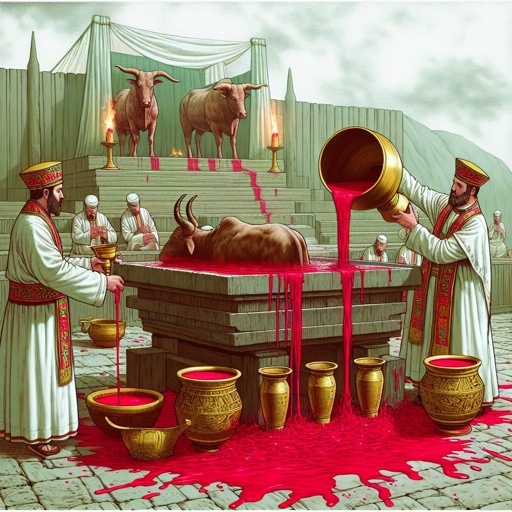
Leviticus 4:7 - "And the priest shall put some of the blood upon the horns of the altar of sweet incense before the LORD, which is in the tabernacle of the congregation; and shall pour all the blood of the bullock at the bottom of the altar of the burnt offering, which is at the door of the tabernacle of the congregation."

leviticus 16:7-10

Leviticus 26: 4-6

Leviticus 7:22 - "¶ And the LORD spake unto Moses, saying,"

Leviticus 7:28 - "¶ And the LORD spake unto Moses, saying,"
Leviticus 26: 4-6

Leviticus 26: 4-6

Leviticus 7:1 - "Likewise this is the law of the trespass offering: it is most holy."

Leviticus 7:7 - "As the sin offering is, so is the trespass offering: there is one law for them: the priest that maketh atonement therewith shall have it."

Leviticus 4:1 - "And the LORD spake unto Moses, saying,"

Leviticus 19:7 - "And if it be eaten at all on the third day, it is abominable; it shall not be accepted."

Leviticus 7:17 - "But the remainder of the flesh of the sacrifice on the third day shall be burnt with fire."

Leviticus 27:4 - "And if it be a female, then thy estimation shall be thirty shekels."

Leviticus 3:7 - "If he offer a lamb for his offering, then shall he offer it before the LORD."

Leviticus 7:3 - "And he shall offer of it all the fat thereof; the rump, and the fat that covereth the inwards,"

Leviticus 26:7 - "And ye shall chase your enemies, and they shall fall before you by the sword."
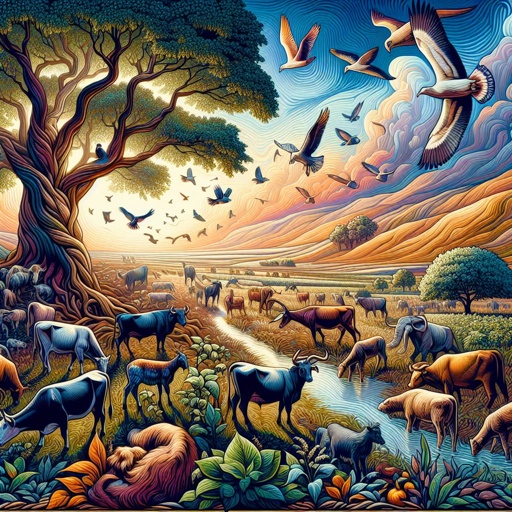
Leviticus 25:7 - "And for thy cattle, and for the beast that are in thy land, shall all the increase thereof be meat."

Leviticus 7:11 - "And this is the law of the sacrifice of peace offerings, which he shall offer unto the LORD."

Leviticus 4:16 - "And the priest that is anointed shall bring of the bullock's blood to the tabernacle of the congregation:"

Leviticus 20:7 - "¶ Sanctify yourselves therefore, and be ye holy: for I am the LORD your God."
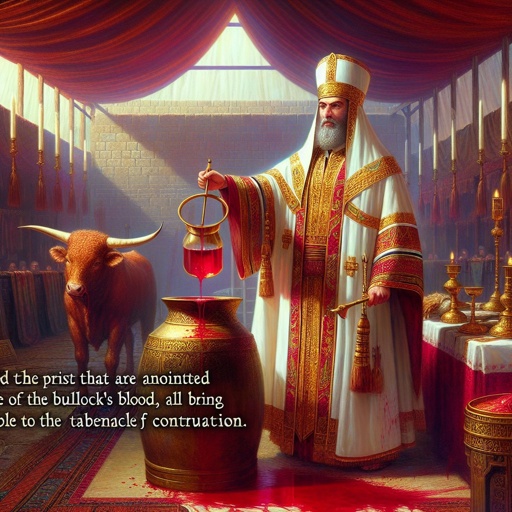
Leviticus 4:5 - "And the priest that is anointed shall take of the bullock's blood, and bring it to the tabernacle of the congregation:"

Leviticus 2:7 - "¶ And if thy oblation be a meat offering baken in the fryingpan, it shall be made of fine flour with oil."

Leviticus 7:31 - "And the priest shall burn the fat upon the altar: but the breast shall be Aaron's and his sons'."

Leviticus 7:9 - "And all the meat offering that is baken in the oven, and all that is dressed in the fryingpan, and in the pan, shall be the priest's that offereth it."

Cycle of sabbath rest year. Leviticus 25:1-7

"¶ And the LORD spake unto Moses, saying," - Leviticus 7:22

"¶ And the LORD spake unto Moses, saying," - Leviticus 7:28