The Weight of Sin: Laying Hands on the Bullock
“And he brought the bullock for the sin offering: and Aaron and his sons laid their hands upon the head of the bullock for the sin offering.” — Leviticus 8:14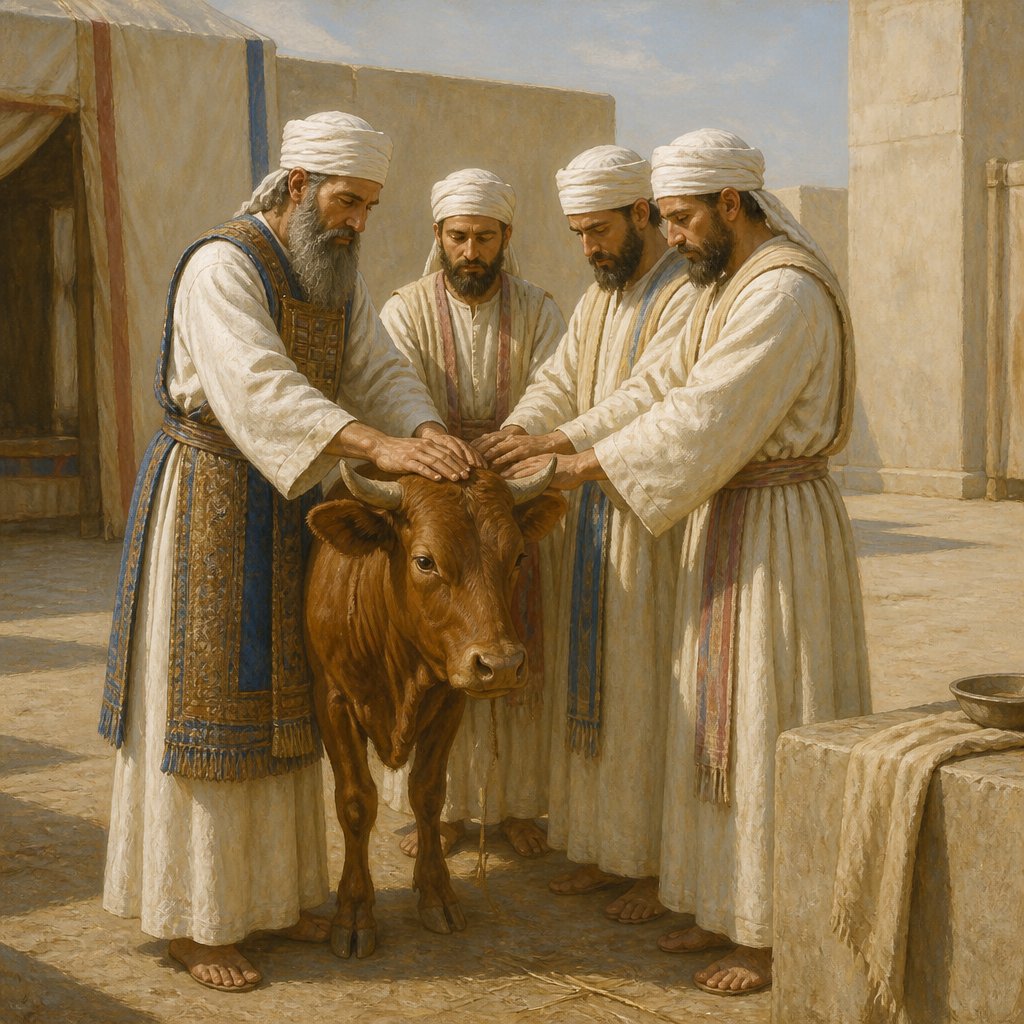
Leviticus 8:14 states, "And he brought the bullock for the sin offering: and Aaron and his sons laid their hands upon the head of the bullock for the sin offering." This act of laying on hands serves as a profound, visual representation of the transfer of sin and guilt from the individual to an innocent substitute, offering deep insights into the nature of sin and the divine grace that covers it.
To fully appreciate this practice, we must first understand the significance of the sin offering itself. In the Mosaic Law, the sin offering was instituted to atone for unintentional sins—those acts committed without malice or deliberate defiance of God’s laws. Yet, the very act of sin, whether intentional or not, separates humanity from its Creator. Sin creates a chasm, a distance from the holiness of God, which necessitated a means of reconciliation.
The bullock symbolizes sacrifice—an innocent animal that bore the sins of Aaron and his sons, the high priest and future priests of Israel. By placing their hands on the bullock's head, they acknowledged their guilt and sinfulness. This physical act represents a deep spiritual truth: that sin must be confronted, recognized, and dealt with. It was not enough simply to feel guilty; there needed to be a recognition that a cost was required for the debt of sin. The laying on hands makes clear that sin cannot simply disappear; it must be transferred, and restitution must be made.
In our contemporary Christian experience, this practice reminds us of the ultimate sacrifice made by Jesus Christ. Hebrews 10:4 reminds us, "For it is not possible that the blood of bulls and of goats should take away sins." These animal sacrifices were merely a foreshadowing of the perfect sacrifice that would come; Jesus, the Lamb of God, who, without sin, took upon Himself the weight of the world's transgressions. Just like the bullock in Leviticus, Christ became the embodiment of sin-bearing, and through His death, the penalty for our sins was paid in full.
The act of laying hands can also be understood as an act of identification. Aaron and his sons identified with the bullock, expressing that the guilt for their transgressions would be placed upon this substitute. Similarly, we are called to identify with Christ in our faith journey. Paul writes in Galatians 2:20, "I am crucified with Christ: nevertheless I live; yet not I, but Christ liveth in me: and the life which I now live in the flesh I live by the faith of the Son of God, who loved me, and gave himself for me." This identification with Christ means that we must also, in humility and contrition, acknowledge our own sinfulness, laying it at the foot of the cross, trusting that Christ has borne our sins so we can live free.
As we consider this rich imagery from Leviticus 8:14, we are reminded to examine our lives regularly, recognizing that like the priests of old, we too carry sin that needs addressing. When we bring our burdens to God, it is a personal act; we are to lay our hands metaphorically upon the One who has taken our guilt upon Himself. In prayer, we confess our sins, repent, and turn toward His grace, believing that He has fully atoned for our failures through His death and resurrection.
In closing, let us hold onto the weight of this text with reverence. It calls us not only to understand sin and sacrifice but also to appreciate the incredible mercy and grace that abound in Christ. Just as Aaron and his sons made a conscious choice to acknowledge their sins through the bullock, let each of us choose daily to confront our sins, placing them upon Christ, and embracing the freedom and life that comes from His ultimate sacrifice.
Get our apps


Artwork for Leviticus 8:14

Leviticus 8:14 - "And he brought the bullock for the sin offering: and Aaron and his sons laid their hands upon the head of the bullock for the sin offering."
"And he brought the bullock for the sin offering: and Aaron and his sons laid their hands upon the head of the bullock for the sin offering." - Leviticus 8:14

Leviticus 14:51
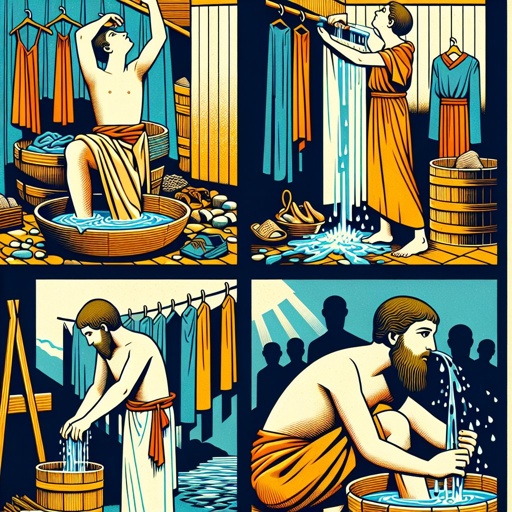
Leviticus 14:8 - "And he that is to be cleansed shall wash his clothes, and shave off all his hair, and wash himself in water, that he may be clean: and after that he shall come into the camp, and shall tarry abroad out of his tent seven days."

Leviticus 16:8

Leviticus 14:55 - "And for the leprosy of a garment, and of a house,"

Leviticus 8:30

Leviticus 14:56 - "And for a rising, and for a scab, and for a bright spot:"

Leviticus 14:1 - "And the LORD spake unto Moses, saying,"

Leviticus 11:14 - "And the vulture, and the kite after his kind;"
Leviticus 5:14 - "¶ And the LORD spake unto Moses, saying,"
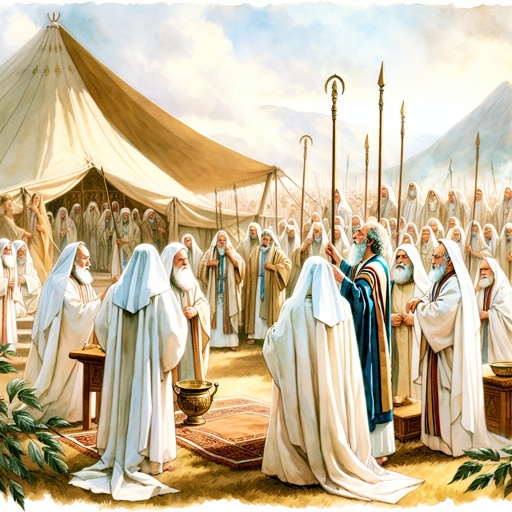
Leviticus 8:1-12

Leviticus 8:8 - "And he put the breastplate upon him: also he put in the breastplate the Urim and the Thummim."

Leviticus 14:54 - "This is the law for all manner of plague of leprosy, and scall,"

Leviticus 6:8 - "¶ And the LORD spake unto Moses, saying,"
Leviticus 10:8 - "¶ And the LORD spake unto Aaron, saying,"

Leviticus 26:14 - "¶ But if ye will not hearken unto me, and will not do all these commandments;"

Leviticus 14:33 - "¶ And the LORD spake unto Moses and unto Aaron, saying,"

Leviticus 8:1 - "And the LORD spake unto Moses, saying,"

Leviticus 14:57 - "To teach when it is unclean, and when it is clean: this is the law of leprosy."

"And for the leprosy of a garment, and of a house," - Leviticus 14:55

Leviticus 13:14 - "But when raw flesh appeareth in him, he shall be unclean."

Leviticus 14:26 - "And the priest shall pour of the oil into the palm of his own left hand:"

Leviticus 8:32 - "And that which remaineth of the flesh and of the bread shall ye burn with fire."

Leviticus 14:30 - "And he shall offer the one of the turtledoves, or of the young pigeons, such as he can get;"

"And for a rising, and for a scab, and for a bright spot:" - Leviticus 14:56

Leviticus 8:6 - "And Moses brought Aaron and his sons, and washed them with water."

Leviticus 8:19 - "And he killed it; and Moses sprinkled the blood upon the altar round about."

Leviticus 8:3 - "And gather thou all the congregation together unto the door of the tabernacle of the congregation."

Leviticus 8:5 - "And Moses said unto the congregation, This is the thing which the LORD commanded to be done."