The Sweet Aroma of Surrender: Understanding Sacrifice in Leviticus 8:16
“And he took all the fat that was upon the inwards, and the caul above the liver, and the two kidneys, and their fat, and Moses burned it upon the altar.” — Leviticus 8:16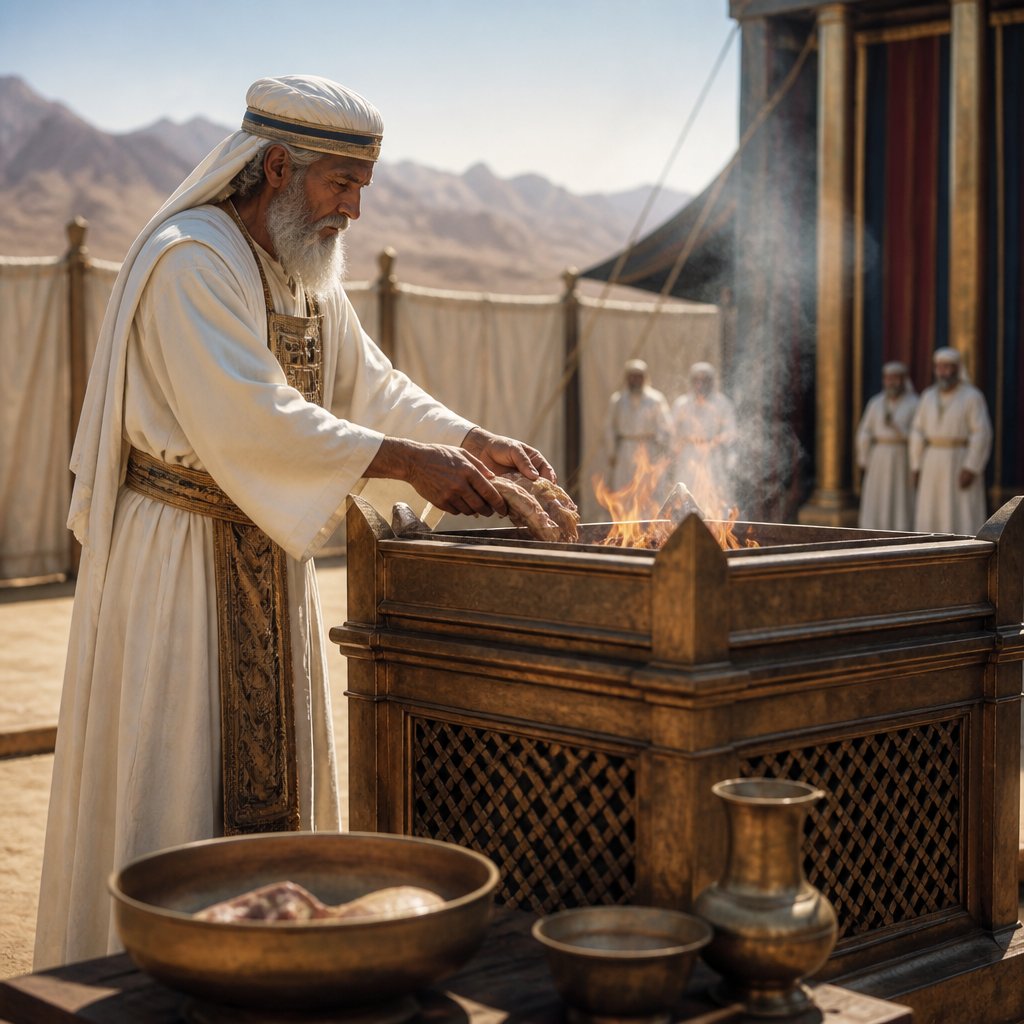
Leviticus 8:16 states, "And he took all the fat that was upon the inwards, and the caul above the liver, and the two kidneys, and their fat, and Moses burned it upon the altar." This verse, while perhaps seemingly obscure at first glance, serves as a profound invitation to explore the depths of sacrifice and devotion required in our walk with God.
In the broader context of Leviticus, we encounter God giving specific instructions to Moses about how to consecrate the priests who would serve before Him in the Tabernacle. These rituals were not only guidelines for worship but also embodied deep spiritual truths that resonate with us today. When we reflect on the sacrificial acts described, we can glean insights into the nature of our relationship with God and what it means to live a life pleasing to Him.
The act described in our verse involves the burning of specific fatty portions of the animal—parts that were deemed the choicest. The fat in Jewish sacrificial law was considered the best part of the offering. To the Israelites, fat was a symbol of abundance and richness, representing what they held dear in their lives. By offering it to the Lord, Moses was conveying a message that, in worship, we present before God the best of what we possess.
In the biblical context, the act of burning these fatty portions upon the altar signifies the complete surrender of a life to God. Sacrifice in the Old Testament was not merely about following rules; rather, it was a physical manifestation of an internal reality—a heart posture of yielding fully to God’s will and purposes. And as these offerings were consumed by fire, they were transformed into a sweet aroma, ascending to heaven, symbolizing acceptance by God. In our lives, when we lay down our desires, ambitions, and even our pain before God, we create a similar sweet fragrance that delights our Father.
In modern Christianity, we often forget that spiritual growth is intimately tied to the concept of sacrifice. We are invited not just to offer tangible gifts but to lay down our whole selves in worship. Romans 12:1 implores us to present our bodies as "a living sacrifice, holy, acceptable unto God, which is your reasonable service." What does this entail? It means giving over our ambitions, relationships, and even our failures to the Lord, trusting that He can use every part of our lives in His divine plan.
Furthermore, consider the significance of the inwards and organs mentioned in Leviticus 8:16. These body parts, often seen as hidden and internal, remind us that true sacrifice extends to our innermost being. God is not merely after our outward show of piety but desires transformation from the inside out. The "inwards" speak to our thoughts, emotions, and intentions. When we come to God, it is essential to bring Him our burdens as well as our joys, recognizing that these, too, can be a part of our offering.
As we meditate on this verse, let us reflect on what we might need to offer on the altar of sacrifice in our own lives. What are the "fats" that we cling to—the desires that we place above our surrender to God? Is it our need for approval, our longing for control, or perhaps our reluctance to forgive or let go? Today is a day to release those weights that hold us back. When we trust in God and in His plans, we not only take a step into deeper faith but also offer up a sweet aroma of worship.
In conclusion, Leviticus 8:16 invites us into a profound rhythm of surrender, reminding us that true worship is rooted in sacrifice. As we reflect upon this passage, let's commit our choices, aspirations, and very selves to be living sacrifices before God, transforming our lives into a continuous offering that delights Him and serves as a testament to our devotion.
Get our apps


Artwork for Leviticus 8:16

Leviticus 8:16 - "And he took all the fat that was upon the inwards, and the caul above the liver, and the two kidneys, and their fat, and Moses burned it upon the altar."
"And he took all the fat that was upon the inwards, and the caul above the liver, and the two kidneys, and their fat, and Moses burned it upon the altar." - Leviticus 8:16

Leviticus 16:8

Leviticus 16:8 - "And Aaron shall cast lots upon the two goats; one lot for the LORD, and the other lot for the scapegoat."
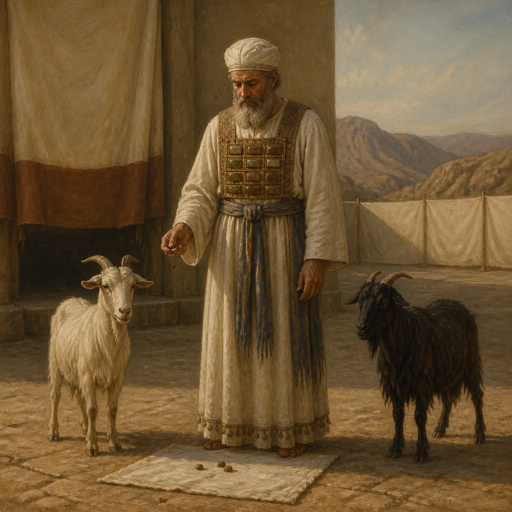
"And Aaron shall cast lots upon the two goats; one lot for the LORD, and the other lot for the scapegoat." - Leviticus 16:8

leviticus 16:7-10

Leviticus 8:30

Leviticus 21:16 - "¶ And the LORD spake unto Moses, saying,"
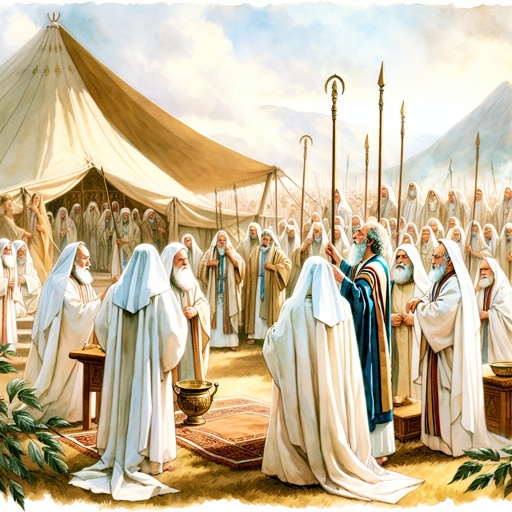
Leviticus 8:1-12

Leviticus 8:8 - "And he put the breastplate upon him: also he put in the breastplate the Urim and the Thummim."

Leviticus 9:16 - "And he brought the burnt offering, and offered it according to the manner."

Leviticus 6:8 - "¶ And the LORD spake unto Moses, saying,"
Leviticus 10:8 - "¶ And the LORD spake unto Aaron, saying,"

Leviticus 4:16 - "And the priest that is anointed shall bring of the bullock's blood to the tabernacle of the congregation:"

Leviticus 11:16 - "And the owl, and the night hawk, and the cuckow, and the hawk after his kind,"

Leviticus 16:25 - "And the fat of the sin offering shall he burn upon the altar."

Leviticus 8:1 - "And the LORD spake unto Moses, saying,"

Leviticus 18:16 - "Thou shalt not uncover the nakedness of thy brother's wife: it is thy brother's nakedness."

Leviticus 8:32 - "And that which remaineth of the flesh and of the bread shall ye burn with fire."

Leviticus 8:6 - "And Moses brought Aaron and his sons, and washed them with water."

Leviticus 8:19 - "And he killed it; and Moses sprinkled the blood upon the altar round about."

Leviticus 8:3 - "And gather thou all the congregation together unto the door of the tabernacle of the congregation."

Leviticus 8:5 - "And Moses said unto the congregation, This is the thing which the LORD commanded to be done."

Leviticus 16:31 - "It shall be a sabbath of rest unto you, and ye shall afflict your souls, by a statute for ever."

Leviticus 13:16 - "Or if the raw flesh turn again, and be changed unto white, he shall come unto the priest;"

Leviticus 17:16 - "But if he wash them not, nor bathe his flesh; then he shall bear his iniquity."

Leviticus 16:7 - "And he shall take the two goats, and present them before the LORD at the door of the tabernacle of the congregation."
"¶ And the LORD spake unto Moses, saying," - Leviticus 21:16

Leviticus 8:20 - "And he cut the ram into pieces; and Moses burnt the head, and the pieces, and the fat."

Leviticus 18:8 - "The nakedness of thy father's wife shalt thou not uncover: it is thy father's nakedness."