Sacrifice: The Aroma of Obedience
“And that which remaineth of the flesh and of the bread shall ye burn with fire.” — Leviticus 8:32
In the Book of Leviticus, we find ourselves immersed in the sacred practices and requirements that God laid out for His people. Leviticus 8:32 states: "And that which remaineth of the flesh and of the bread shall ye burn with fire." At first glance, this verse might appear as a mere instruction on what to do with the leftovers from the sacrificial offerings. However, beneath this directive lies profound spiritual truths that can be transformative for our lives as followers of Christ.
The context of this verse is crucial. It comes during the ordination of Aaron and his sons as priests, signaling the establishment of the Levitical priesthood to mediate between God and the Israelites. The sacrifices made here are more than just ritualistic acts; they signify the seriousness of sin, the need for atonement, and ultimately, the foreshadowing of the ultimate sacrifice made through Jesus Christ.
When we delve into the act of burning the remaining flesh and bread, we see a powerful image of total surrender and obedience. The notion of burning what remains points us to the idea that our offerings to God must not only be generous but also complete. In the Old Covenant, any remaining elements of the offerings, whether it be flesh or bread, signified imperfections or incompleteness in the sacrifice. Thus, burning these leftovers symbolized their total destruction and removal from the presence of the Holy One.
In our daily lives, we are often tempted to offer God the best of what we have, sometimes holding onto remnants that we feel are too valuable to let go. However, true worship requires that we yield not just the portions we deem worthy but everything. God desires all of us—our time, our talents, our dreams, and even our fears. When we offer Him our burnt offerings—in complete surrender—we reflect a heart transformed by His grace, a heart that understands the significance of the sacrifice made on our behalf.
The act of burning signifies purification; it is a way to remove what is unacceptable to God. Similarly, as we navigate our spiritual journeys, we must allow God to burn away the remnants of our sinful nature, the doubts that hinder our faith, and the distractions that pull us away from our relationship with Him. This process, while painful at times, is essential for spiritual growth. In Romans 12:1, Paul urges us to present our bodies as "a living sacrifice, holy, acceptable unto God, which is your reasonable service." This reasonable service is partaking in a continuous act of burning away the old while embracing the new life we have in Christ.
Moreover, the act of burning leftovers could also be seen as a reminder of God's judgment on that which is unacceptable. As we offer up our lives to God, it's important to assess what we are holding onto. Are there parts of our lives that do not bring glory to God? Are there harmful habits, toxic relationships, or negative thoughts we cling to? God calls us to lay these before Him, trusting that He will consume them in His purifying fire, making us more like Him.
Ultimately, Leviticus 8:32 invites us into a deeper understanding of sacrifice—a theme that resonates throughout Scripture—from the Old Testament offerings to the New Testament's invitation to carry our cross daily. As we contemplate this verse, let us ask ourselves: What remains in our lives that we need to surrender to God? Are there unfinished areas of obedience that we have yet to address? May we be willing to submit it all to the fire of His love and grace, knowing that in doing so, we become living testimonies of His transformative power.
As we embrace the act of burning what remains in our lives, let us celebrate the overwhelming truth that our Savior has already paid the price for us, leading us into a life of joyful sacrifice that brings glory to God.
Get our apps


Artwork for Leviticus 8:32

Leviticus 8:32 - "And that which remaineth of the flesh and of the bread shall ye burn with fire."

"And that which remaineth of the flesh and of the bread shall ye burn with fire." - Leviticus 8:32

Matthew 8:32

Matthew 8:32

Matthew 8:32

Leviticus 25:32 - "Notwithstanding the cities of the Levites, and the houses of the cities of their possession, may the Levites redeem at any time."

Leviticus 4:32 - "And if he bring a lamb for a sin offering, he shall bring it a female without blemish."

Leviticus 26:32 - "And I will bring the land into desolation: and your enemies which dwell therein shall be astonished at it."

Psalm 32:8

Psalm 32:8

Psalm 32:8

Psalm 32:8

Psalm 32:8

Psalm 32:8

Leviticus 14:32 - "This is the law of him in whom is the plague of leprosy, whose hand is not able to get that which pertaineth to his cleansing."

Leviticus 7:32 - "And the right shoulder shall ye give unto the priest for an heave offering of the sacrifices of your peace offerings."

Leviticus 16:8

Leviticus 27:32 - "And concerning the tithe of the herd, or of the flock, even of whatsoever passeth under the rod, the tenth shall be holy unto the LORD."

Leviticus 8:30

Leviticus 13:32 - "And in the seventh day the priest shall look on the plague: and, behold, if the scall spread not, and there be in it no yellow hair, and the scall be not in sight deeper than the skin;"
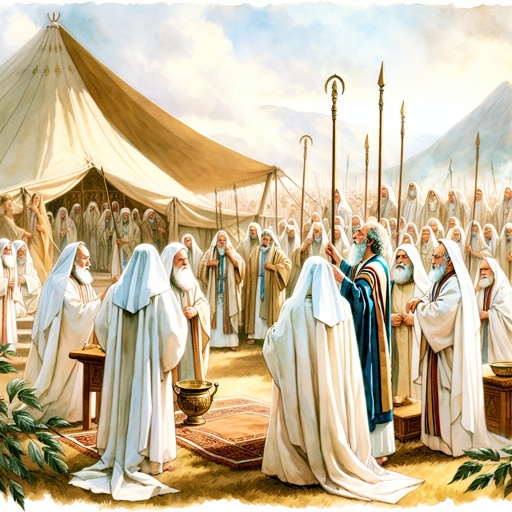
Leviticus 8:1-12

Leviticus 19:32 - "¶ Thou shalt rise up before the hoary head, and honour the face of the old man, and fear thy God: I am the LORD."

Leviticus 8:8 - "And he put the breastplate upon him: also he put in the breastplate the Urim and the Thummim."

Leviticus 22:32 - "Neither shall ye profane my holy name; but I will be hallowed among the children of Israel: I am the LORD which hallow you,"

Ezra 8:32 - "And we came to Jerusalem, and abode there three days."

Leviticus 6:8 - "¶ And the LORD spake unto Moses, saying,"
Leviticus 10:8 - "¶ And the LORD spake unto Aaron, saying,"

Leviticus 15:32 - "This is the law of him that hath an issue, and of him whose seed goeth from him, and is defiled therewith;" The image should not depict explicit or offensive content but be symbolic.

Job 32:8 - "But there is a spirit in man: and the inspiration of the Almighty giveth them understanding."

Leviticus 8:1 - "And the LORD spake unto Moses, saying,"