The Weight of Rejection: A Call to Perseverance and Grace
“But into whatsoever city ye enter, and they receive you not, go your ways out into the streets of the same, and say, Even the very dust of your city, which cleaveth on us, we do wipe off against you: notwithstanding be ye sure of this, that the kingdom of God is come nigh unto you. But I say unto you, that it shall be more tolerable in that day for Sodom, than for that city.” — Luke 10:10-12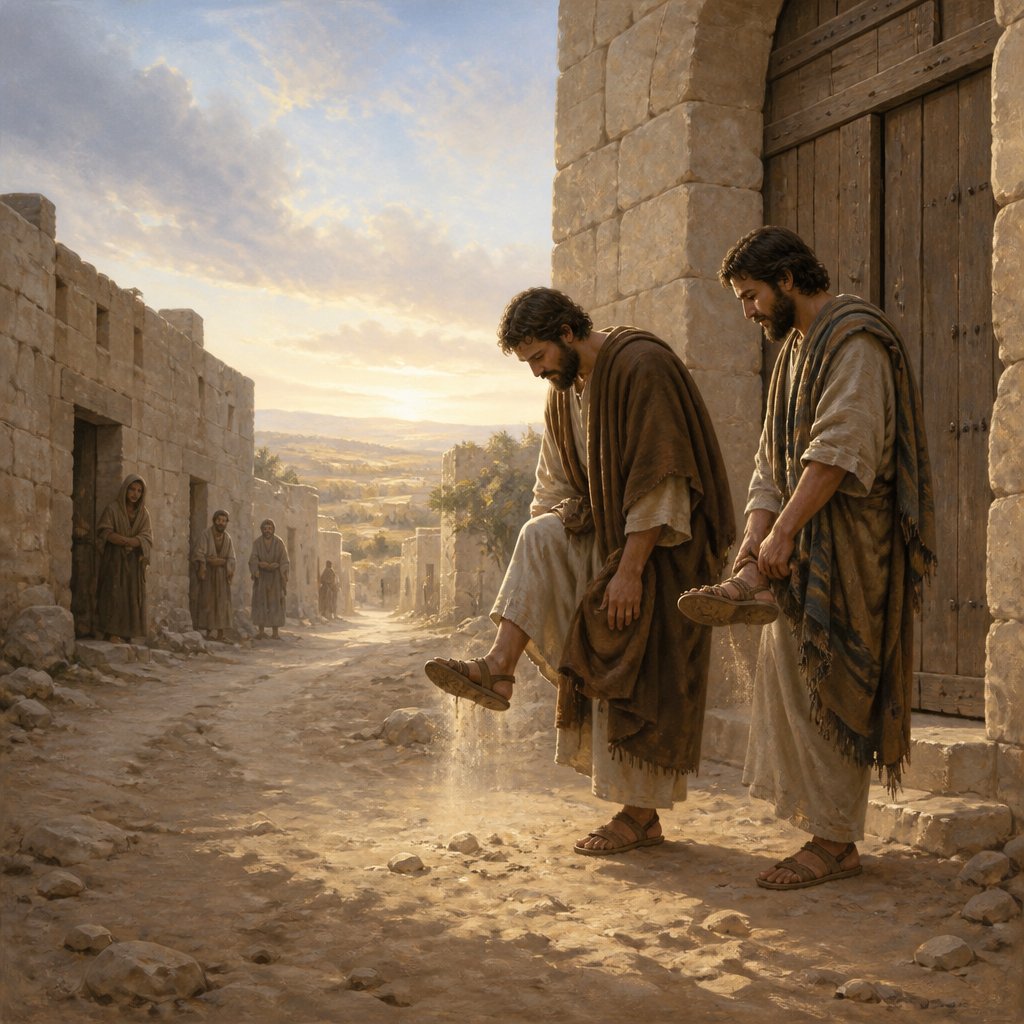
In Luke 10:10-12, we find an essential moment in Jesus’ ministry, where He conveys profound truths about acceptance, rejection, and the weight of the Kingdom of God upon our lives. The specific verses state, ‘But into whatsoever city ye enter, and they receive you not, go your ways out into the streets of the same, and say, Even the very dust of your city, which cleaveth on us, we do wipe off against you: notwithstanding be ye sure of this, that the kingdom of God is come nigh unto you. But I say unto you, that it shall be more tolerable in that day for Sodom, than for that city.’ (KJV)
When we reach out to others—whether in our families, communities, or workplaces—there is a fervent desire for acceptance. Jesus understood this innate human need and brilliantly layered His response with both instruction and warning. Here, He sends out His disciples, not as conquerors but as bearers of good news. However, He anticipates that not every city will accept them.
The directive to shake off the dust signifies a sign of judgment. In ancient Jewish culture, shaking the dust off one's feet was a declaration that the message had been ignored, and it served as a severe critique of the city's spiritual state. The phrase, ‘the dust of your city, which cleaveth on us,’ indicates a deep connection; when we share the gospel, we are not merely delivering information but becoming enmeshed in the fabric of that community’s spiritual condition.
Yet, this initial act of rejection should not discourage us. It's important to note that while the disciples were instructed to leave in peace, they were to proclaim the nearness of the Kingdom of God. ‘Notwithstanding be ye sure of this, that the kingdom of God is come nigh unto you.’ This declaration holds significant weight; it reminds us that no matter the outcome, the Kingdom's presence has been offered, and the potential for acceptance remains a sacred possibility. The Kingdom of God is not merely a future hope but a present reality that we are privileged to carry to every doorstep. The message itself is powerful, regardless of the reception it receives.
Moreover, Jesus’ statement about Sodom highlights the severe consequences of blatant rejection. Sodom, known for its immorality and wickedness, faced dire judgment. However, the warning signifies that those who reject God’s message in the face of the revealed Kingdom are held to a stricter account. It evokes a sobering thought: the implications of our response—or lack thereof—to the gospel are profound.
In a broader sense, this truth speaks to our individual journeys of faith. How often do we side with rejection or apathy in our own communities? How easily do we dismiss those who may seemingly cast aside the message we share? Our response must not be one of bitterness or despair, but of grace and perseverance. The Kingdom's nearness carries with it an urgency for each of us to reflect God’s love, even to the hardest of hearts.
Finally, let us meditate on the truth that, through our rejections, God is still at work. Each person we encounter who declines the gospel is not a lost cause; rather, they are a reminder of the relentless pursuit of God's love. The act of sharing the gospel reflects the very heart of Jesus, a heart that persistently seeks the lost, the broken, and the weary.
In conclusion, may we approach each day tapping into the very essence of the Kingdom—we are messengers of hope. The pain of rejection does not define our effectiveness; instead, let us stride forth, shaking off past dust, and declare with confidence the nearness of the Kingdom of God. The path of perseverance is fraught with challenges, but it is also laden with grace, joy, and purpose. Let this be our anthem: even in rejection, we carry the light of Christ’s hope close to our hearts.
Get our apps


Artwork for Luke 10:10-12

Luke 10:10-12 - "But when you enter a town and are not welcomed, go into its streets and say, ‘Even the dust of your town we wipe from our feet as a warning to you. Yet be sure of this: The kingdom of God has come near.’ I tell you, it will be more bearable on that day for Sodom than for that town."
"But when you enter a town and are not welcomed, go into its streets and say, ‘Even the dust of your town we wipe from our feet as a warning to you. Yet be sure of this: The kingdom of God has come near.’ I tell you, it will be more bearable on that day for Sodom than for that town." - Luke 10:10-12

Luke 12:10

Luke 10:12 - "But I say unto you, that it shall be more tolerable in that day for Sodom, than for that city."

Ezra 10:10-12

Luke 12:10 - "And whosoever shall speak a word against the Son of man, it shall be forgiven him: but unto him that blasphemeth against the Holy Ghost it shall not be forgiven."

Luke 10:5

Luke 10:5

Luke 10:5

Luke 10:18-19

Luke 10:18-19

Luke 10:18-19

Luke 10:17-19

Luke 10:18-19

Luke 10:18-19

Luke 10:18-19

Luke 10:17-19

Luke 19:10

Luke 2:10

Luke 10:27

Luke 15:10

Luke 17:10

Luke 10:10 - "But into whatsoever city ye enter, and they receive you not, go your ways out into the streets of the same, and say,"

"But I say unto you, that it shall be more tolerable in that day for Sodom, than for that city." - Luke 10:12

Luke 10:18-19

Luke 19:1-10

Luke 11:9-10

Luke 19:1-10

Luke 13:10 - "And he was teaching in one of the synagogues on the sabbath."

Exodus 10:12