Who Is My Neighbor? Discovering True Compassion
“But he, willing to justify himself, said unto Jesus, And who is my neighbour?” — Luke 10:29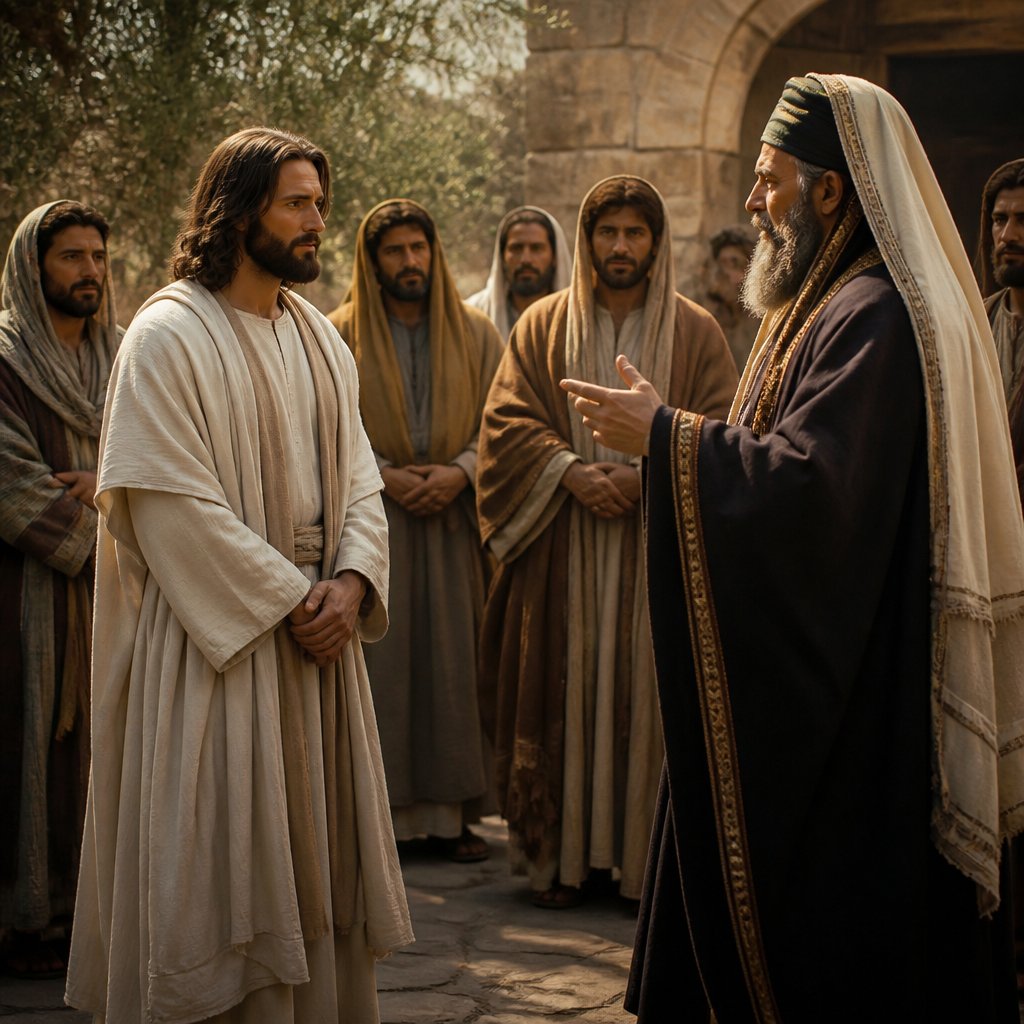
In the Gospel of Luke, we encounter a compelling exchange between Jesus and a lawyer, who, prompted by his own desire to justify himself, asks a profound question: "And who is my neighbour?" (Luke 10:29, KJV). This seemingly simple inquiry unveils a complex landscape of love, mercy, and responsibility that reaches far beyond mere geographical or social boundaries. Through this verse, we are called not only to examine the essence of our relationships with others but to challenge the very definitions we hold about whom we should love and serve.
The context of the lawyer’s question is pivotal. He is not merely curious; rather, he seeks to establish a limit on the commandment of loving one another. He wants to find a way to justify his actions and perhaps to identify an ‘in’ group of those who deserve love and kindness. By asking, “Who is my neighbour?” he attempts to draw a line that enables him to feel righteous while minimizing his obligation to care for those deemed outside his immediate community. However, Jesus responds with the Parable of the Good Samaritan, which radically redefines the concept of neighborliness and love.
When we think about neighbors, what images come to mind? Perhaps we think of the people living next door, those in our social circles, or members within our church. But the heart of Jesus’ message is that our view of a neighbour should be expansive and inclusive, encompassing even those we might consider enemies, outcasts, or strangers. In the parable, the Samaritan, a group traditionally despised by the Jews, exhibits the deepest form of compassion by aiding a wounded man while others, who perhaps should have acted, pass by.
This brings forth a critical question for us today: Who do we exclude in our understanding of who deserves our love and help? Are there individuals or groups we categorize as ‘other’ or even ‘unworthy’? The truth is that in a world filled with divisions—be they racial, socioeconomic, or ideological—the call to love our neighbor cuts through all of that. It challenges us to act with compassion, even when it is uncomfortable.
Jesus demonstrates that being a neighbor is not merely about proximity; it is about action and heart posture. To answer the lawyer’s question, Jesus encourages us to have a posture of servanthood. True neighborliness transcends borders and barriers; it compels us to consider the needs of others, even if they are vastly different from us. Such love can be seen not just in grand gestures but in the everyday moments of our lives—stopping to help a stranger in need, actively listening to those we disagree with, or sharing our resources with those marginalized in society.
In reflecting upon Luke 10:29, we find ourselves challenged to embrace a radical form of inclusivity. Let us resist the temptation to create categories of ‘us’ versus ‘them.’ Instead, let us lean into the opportunity to express kindness, empathy, and compassion toward everyone we encounter, especially those who might not fit our comfort zone.
As we ponder this verse, let us ask ourselves: How can I be a better neighbor today? In what ways can I extend love and kindness beyond boundaries? May we embody the love Christ demonstrated through His life—a love that knows no limits and extends beyond bias—a love that has the power to transform the world around us. So, as we journey forward, let us commit to being all-encompassing in our compassion, actively seeking to live out the essence of what it means to love our neighbor as ourselves.
In the spirit of openness and readiness, may we respond to Jesus' challenge to expand our understanding of who our neighbor is, drawing us into deeper connection and community as people of faith.
Get our apps


Artwork for Luke 10:29

Luke 10:29 - "But he, willing to justify himself, said unto Jesus, And who is my neighbour?"
"But he, willing to justify himself, said unto Jesus, And who is my neighbour?" - Luke 10:29

Luke 4:29

luke 1:29

luke 9:29- 30

Luke 21:29 - "And he spake to them a parable; Behold the fig tree, and all the trees;"

Luke 10:5

Luke 9:29 - "And as he prayed, the fashion of his countenance was altered, and his raiment was white and glistering."

Luke 10:5

Luke 10:5

Luke 20:29 - "There were therefore seven brethren: and the first took a wife, and died without children."

Luke 10:18-19

Luke 10:18-19

Luke 10:18-19

Luke 10:17-19

Luke 7:29 - "And all the people that heard him, and the publicans, justified God, being baptized with the baptism of John."

Luke 16:29 - "Abraham saith unto him, They have Moses and the prophets; let them hear them."

Luke 2:29 - "Lord, now lettest thou thy servant depart in peace, according to thy word:"

Luke 22:29 - "And I appoint unto you a kingdom, as my Father hath appointed unto me;"

Luke 10:18-19

Luke 10:18-19

Luke 10:18-19

Luke 10:17-19

Luke 19:10

Luke 2:10

Luke 10:27

Luke 15:10

Luke 12:10

Luke 17:10

Job 29:10 - "The nobles held their peace, and their tongue cleaved to the roof of their mouth."