Watching with Intention: Understanding the Heart of Sabbath Rest
“And it came to pass, as he went into the house of one of the chief Pharisees to eat bread on the sabbath day, that they watched him.” — Luke 14:1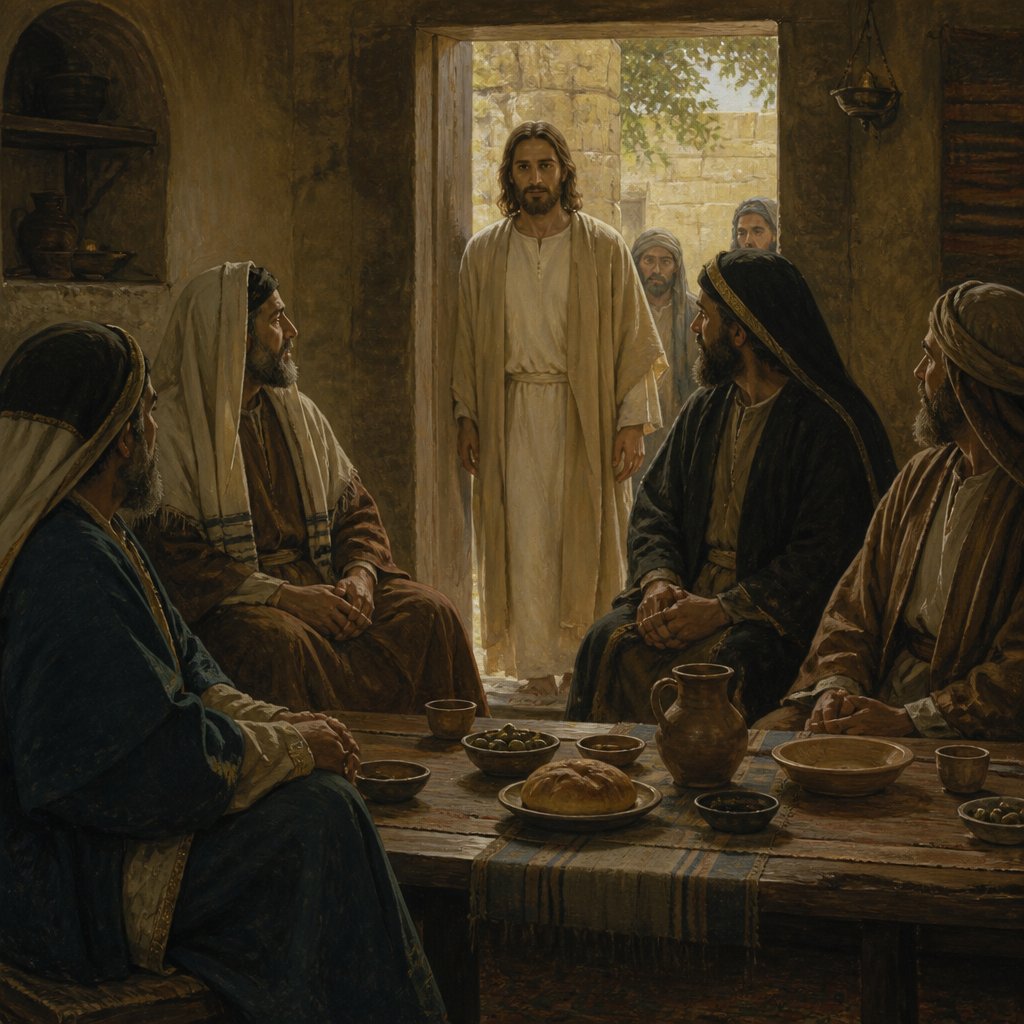
In the Gospel of Luke, chapter 14, verse 1, we encounter a scene that unfolds with significance and depth: "And it came to pass, as he went into the house of one of the chief Pharisees to eat bread on the sabbath day, that they watched him." This single verse contains a wealth of meaning, inviting us to consider the nature of observation, the definition of rest, and ultimately, the heart of Jesus’ ministry.
At first glance, this verse presents a narrative moment—a sharing of a meal on the Sabbath. Jesus, our Lord and Savior, is breaking bread with the Pharisees, a group often characterized by their strict adherence to the Law. However, there’s an underlying tension; the act of eating with the chief Pharisee is not just a casual encounter. It is a deliberate moment where intentions are scrutinized and motives are questioned, especially concerning the observance of the Sabbath.
The Pharisees were known for their rigorous interpretations of the Law, and they had specific, often burdensome, rules about what was permissible on the Sabbath. Their watching of Jesus was not merely a matter of curiosity; it was a means of assessment, an expectation that He would slip, err, or transgress their oral traditions regarding rest on the Sabbath. This gives us a distinct picture of how the Pharisees viewed the Law—not as a pathway to relationship with God, but as a tool for judgment and condemnation.
Yet, Jesus, embodying the very fulfillment of the Law, enters their midst with an openness that challenges their expectations. As we delve deeper into the motivation behind their observation, we are faced with a profound reflection on our own hearts. Are we, like the Pharisees, more concerned with the rules than the relationship? Are we watching for fault, or are we looking for grace?
The Sabbath itself represents rest—an intentional withdrawal from labor designed by God to rejuvenate His creation. In Genesis, we read that God rested on the seventh day after creating the universe, and He sanctified it as holy. For Jesus, the Sabbath was a day to do good, to heal, and to show the love of God in action. The interruption of conventional thinking around the Sabbath demonstrates His desire for mercy rather than judgment. In Matthew 12:7, Jesus quotes, "But if ye had known what this meaneth, I will have mercy, and not sacrifice, ye would not have condemned the guiltless."
As followers of Christ, we are called to look beyond mere compliance to external rules. This call connects us back to the original intent of the Sabbath. When Jesus was being watched, He was bringing to light what true rest looks like—a rest filled with compassion, love, and restoration. He teaches us that observing the Sabbath must transcend ritualistic practice and transform into a time of embracing humanity in all its brokenness and need.
Consider also the invitation for us to examine who we are in this narrative. Are we the observers, standing on the sidelines with skepticism, expecting to find flaws and hypocrisy in others? Or are we those who embrace Jesus’ radical love, one that is inclusive and restorative? The position that we choose can define our experience of the Sabbath and our interactions with others—whether in the church or in secular spaces.
As you meditate on this verse, ask God to reveal any ways you might be watching others with judgment rather than love. Let His example guide you toward mercy, allowing you to reflect the heart of Christ in all your interactions. This Sabbath, join Him in the work of restoration, knowing that it is always permissible to do good. Thus, free from judgmental watching and steeped in Jesus’ grace, we can truly enter into the rest that He offers—a rest that heals and transforms.
In conclusion, let this verse remind us not only of the tension present in Jesus’ interactions with the Pharisees but also of the eternal invitation to experience Sabbath in its truest form. Let’s watch with intention—intent to love, to serve, to heal, and to grow closer to God, reflecting His glory in every moment.
Get our apps


Artwork for Luke 14:1

Luke 14:1 - "And it came to pass, as he went into the house of one of the chief Pharisees to eat bread on the sabbath day, that they watched him."
"And it came to pass, as he went into the house of one of the chief Pharisees to eat bread on the sabbath day, that they watched him." - Luke 14:1

Luke 11:1-14

Luke 11:1-14

Luke 11:14-15

Luke 18:9-14

Luke 18: 9-14

Luke 1:14 - "And thou shalt have joy and gladness; and many shall rejoice at his birth."

Luke 14:14 - "And thou shalt be blessed; for they cannot recompense thee: for thou shalt be recompensed at the resurrection of the just."

"And thou shalt have joy and gladness; and many shall rejoice at his birth." - Luke 1:14

Luke 14:25 - 33

Luke 2:13-14

Luke 2:13-14

Luke 14:6 - "And they could not answer him again to these things."

Colossians 4:14 - "Luke, the beloved physician, and Demas, greet you."

Luke 14:30 - "Saying, This man began to build, and was not able to finish."

Luke 24:14 - "And they talked together of all these things which had happened."

Luke 10:14 - "But it shall be more tolerable for Tyre and Sidon at the judgment, than for you."

Luke 14:2 - "And, behold, there was a certain man before him which had the dropsy."

Luke 2:14 - "Glory to God in the highest, and on earth peace, good will toward men."

Luke 14:22 - "And the servant said, Lord, it is done as thou hast commanded, and yet there is room."

Luke 14:13 - "But when thou makest a feast, call the poor, the maimed, the lame, the blind:"

Luke 14:25 - "¶ And there went great multitudes with him: and he turned, and said unto them,"

Luke 22:14 - "And when the hour was come, he sat down, and the twelve apostles with him."

Luke 2:13-14 fine pointillism sytle
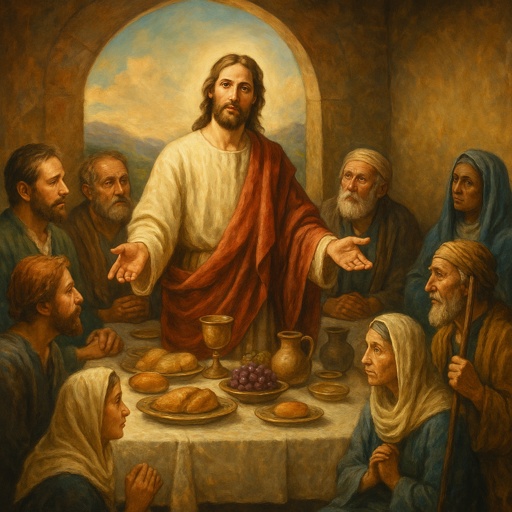
"And he put forth a parable to those which were bidden, when he marked how they chose out the chief rooms; saying unto them, When thou art bidden of any man to a wedding, sit not down in the highest room; lest a more honourable man than thou be bidden of him; And he that bade thee and him come and say to thee, Give this man place; and thou begin with shame to take the lowest room. But when thou art bidden, go and sit down in the lowest room; that when he that bade thee cometh, he may say unto thee, Friend, go up higher: then shalt thou have worship in the presence of them that sit at meat with thee. For whosoever exalteth himself shall be abased; and he that humbleth himself shall be exalted. Then said he also to him that bade him, When thou makest a feast, call the poor, the maimed, the lame, the blind: And thou shalt be blessed; for they cannot recompense thee: for thou shalt be recompensed at the resurrection of the just." - Luke 14:7-14

Luke 14:4 - "And they held their peace. And he took him, and healed him, and let him go;"

Luke 21:14 - "Settle it therefore in your hearts, not to meditate before what ye shall answer:"

Luke 14:34 - "¶ Salt is good: but if the salt have lost his savour, wherewith shall it be seasoned?"

Luke 16:14 - "And the Pharisees also, who were covetous, heard all these things: and they derided him."