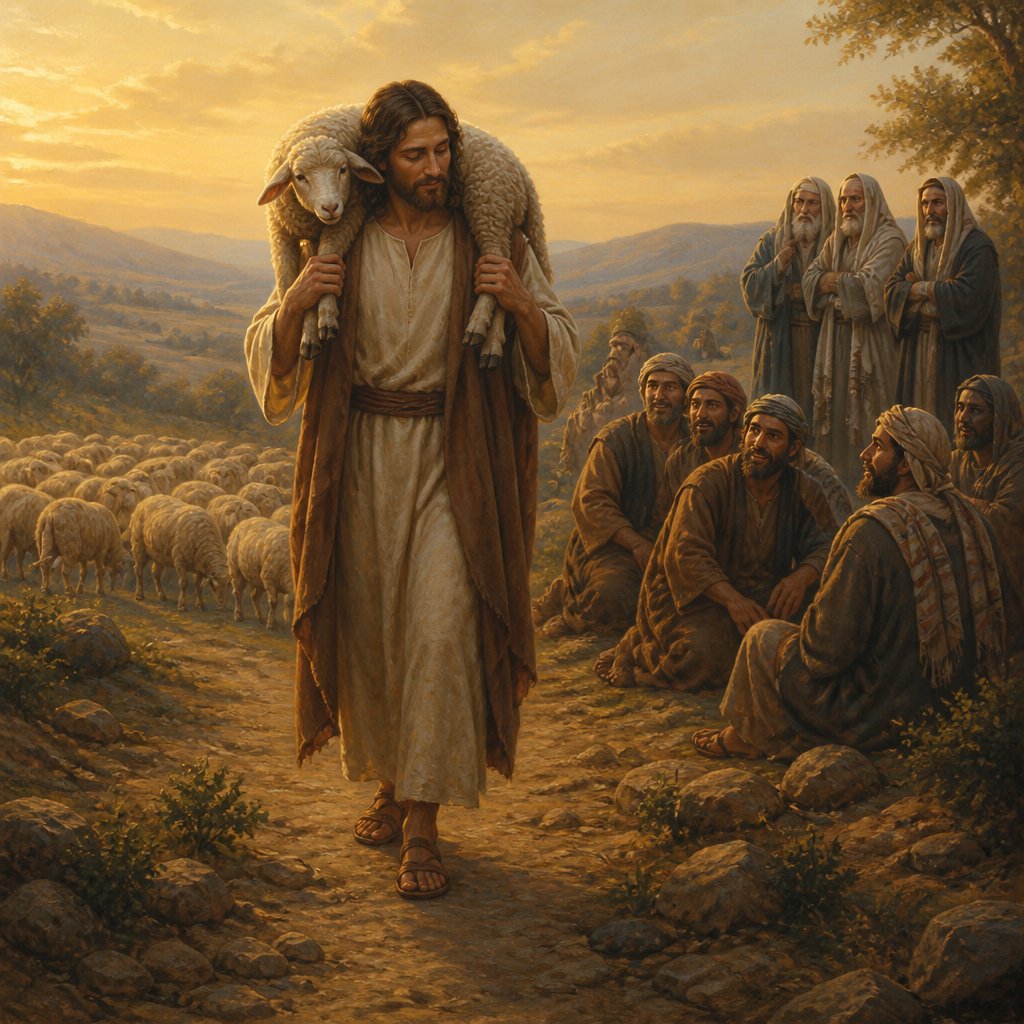
In the Gospel of Luke, we encounter a beautiful and powerful message through the parable of the lost sheep, found in Luke 15:1-7 KJV: "Now the tax collectors and sinners were all drawing near to hear Him. And the Pharisees and scribes complained, saying, ‘This Man receives sinners and eats with them.’ So He spoke this parable to them, saying: ‘What man of you, having a hundred sheep, if he loses one of them, does not leave the ninety-nine in the wilderness, and go after the one which is lost until he finds it? And when he has found it, he lays it on his shoulders, rejoicing. And when he comes home, he calls together his friends and neighbors, saying to them, ‘Rejoice with me, for I have found my sheep which was lost!’ I say unto you that likewise, joy shall be in heaven over one sinner that repenteth, more than over ninety and nine just persons, which need no repentance.’
At first glance, this passage illustrates a simple yet profound truth about God's love for humanity, underscoring the significance of each individual soul. The context reveals how the presence of 'tax collectors and sinners' drew close to Jesus, while the religious leaders – the Pharisees and scribes – looked upon this with disdain. They could not grasp the depth of mercy and grace that our Lord extended, nor could they comprehend why He would associate with the 'undeserving.'
In this parable, Jesus paints an image that resonates with every heart that has wandered and needs to be brought back. The quantitative comparison of 100 sheep to 99 is reminiscent of our own undervaluation of love and belonging. To many, losing one when you have ninety-nine remaining might seem a trivial loss. Yet, in God's kingdom, every individual is priceless. It deserves to be cared for, searched for, and brought back. This serves as a divine reminder that no person is insignificant to God; every lost soul is a treasure worth pursuing.
We witness the heart of a true shepherd. When he loses one sheep, he does not merely count his losses and resign himself to fate. Instead, he ventures into the wilderness, leaving the safety of the flock because he knows that his bond with the one who is lost requires action. This speaks volumes about the nature of true love and commitment – it is proactive, sacrificial, and relentless. Our God does not shy away from the dirty and chaotic wilderness, but rather confronts it, exhibiting the very essence of love that seeks and saves.
Upon finding the lost sheep, the shepherd does not scold it for straying; rather, he rejoices. This reaction reveals God's heart toward us—He is not eager to point fingers or harbor resentment; He desires celebration over our return. "Rejoice with me, for I have found my sheep which was lost!" echoes like a powerful anthem in heaven. When we repent, the gates of joy swing wide open, affirming that divine reception is always met with rejoicing.
In the concluding declaration of Jesus, we see the staggering depth of God’s compassion. “I say unto you, that likewise, joy shall be in heaven over one sinner that repenteth…” Picture how the heavens respond at the moment of a sinner’s repentance; it is a symphony of joy over a singular soul's turn toward grace. It’s an anthem of grace reminding us that every individual matters, not just in the abstract sense, but profoundly and personally.
This parable invites us into the heart of our Savior. It urges us to be for others what He has been for us—actively searching, lovingly embracing, and joyfully welcoming the ones who have lost their way. In your life, who are the 'lost sheep' you can pursue? In a world often overshadowed by judgment and isolation, let us emulate the heart of the Shepherd. Engage with those around us, especially those who society has marginalized. Let us celebrate not just our victories in faith but also every victory in the restoration of lost lives.
As we reflect on this truth, may we carry the divine burden to seek the lost and lead them back to the loving arms of the Shepherd who rejoices over every soul that is found.
Get our apps


Artwork for Luke 15:1-7
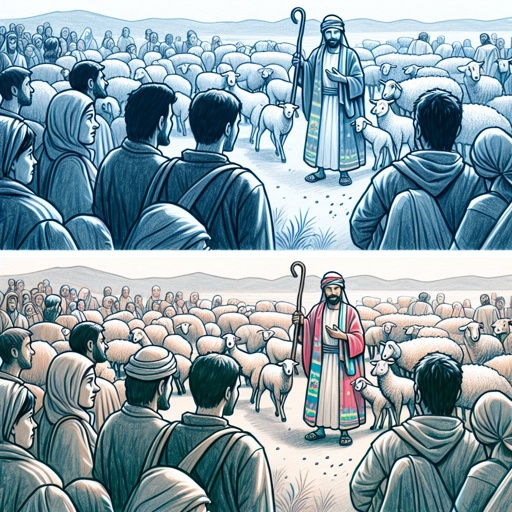
Luke 15:1-7 - "Now the tax collectors and sinners were all gathering around to hear Jesus. But the Pharisees and the teachers of the law muttered, “This man welcomes sinners and eats with them.” Then Jesus told them this parable: “Suppose one of you has a hundred sheep and loses one of them. Doesn’t he leave the ninety-nine in the open country and go after the lost sheep until he finds it? And when he finds it, he joyfully puts it on his shoulders and goes home. Then he calls his friends and neighbors together and says, ‘Rejoice with me; I have found my lost sheep.’ I tell you that in the same way there will be more rejoicing in heaven over one sinner who repents than over ninety-nine righteous persons who do not need to repent."
"Now the tax collectors and sinners were all gathering around to hear Jesus. But the Pharisees and the teachers of the law muttered, “This man welcomes sinners and eats with them.” Then Jesus told them this parable: “Suppose one of you has a hundred sheep and loses one of them. Doesn’t he leave the ninety-nine in the open country and go after the lost sheep until he finds it? And when he finds it, he joyfully puts it on his shoulders and goes home. Then he calls his friends and neighbors together and says, ‘Rejoice with me; I have found my lost sheep.’ I tell you that in the same way there will be more rejoicing in heaven over one sinner who repents than over ninety-nine righteous persons who do not need to repent." - Luke 15:1-7

Luke 15: 4-7

Luke 15:1 - "Then drew near unto him all the publicans and sinners for to hear him."

Luc 15:1-2

Luke 7:15 - "And he that was dead sat up, and began to speak. And he delivered him to his mother."

Luc 15:1-2

Luke 11:14-15

Luke 21:15-19

Luke 7:50

Luke 7:50

Luc 15:1-2
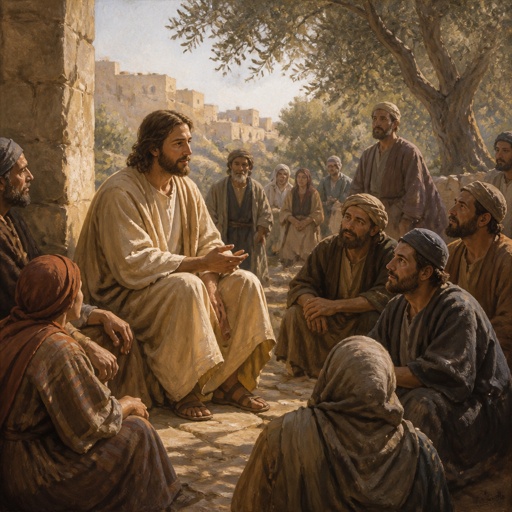
"Then drew near unto him all the publicans and sinners for to hear him." - Luke 15:1

Luc 15:1-2

Luke 15:7 - "I say unto you, that likewise joy shall be in heaven over one sinner that repenteth, more than over ninety and nine just persons, which need no repentance."

1 Corinthians 15:7 - "After that, he was seen of James; then of all the apostles."

Luke 1:7 - "And they had no child, because that Elisabeth was barren, and they both were now well stricken in years."

1 Samuel 7:15 - "And Samuel judged Israel all the days of his life."

"And he that was dead sat up, and began to speak. And he delivered him to his mother." - Luke 7:15

1 Chronicles 15:7 - "Of the sons of Gershom; Joel the chief, and his brethren an hundred and thirty:"

Luke 7:1 - "Now when he had ended all his sayings in the audience of the people, he entered into Capernaum."

Luke 8:7 - "And some fell among thorns; and the thorns sprang up with it, and choked it.

1 Samuel 15:7 - "And Saul smote the Amalekites from Havilah until thou comest to Shur, that is over against Egypt."

Luke 15:23

Luke 15:10

Luke 15:21

Luke 15:21

Luke 1:15 - "For he shall be great in the sight of the Lord, and shall drink neither wine nor strong drink; and he shall be filled with the Holy Ghost, even from his mother's womb."

1 Corinthians 7:15 - "But if the unbelieving depart, let him depart. A brother or a sister is not under bondage in such cases: but God hath called us to peace."

Luke 15:11-32