Stewardship: A Call to Faithful Management
“And he said also unto his disciples, There was a certain rich man, which had a steward; and the same was accused unto him that he had wasted his goods.” — Luke 16:1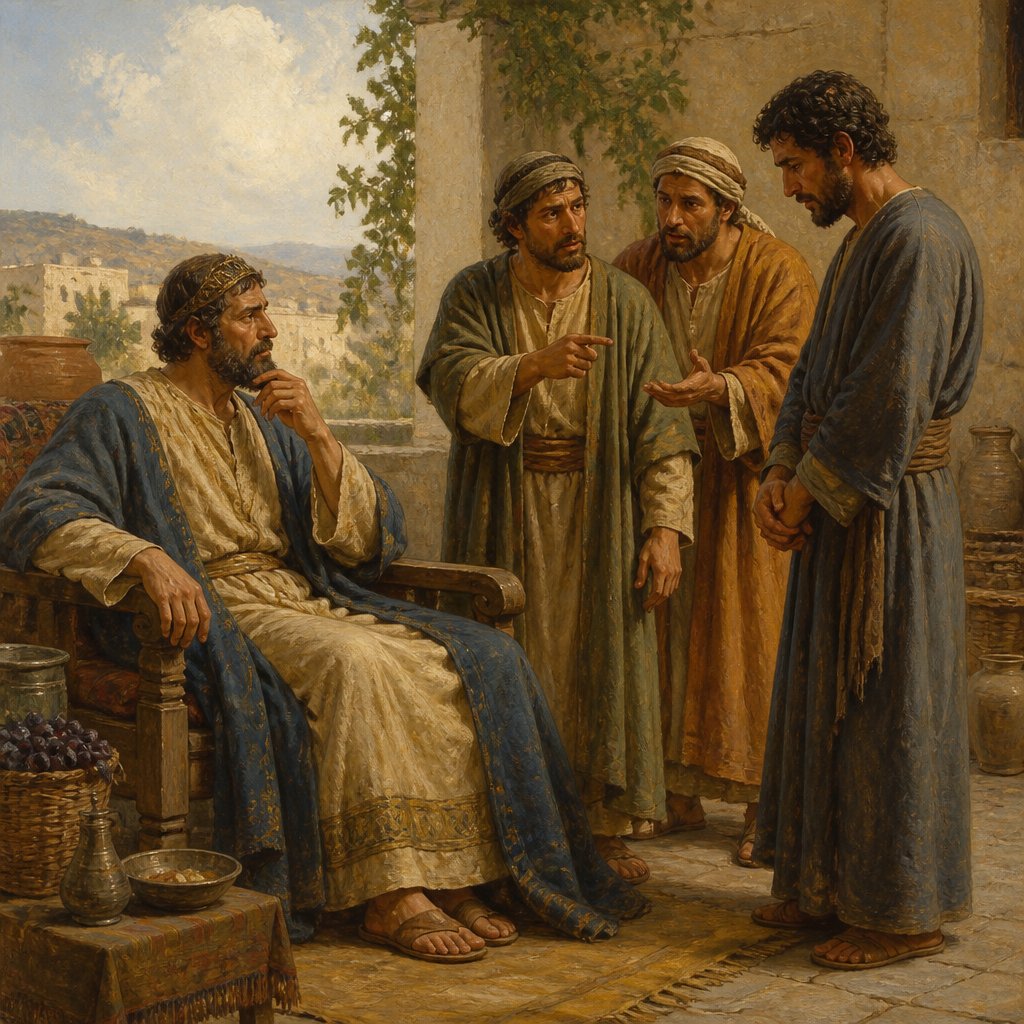
In the quiet moments of reflection, we often find ourselves wrestling with the weight of responsibility—the management of our lives, resources, and relationships. Luke 16:1 captures the essence of accountability and stewardship: "And he said also unto his disciples, There was a certain rich man, which had a steward; and the same was accused unto him that he had wasted his goods."
This parable, profound in its implications, unfolds within a context that Jesus speaks to His disciples, drawing them into a deeper understanding of their roles as stewards of the gifts and resources God has entrusted to them. The portrayal of the steward—a position of significant responsibility—invites us to examine our own stewardship in light of God’s expectations.
**The Position of the Steward**
In biblical times, to be a steward was to hold a position of privilege but also of great responsibility. A steward was entrusted with the household of another, managing resources that did not belong to him. This role is a reflective representation of our relationship with God as believers. As stewards of the grace, talents, time, and resources that God has bestowed upon us, we must remember that we are accountable to Him.
The steward in the parable was accused of wasting his master’s goods. This indictment speaks to a reality we must confront—many of us have at some point mismanaged the gifts we have received. The weight of this accusation compels us to ask profound questions of ourselves: Are we wasting our time on trivial pursuits? Are we squandering our finances on fleeting pleasures? Are we neglecting the relationships that God has placed in our lives?
**The Call to Accountability**
Jesus’ story draws our attention not only to the actions of the steward but also to the reality that there will be a day of accounting. The rich man, upon hearing the report of his steward's negligence, prepares to take action. This reminds us that in our lives, we too will have to account for how we have managed God's gifts.
In Romans 14:12, Paul writes, "So then every one of us shall give account of himself to God." The essence of accountability is woven throughout Scripture; we are continually reminded that our faith is not just a personal sanctification journey, but it compels us to live an outward life that honors God.
But as Christians, the grace we have in Christ assures us that we are not alone in this task. We are empowered by the Holy Spirit to be good stewards in every area of our lives. This brings us to the beautiful intersection of grace and responsibility, urging us towards diligent stewardship grounded in faith.
**Reflecting on Our Stewardship**
To walk in true stewardship, we must first recognize the nature of what we possess. Everything we have—our time, talents, finances, and relationships—are blessings from God. This attitude of gratitude shifts our perspective from ownership to stewardship. We must daily assess how we are utilizing these gifts.
Consider your time: Are you spending it in ways that glorify God and serve others? Reflect on your finances: Are you practicing good stewardship by budgeting and giving to those in need? Look at your talents: Are they being developed and used for the body of Christ?
**Conclusion**
As we dwell on this verse from Luke 16:1, let us remember that stewardship is an integral part of our faith. The life we lead is a precious gift, and how we manage that life will reflect our understanding of God’s grace. Let us rise to the challenge and be followers of Christ who take seriously the call to be faithful stewards. May we live in such a way that, at the end of our days, we can hear the words of our Master, "Well done, thou good and faithful servant." (Matthew 25:21)
In this light, may we not waste our goods, but wisely invest them in the Kingdom of God, knowing that our efforts will bear fruit that glorifies Him for eternity.
Get our apps


Artwork for Luke 16:1

Luke 16:1-13

Luke 16:1-1313

Luke 16:1-13

Luke 16:1-13

Luke 16:1 - "And he said also unto his disciples, There was a certain rich man, which had a steward; and the same was accused unto him that he had wasted his goods."
"And he said also unto his disciples, There was a certain rich man, which had a steward; and the same was accused unto him that he had wasted his goods." - Luke 16:1

Luke 16:1-8 - "Luke 16:1-8 Jesus told his disciples: "There was a rich man whose manager was accused of wasting his possessions. So he called him in and asked him, 'What is this I hear about you? Give an account of your management, because you cannot be manager any longer.' The manager said to himself, 'What shall I do now? My master is taking away my job. I'm not strong enough to dig, and I'm ashamed to beg-- I know what I'll do so that, when I lose my job here, people will welcome me into their houses.' So he called in each one of his master's debtors. He asked the first, 'How much do you owe my master?' 'Nine hundred gallons of olive oil,' he replied. The manager told him, 'Take your bill, sit down quickly, and make it four hundred and fifty.' Then he asked the second, 'And how much do you owe?' 'A thousand bushels of wheat,' he replied. He told him, 'Take your bill and make it eight hundred.' The master commended the dishonest manager because he had acted shrewdly. For the people of this world are more shrewd in dealing with their own kind than are the people of the light."
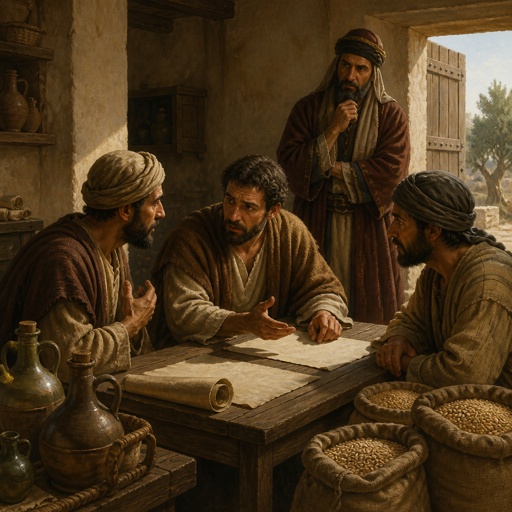
"Luke 16:1-8 Jesus told his disciples: "There was a rich man whose manager was accused of wasting his possessions. So he called him in and asked him, 'What is this I hear about you? Give an account of your management, because you cannot be manager any longer.' The manager said to himself, 'What shall I do now? My master is taking away my job. I'm not strong enough to dig, and I'm ashamed to beg-- I know what I'll do so that, when I lose my job here, people will welcome me into their houses.' So he called in each one of his master's debtors. He asked the first, 'How much do you owe my master?' 'Nine hundred gallons of olive oil,' he replied. The manager told him, 'Take your bill, sit down quickly, and make it four hundred and fifty.' Then he asked the second, 'And how much do you owe?' 'A thousand bushels of wheat,' he replied. He told him, 'Take your bill and make it eight hundred.' The master commended the dishonest manager because he had acted shrewdly. For the people of this world are more shrewd in dealing with their own kind than are the people of the light." - Luke 16:1-8

"Luke 16:1-13 Jesus told his disciples: “There was a rich man whose manager was accused of wasting his possessions. So he called him in and asked him, ‘What is this I hear about you? Give an account of your management, because you cannot be manager any longer.’ “The manager said to himself, ‘What shall I do now? My master is taking away my job. I’m not strong enough to dig, and I’m ashamed to beg— I know what I’ll do so that, when I lose my job here, people will welcome me into their houses.’ “So he called in each one of his master’s debtors. He asked the first, ‘How much do you owe my master?’ ‘Nine hundred gallons of olive oil,’ he replied. The manager told him, ‘Take your bill, sit down quickly, and make it four hundred and fifty.’ “Then he asked the second, ‘And how much do you owe?’ ‘A thousand bushels of wheat,’ he replied. He told him, ‘Take your bill and make it eight hundred.’ “The master commended the dishonest manager because he had acted shrewdly. For the people of this world are more shrewd in dealing with their own kind than are the people of the light. I tell you, use worldly wealth to gain friends for yourselves, so that when it is gone, you will be welcomed into eternal dwellings. “Whoever can be trusted with very little can also be trusted with much, and whoever is dishonest with very little will also be dishonest with much. So if you have not been trustworthy in handling worldly wealth, who will trust you with true riches? And if you have not been trustworthy with someone else’s property, who will give you property of your own? “No one can serve two masters. Either you will hate the one and love the other, or you will be devoted to the one and despise the other. You cannot serve both God and money.”" - Luke 16:1-13

Luke 16:1-13 - "Luke 16:1-13 Jesus told his disciples: “There was a rich man whose manager was accused of wasting his possessions. So he called him in and asked him, ‘What is this I hear about you? Give an account of your management, because you cannot be manager any longer.’ “The manager said to himself, ‘What shall I do now? My master is taking away my job. I’m not strong enough to dig, and I’m ashamed to beg— I know what I’ll do so that, when I lose my job here, people will welcome me into their houses.’ “So he called in each one of his master’s debtors. He asked the first, ‘How much do you owe my master?’ ‘Nine hundred gallons of olive oil,’ he replied. The manager told him, ‘Take your bill, sit down quickly, and make it four hundred and fifty.’ “Then he asked the second, ‘And how much do you owe?’ ‘A thousand bushels of wheat,’ he replied. He told him, ‘Take your bill and make it eight hundred.’ “The master commended the dishonest manager because he had acted shrewdly. For the people of this world are more shrewd in dealing with their own kind than are the people of the light. I tell you, use worldly wealth to gain friends for yourselves, so that when it is gone, you will be welcomed into eternal dwellings. “Whoever can be trusted with very little can also be trusted with much, and whoever is dishonest with very little will also be dishonest with much. So if you have not been trustworthy in handling worldly wealth, who will trust you with true riches? And if you have not been trustworthy with someone else’s property, who will give you property of your own? “No one can serve two masters. Either you will hate the one and love the other, or you will be devoted to the one and despise the other. You cannot serve both God and money.”"

Luke 1:16 - "And many of the children of Israel shall he turn to the Lord their God."

"And many of the children of Israel shall he turn to the Lord their God." - Luke 1:16

Luke 8:16

luke 4:16

Luke 16:22-26

Luke 2:16 - 21

Luke 16:16 - "The law and the prophets were until John: since that time the kingdom of God is preached, and every man presseth into it."

Luke 5:16 - "¶ And he withdrew himself into the wilderness, and prayed."

Luke 24:16 - "But their eyes were holden that they should not know him."

Luke 23:16 - "I will therefore chastise him, and release him."

Luke 11:16 - "And others, tempting him, sought of him a sign from heaven."

Luke 2:16 - "And they came with haste, and found Mary, and Joseph, and the babe lying in a manger."

Luke 6:16 - "And Judas the brother of James, and Judas Iscariot, which also was the traitor."

Luke 16:17 - "And it is easier for heaven and earth to pass, than one tittle of the law to fail."

Luke 16:20 - "And there was a certain beggar named Lazarus, which was laid at his gate, full of sores,"

Luke 16:14 - "And the Pharisees also, who were covetous, heard all these things: and they derided him."

Luke 19:16 - "Then came the first, saying, Lord, thy pound hath gained ten pounds."

Luke 17:16 - "And fell down on his face at his feet, giving him thanks: and he was a Samaritan."

Luke 14:16 - "Then said he unto him, A certain man made a great supper, and bade many:"

Luke 16:29 - "Abraham saith unto him, They have Moses and the prophets; let them hear them."