The Power of Witness: Hope Beyond the Grave
“And he said, Nay, father Abraham: but if one went unto them from the dead, they will repent.” — Luke 16:30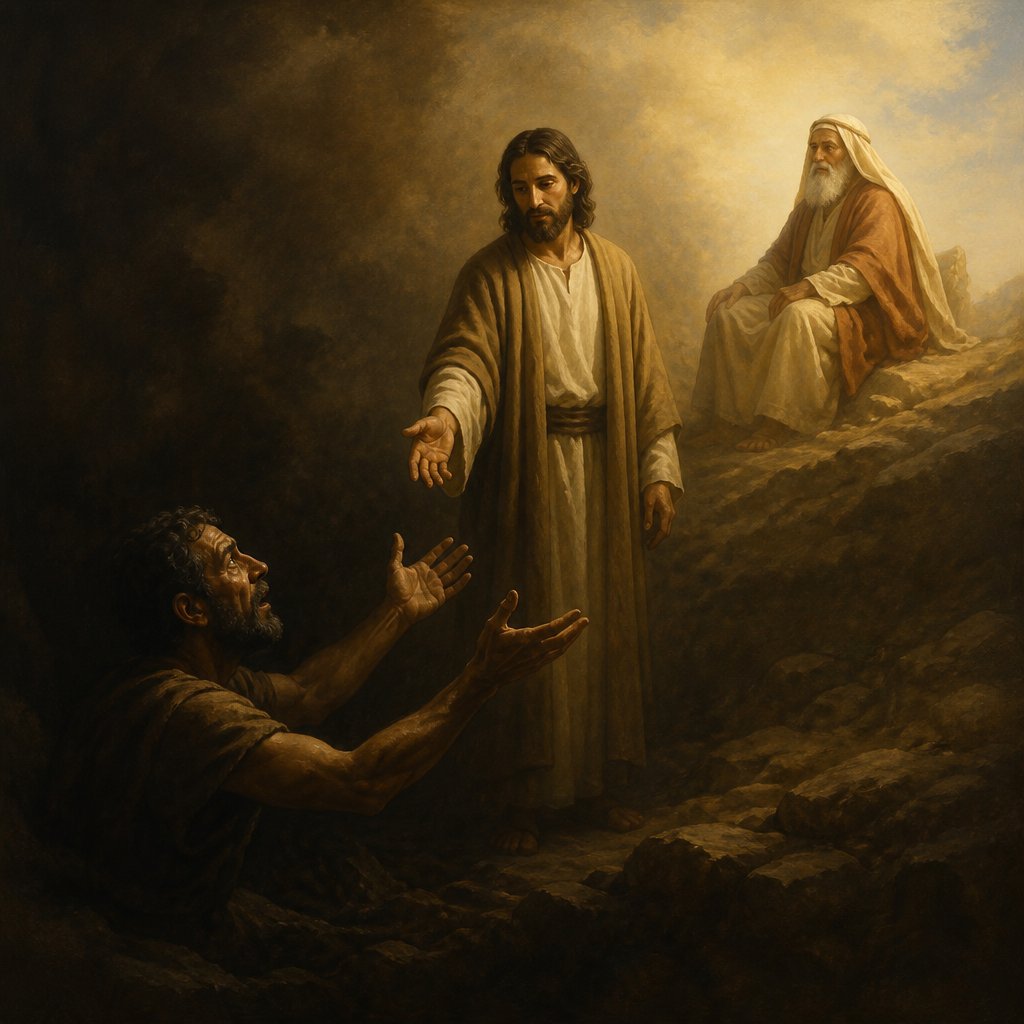
In Luke 16:30, we are presented with a poignant scene from the depths of Hades, a parable of eternal consequence: "And he said, Nay, father Abraham: but if one went unto them from the dead, they will repent." These words come from the lips of a rich man who, engulfed in eternal torment, pleads for a chance to influence those he left behind. His desperate assertion reveals the profound truth that there is a yearning within the human heart—a longing to be warned, to be guided, and ultimately, to be redeemed.
This verse speaks volumes about human nature, our tendency to seek physical evidence as a catalyst for faith. The rich man, once consumed by his earthly power and wealth, is now humbled by his circumstances. He believes that a miraculous appearance from someone resurrected from the dead would definitively convince his family to turn from their ways and repent. What follows is a startling essence of humanity: the persistent hope that extraordinary experiences could incite true belief.
However, this moment serves as a powerful reminder of the sufficiency of Scripture and the warnings that God has provided us through ordinary means. In the same chapter, Abraham responds to the rich man's plea, saying, "If they hear not Moses and the prophets, neither will they be persuaded, though one rose from the dead" (Luke 16:31). This statement intrinsically acknowledges that mere signs and wonders do not guarantee real transformation or repentance.
God has provided us with His Word as an instruction manual for life—a guide filled with the richness of truth, a source of conviction, and a fountain of hope. The Scriptures contain the stories and lessons delivered through faithful men of God who bore witness to His faithfulness. The challenge presented to us is to heed these messages. For many, the desire for a dramatic experience overshadows the importance of steadfast faith rooted in the Word of God.
The rich man's insistence highlights a common misconception; it assumes that knowledge gained through experience trumps the established truth. Yet, how often do we overlook the countless opportunities we have to witness the power of God through the mundane? Miracles may captivate our attention, but it is the consistency of faith lived out in everyday scenarios that ultimately points others to Christ. It is the unfolding testimony constructed by daily obedience that nudges wandering souls toward the Savior.
As you reflect on this verse, consider your own life—what does your testimony communicate about your faith? Are you sharing the Gospel with those around you, living as a beacon of hope in your community? The rich man's despair should ignite a sense of urgency within us. There are souls, perhaps in your family or circle of influence, who may be similarly unaware of their eternal standing before a holy God.
We live in a time where many seek signs and spectacular occurrences, and perhaps you too have longed for a 'sign' in your spiritual journey. While it is natural to desire memorable encounters, we must remind ourselves of the ultimate truth: the Gospel is our greatest sign. It is the death, burial, and resurrection of Jesus Christ that calls us to repentance. One does not need to wait for a supernatural event to convince them of God’s love; the atoning sacrifice of Christ is sufficient enough.
In conclusion, Luke 16:30 challenges us to recognize the importance of our roles in witnessing God's truth. As we lead others towards repentance, let us be diligent in sharing the Scriptures. Let us not imply that a miraculous encounter is needed for faith, for we have already been given the most profound miracle of all—salvation through Jesus Christ. Reflect today on the rich gift of faith that you possess. May your testimony echo beyond your lifespan, drawing hearts to repentance long after you have gone. Live your life as a living testimony, driven by the understanding that your simple faith could spark the divine curiosity of someone seeking the truth.
Get our apps


Artwork for Luke 16:30

Luke 16:30 - "And he said, Nay, father Abraham: but if one went unto them from the dead, they will repent."
"And he said, Nay, father Abraham: but if one went unto them from the dead, they will repent." - Luke 16:30

Luke 1:30

luke 9:30

luke 6:30

luke 9:29- 30

judges 16:30

african american luke 10:30

Luke 14:30 - "Saying, This man began to build, and was not able to finish."

Luke 2:30 - "For mine eyes have seen thy salvation,"
Luke 20:30 - "And the second took her to wife, and he died childless."

Luke 1:30 Gabriel visits Mary

Exodus 16:30 - "So the people rested on the seventh day."

Luke 17:30 - "Even thus shall it be in the day when the Son of man is revealed."

Luke 4:30 - "But he passing through the midst of them went his way,"

Luke 13:30 - "And, behold, there are last which shall be first, and there are first which shall be last."

Luke 23:30 - "Then shall they begin to say to the mountains, Fall on us; and to the hills, Cover us."

Luke 9:30 - "And, behold, there talked with him two men, which were Moses and Elias:"

Sampson's strength judges 16:30

Luke 7:30 - "But the Pharisees and lawyers rejected the counsel of God against themselves, being not baptized of him."

Luke 11:30 - "For as Jonas was a sign unto the Ninevites, so shall also the Son of man be to this generation."

Luke 8:16

luke 4:16

Luke 1:30 - "And the angel said unto her, Fear not, Mary: for thou hast found favour with God."

Luke 18:30 - "Who shall not receive manifold more in this present time, and in the world to come life everlasting."

Luke 16:1-13

Proverbs 30:16 - "The grave; and the barren womb; the earth that is not filled with water; and the fire that saith not, It is enough."

Luke 16:1-1313

Luke 16:22-26

Luke 16:1-13