The Challenge of Salvation: A Journey of Faith
“And they that heard it said, Who then can be saved?” — Luke 18:26
**Devotional: The Challenge of Salvation: A Journey of Faith**
When Jesus spoke the profound words in Luke 18:26, “And they that heard it said, Who then can be saved?” the gravity of the question echoed through the hearts of His listeners. This moment came right after Jesus had just expounded the difficulty for a rich man to enter the Kingdom of God, likening it to a camel passing through the eye of a needle. The disciples were astonished, grappling with the implications of His teaching on wealth and salvation.
The rich young ruler had approached Jesus with enthusiasm and an earnest heart. He inquired about eternal life, hoping to confirm his own goodness. Yet after Jesus pointed out the requirement to obey the commandments and ultimately asked him to sell all that he had, give to the poor, and follow Him, the ruler walked away sorrowful because he had great possessions. This incident sparked the disciples' incredulity—if a man who seemed so morally upright and blessed could not be saved, who then could?
This moment reveals an inherent struggle present in all humanity: the reliance on self and material possessions as indicators of worthiness. The rich man, like many of us, trusted in his wealth, social status, and adherence to the law. Jesus’ teachings shatter the illusion that success in the world guarantees favor in the Kingdom of God. His declaration about camels and needles serves not only as hyperbole but as a spiritual truth: the Kingdom operates under principles diametrically opposed to those of the earthly realm.
The disciples’ question, “Who then can be saved?” resonates deeply with our modern hearts. We often evaluate ourselves and our standing based on worldly criteria: Do we attend church regularly? Do we act morally? Do we give to charity? Yet, the central question must always be: what is the basis of our salvation? In that moment, Jesus challenged the very core of their faith—He illustrated that salvation is not by human effort but by divine grace.
In response to their confusion, Christ elaborates in verse 27, stating, “The things which are impossible with men are possible with God.” This assurance emblemizes the essence of the Gospel: salvation is not a commodity to be earned but a gift granted by the grace of God through faith in Jesus Christ. The salvific work undertaken by Christ on the cross covers our shortcomings and weaknesses.
Part of this faith journey includes a personal reckoning with our own spiritual poverty. Like the rich man, many of us may find ourselves resisting the call to let go of our possessions, our ideologies, and our control over our lives. Jesus beckons us to relinquish this illusion, calling us to trust Him above all else. It is only through denying ourselves, taking up our cross, and following Him that we can enter through the narrow gate leading to eternal life.
Thus, the question of “Who then can be saved?” does not simply point to the impossibility but illuminates the reality that salvation is offered freely. Regardless of our circumstances, backgrounds, or failures, we have the opportunity to turn toward Christ for rescue. We are called not to rely on our good works or status but to place our faith in Jesus' redemptive power.
As we meditate on this verse, let us engage in self-examination, humbly recognizing areas where we may clench tightly to the false security of this world. While the disciples grappled with what seemed an impossible notion, we have the privilege of clarity—the good news is for all. In repentance and submission to the Lord, we can rest assured that our salvation is entirely the work of God. May we continually reaffirm our trust in Him, who makes all things possible.
Get our apps


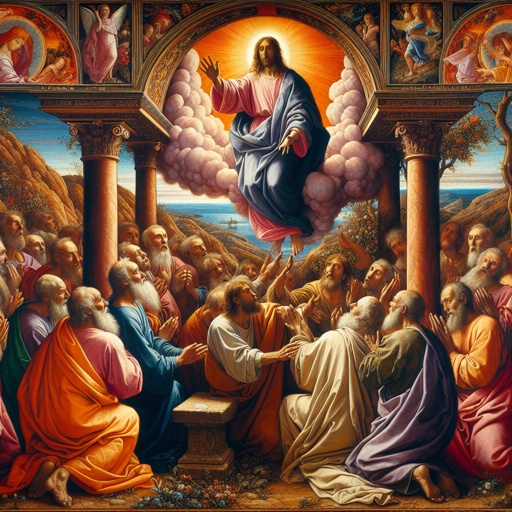
Artwork for Luke 18:26

Luke 18:26 - "And they that heard it said, Who then can be saved?"

"And they that heard it said, Who then can be saved?" - Luke 18:26

luke 1:26

luke 1:26

Luke 1:26

Luke 12:25-26

Luke 12:25-26

Luke 16:22-26

Luke 12:25-26

Luke 6:21-26

Luke 12:25-26

Genesis 18-26

Genesis 26:18
Luke 12:25-26

Luke 12:25-26

Luke 6:21-26

Luke 5:17-26

Luke 12:25-26

Luke 10:18-19

Luke 13:18-19

Luke 10:18-19

Luke 10:18-19

Luke 13:18-19

Luke 10:18-19

Luke 10:18-19

Luke 10:18-19

Joshua 18:26 - "And Mizpeh, and Chephirah, and Mozah,"

Luke 4:18

Luke 4:18

Luke 8:26 - "¶ And they arrived at the country of the Gadarenes, which is over against Galilee."