The Mockery of Love: Finding Christ in Suffering
“And the men that held Jesus mocked him, and smote him.” — Luke 22:63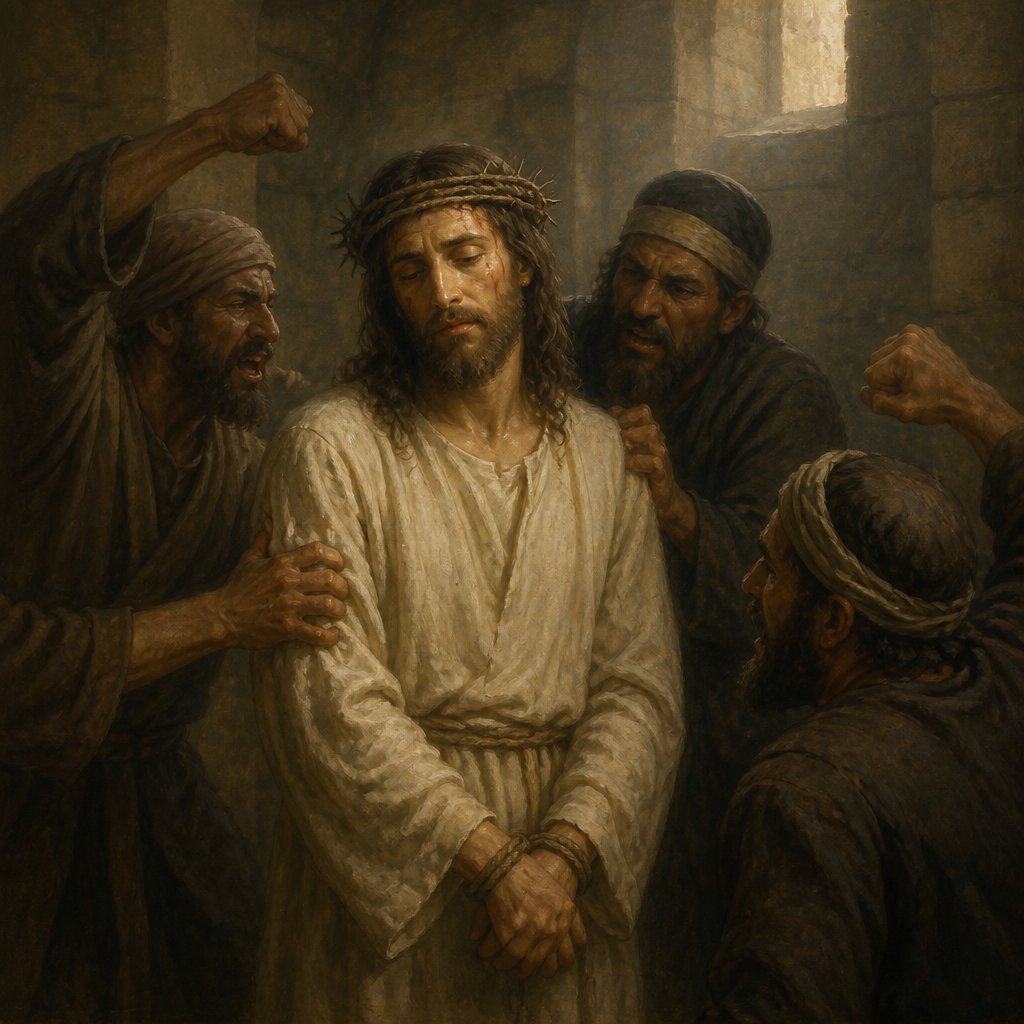
As we delve into the profound depths of Luke 22:63, we encounter a moment so crucial that it reverberates throughout history: "And the men that held Jesus mocked him, and smote him." This verse raises a multitude of emotional and theological reflections that demand our attention and contemplation. Here, the sinless Son of God, the very embodiment of love and mercy, is subjected to humiliation, physical violence, and mockery by men who utterly fail to grasp His divine nature and purpose.
Understanding the full weight of Christ’s suffering is essential for any believer striving to comprehend the nature of God’s love and our own human condition. In this dark moment, we see most vividly the stark contrast between the holiness of Jesus and the depravity of mankind. However, this account does more than merely record an event; it invites us into a deeper understanding of how we can respond to suffering, both His and our own.
First, let’s consider the context of this mockery. Jesus, who had performed miracles, preached love, and brought hope to the hopeless, stands trial for crimes He did not commit. The same people who declare Him a blasphemer are the ones who strike Him, laugh at Him, and belittle His authority. It is an excruciatingly cruel scenario—one that challenges our understanding of justice, righteousness, and the character of God. What is God up to in His silence? Why does He allow His Son to be treated with such disdain?
The mockery of Jesus reveals one of the most enduring truths of Christianity: Love can often lead to suffering. To follow Jesus is to embrace a path that might lead us into places of great pain. The mockers were driven by jealousy, insecurity, and a profound inability to recognize the Messiah. In our own lives, do we mock Christ when we dismiss His authority in our decisions and desires? How often do we turn away from His loving guidance, opting instead for the fleeting pleasures of this world, thereby effectively ridiculing the One who selflessly gave His life for us?
In the face of such suffering, we are compelled to ask: What does it mean to take up the cross, as Christ instructed? To bear our crosses and identify with Christ in His suffering is not merely to endure hardship—it is to reflect on the nature of sacrifice and redemption. Jesus endured such ridicule not only as an inevitable consequence of His mission but as a profound expression of divine love for humanity. He showed us that suffering has purpose; through it, God provides a way for humanity to be reconciled back to Him.
Furthermore, this mockery prompts us to evaluate our lives in light of the gospel. How do we respond to injustice either towards ourselves or others? The world may scoff at our faith, but let us remember, as we encounter our own trials, that Jesus stands beside us, having endured far worse for our sake. We are called to meet scorn and ridicule with grace and mercy, mirroring Christ’s heart even in our weakest moments.
As we reflect on Luke 22:63, let us move beyond simply recognizing the injustice faced by Savior. Let this moment serve as a powerful reminder of our own humanity. The mockery serves as a profound backdrop against which God’s love shines brightly. In a world that often mocks faith, we are charged to stand firm, bearing witness to the love that conquers all.
Lastly, amidst our meditations on this poignant moment of mockery and suffering, let us hold fast to gratitude for the cross—where mockery turned into forgiveness, and loss transformed into victory. In Jesus’ enduring love, we find our purpose and power to confront our own struggles with courage and faith. May we embody the message of hope and healing in our lives, reflecting the glory of Him who was mocked and scorned but ultimately triumphed in love.
Get our apps


Artwork for Luke 22:63

Luke 22:63 - "¶ And the men that held Jesus mocked him, and smote him."
"¶ And the men that held Jesus mocked him, and smote him." - Luke 22:63

Luke 1:63 - "And he asked for a writing table, and wrote, saying, His name is John. And they marvelled all."

"And he asked for a writing table, and wrote, saying, His name is John. And they marvelled all." - Luke 1:63

luke 22:42

Luke 22:39

Luke 22:61,62

Luke 22:39

luke 22 44
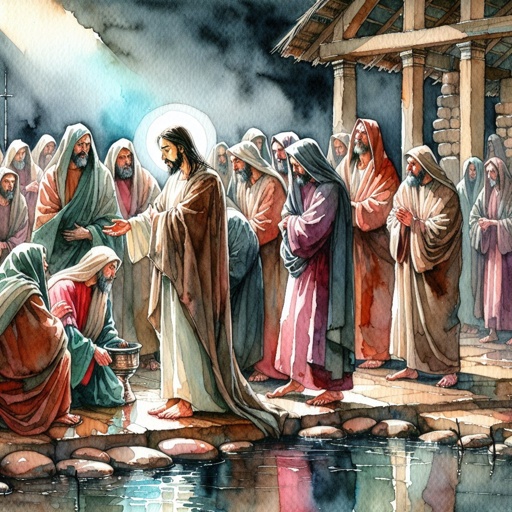
luke 22:42

Luke 22:42

Luke 16:22-26

Luke 22:62 - "And Peter went out, and wept bitterly."

Luke 20:22 - "Is it lawful for us to give tribute unto Caesar, or no?"

Luke 22:5 - "And they were glad, and covenanted to give him money."

Luke 22:28 - "Ye are they which have continued with me in my temptations."

Luke 22:65 - "And many other things blasphemously spake they against him."

Luke 22:31-32 - "Luke 22:31-32: And the Lord said, Simon, Simon, behold, Satan hath desired to have you, that he may sift you as wheat: But I have prayed for thee, that thy faith fail not: and when thou art converted, strengthen thy brethren."

Luke 22:21 - "¶ But, behold, the hand of him that betrayeth me is with me on the table."

Luke 22:43 - "And there appeared an angel unto him from heaven, strengthening him."

Luke 22:3 - "¶ Then entered Satan into Judas surnamed Iscariot, being of the number of the twelve."

Luke 22:57 - "And he denied him, saying, Woman, I know him not."

Luke 22:7 - "¶ Then came the day of unleavened bread, when the passover must be killed."

Luke 21:22 - "For these be the days of vengeance, that all things which are written may be fulfilled."

Luke 22:9 - "And they said unto him, Where wilt thou that we prepare?"

Luke 22:24 - "¶ And there was also a strife among them, which of them should be accounted the greatest."

Luke 22:69 - "Hereafter shall the Son of man sit on the right hand of the power of God."

Luke 22:14 - "And when the hour was come, he sat down, and the twelve apostles with him."

Luke 22:1 - "Now the feast of unleavened bread drew nigh, which is called the Passover."

Luke 13:22 - "And he went through the cities and villages, teaching, and journeying toward Jerusalem."