The Weight of Justice: Pilate’s Dilemma
“And Pilate, when he had called together the chief priests and the rulers and the people,” — Luke 23:13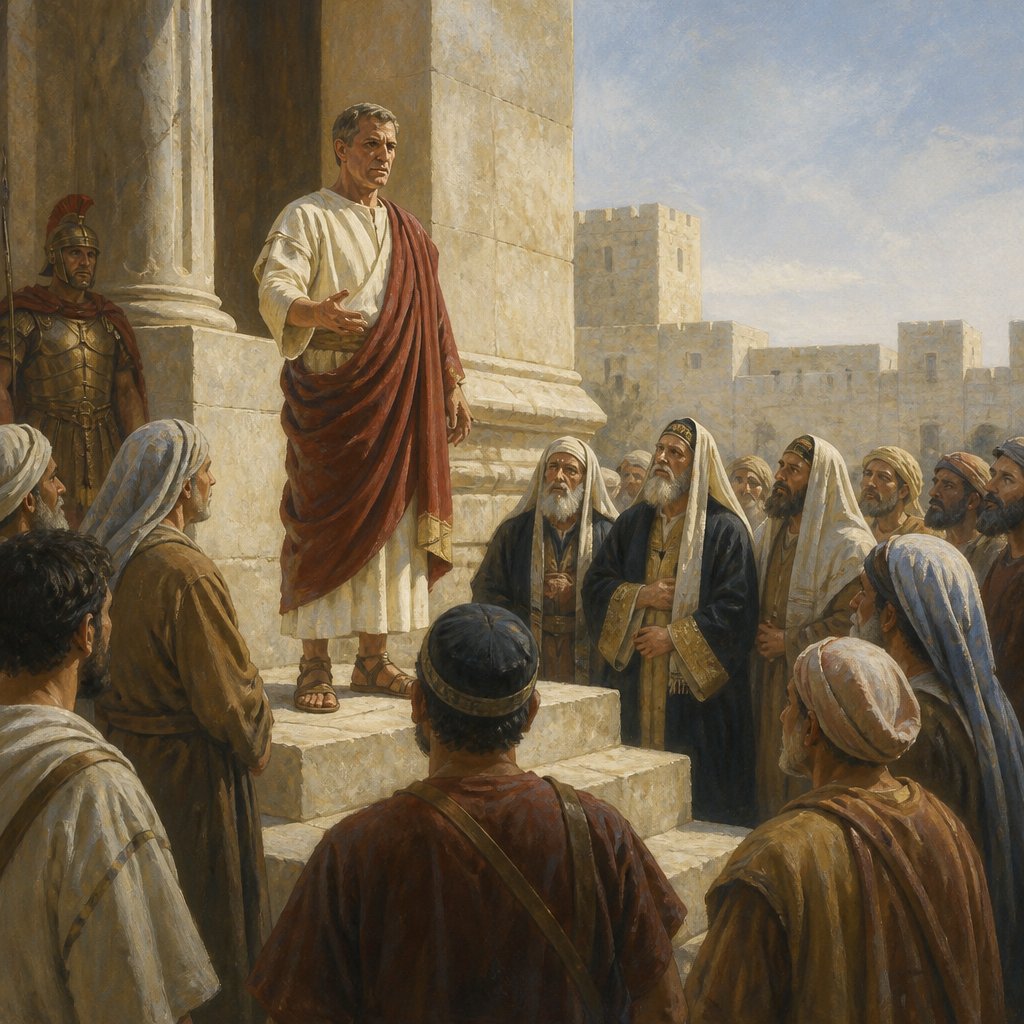
When we delve into Luke 23:13, we encounter one of the most pivotal moments in the narrative of Jesus’ trial: "And Pilate, when he had called together the chief priests and the rulers and the people," (KJV). This verse paints a picture of a conflicted leader at a crossroads, wrestling with the profound implications of justice, truth, and the weight of responsibility, a reflection mirrored in our own lives.
To set the context, we must understand the background of Pontius Pilate. He was the Roman governor of Judea, a position fraught with political tension and societal expectations. Pilate was caught in a precarious situation, tasked with maintaining order in a region simmering with unrest. He was a man of power but faced with the unexpected challenge brought forth by the religious leaders and the demands of the crowd seeking Jesus’ crucifixion. Herein lies the crux of Pilate’s dilemma: the conflict between public opinion and personal conviction.
As we reflect on this verse, several poignant lessons emerge concerning leadership, responsibility, and the quest for truth. Pilate called together the chief priests and rulers, perhaps hoping to unveil the truth and bring clarity to the situation. However, what unfolded was a cacophony of voices demanding the blood of an innocent man. This scene forces us to consider the pressures we may face in our own lives. How often do we allow the loud clamor of public opinion to drown out our own convictions? How frequently do we find ourselves in situations where we must choose between what is right and what is popular?
In the hearts of the chief priests and rulers, a deep-seated fear resided—they feared losing their influence and authority over the people. This fear led them not only to manipulate the truth but also to orchestrate the execution of their own Messiah. Their actions suggest a sobering truth: fear can lead to complicity in injustice. When we, too, succumb to fear, we may find ourselves endorsing actions and decisions that contradict our values, leaving our conscience troubled and our integrity compromised.
The crowd, fuelled by a desire for spectacle and influenced by the fervent cries, chanted for the release of Barabbas, a criminal, instead of Jesus—the innocent Lamb. Here, we see a stark contrast between righteousness and the depravity of the human heart. It serves as a warning to us today. The mob mentality persists, urging us to conform rather than confront the hard truths of our faith. We must ask ourselves: are we followers of Christ who stand on solid ground, or do we sway with the currents of convenience?
Pilate's vulnerability is tangible as he faces the crowd and the weight of his office. He knows Jesus is innocent. He is aware of the intricate political games being played. Yet, his fear of losing power and his desire for self-preservation compel him to play a dangerous game of appeasement. This reality leads us to an essential realization: the fear of man can lead us to deny our formidable call to speak and act according to God’s truth.
As faithful believers, we are encouraged to stand firm in our convictions, unashamed of the Gospel, and unwavering in our pursuit of justice. We must remember that at times when we encounter pressure to compromise, there is a Sovereign God who holds the ultimate authority. Pilate’s failure ultimately resulted in Jesus’ crucifixion, but it also ushered in redemption for humankind. In our trials and quandaries, we must cling to the hope that God can weave our failures into His divine tapestry of grace.
In conclusion, let us seek to emulate the courage of Christ in our own lives. May we discern the voices calling us towards fear and injustice, allowing God's truth to illuminate our paths. Let us turn to God in prayer, asking for His strength to stand firm as we encounter our own temptations, filling our spirits with the knowledge that our role is not just to please the crowds but to seek the heart of God. When challenged by the loud voices around us, let us respond with the quiet confidence of our faith in Christ, the true King who personally bore the weight of our sins, offering us eternal hope.
Get our apps


Artwork for Luke 23:13
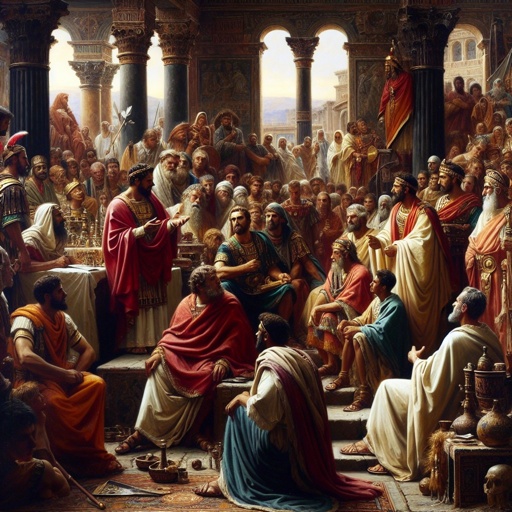
Luke 23:13 - "¶ And Pilate, when he had called together the chief priests and the rulers and the people,"
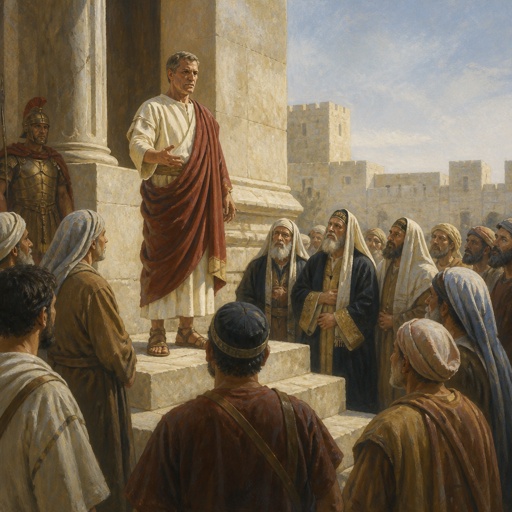
"¶ And Pilate, when he had called together the chief priests and the rulers and the people," - Luke 23:13

Luke 13:23 - "Then said one unto him, Lord, are there few that be saved? And he said unto them,"
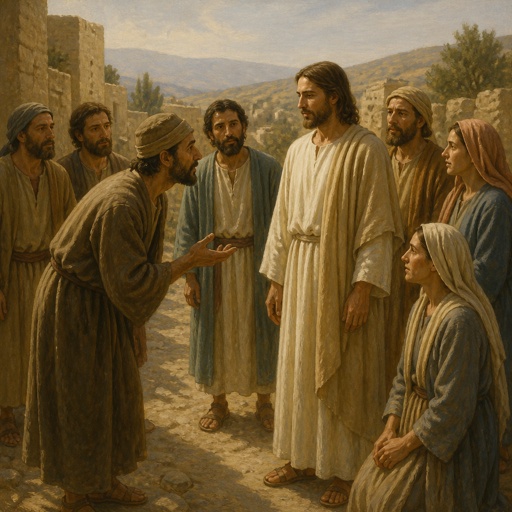
"Then said one unto him, Lord, are there few that be saved? And he said unto them," - Luke 13:23

Luke 23:53

Luke 19:23

luke 11:23

Luke 19:23

luke 11:23
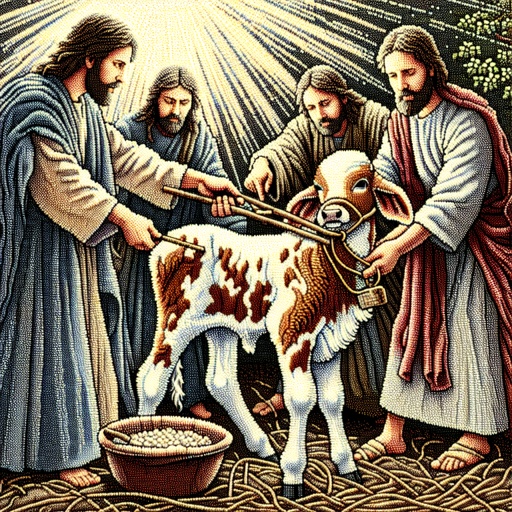
Luke 15:23

luke 11:23

luke 11:23

Luke 23:54 - "And that day was the preparation, and the sabbath drew on."

Luke 23:23 - "And they were instant with loud voices, requiring that he might be crucified. And the voices of them and of the chief priests prevailed."

Luke 13:18-19

Luke 13:20-21

Luke 13:20-21

Luke 13:18-19
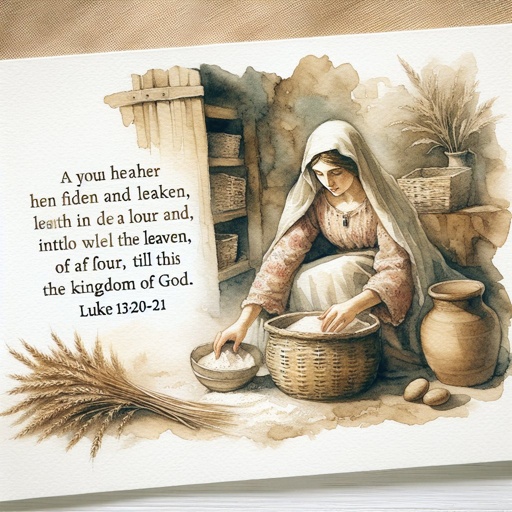
Luke 13:20-21

Luke 13:20-21

Luke 13:20-21

Luke 23:24 - "And Pilate gave sentence that it should be as they required."

Jeremiah 13:23

Genesis 23-13

Luke 1:13

Luke 1:13

Luke 8:13

Luke 13:24

Luke 8:13

Luke 1:13