What does Luke 23:13 mean?
“And Pilate, when he had called together the chief priests and the rulers and the people,” — Luke 23:13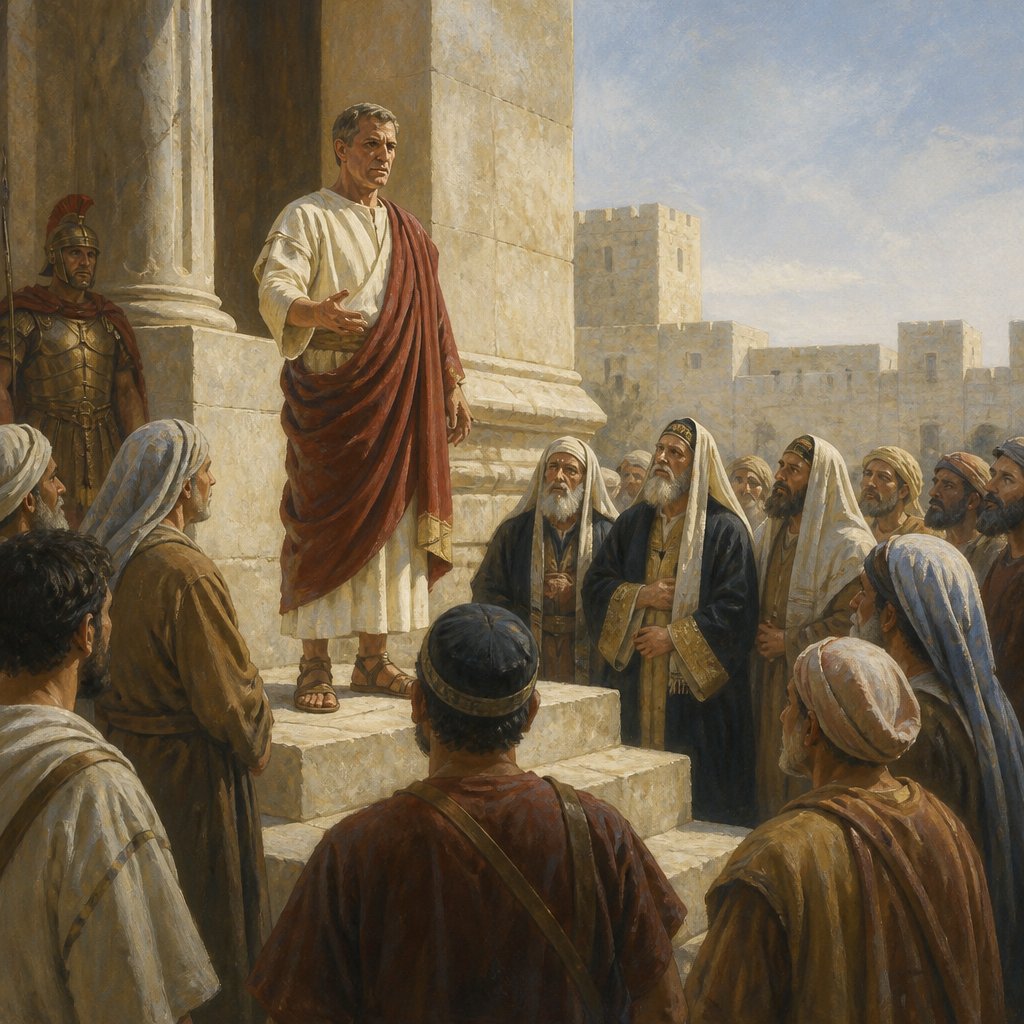
The Bible verse Luke 23:13 from the King James Version (KJV) reads, "And Pilate, when he had called together the chief priests and the rulers and the people, said unto them, Ye have brought this man unto me, as one that perverteth the people: and, behold, I, having examined him before you, have found no fault in this man touching those things whereof ye accuse him."
This verse is part of the larger narrative of the trial and crucifixion of Jesus Christ. In this particular verse, Pontius Pilate, the Roman governor, is addressing the chief priests, rulers, and people regarding the accusations against Jesus. Pilate states that he has found no fault in Jesus regarding the charges brought against him. This statement sets the stage for the events that will unfold, ultimately leading to Jesus' crucifixion.
The context of this verse is critical to understanding its meaning. At the time of Jesus' arrest and trial, the religious leaders, particularly the chief priests, were intent on having Jesus executed. They saw him as a threat to their own authority and the stability of their religious establishment. They accused Jesus of blasphemy and insurrection against the Roman Empire, both of which were serious charges in that time and place.
Pilate, as the Roman governor, had the authority to make the final decision in Jesus' case. However, he was in a difficult position. On one hand, he had to maintain order and keep the peace in the region. On the other hand, he did not want to be seen as unjust or unfair in his decisions. This verse shows Pilate's attempt to appease the religious leaders while also asserting his own assessment of Jesus' innocence.
The themes in this verse are multifaceted. One of the most prominent themes is the conflict between religious and secular authority. The chief priests and the rulers represent the religious establishment, while Pilate represents the secular, Roman authority. This conflict underscores the tension between earthly power and divine authority, a theme that runs throughout the entire Bible.
Another theme is the idea of innocence and guilt. Pilate's declaration that he found no fault in Jesus highlights the injustice of Jesus' impending crucifixion. This theme is central to the Christian faith, as it speaks to the sacrificial nature of Jesus' death and the forgiveness of sin.
Symbolism in this verse can be seen in the character of Pontius Pilate. Some theologians interpret Pilate as a symbol of moral ambiguity and the human struggle to make difficult decisions. His vacillation and attempts to appease both the religious leaders and the people show the complexities of human nature and the challenges of upholding justice in a fallen world.
In conclusion, the Bible verse Luke 23:13 from the King James Version is a crucial piece of the narrative of Jesus' trial and crucifixion. Its themes of religious and secular authority, innocence and guilt, and the symbolism of Pontius Pilate all contribute to its rich and profound meaning. This verse serves as a reminder of the complexities of human nature and the ultimate sacrifice made by Jesus for the forgiveness of sin.
Get our apps


Artwork for Luke 23:13
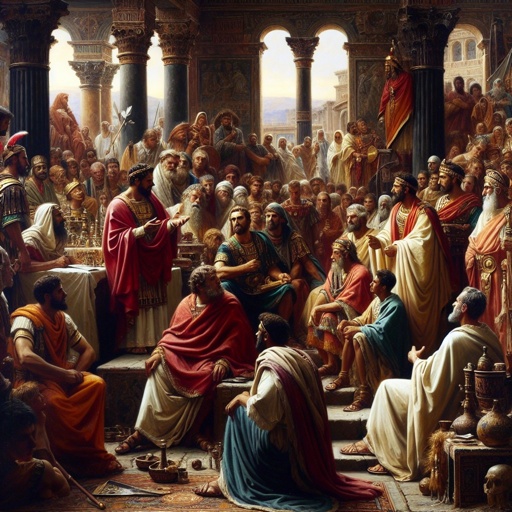
Luke 23:13 - "¶ And Pilate, when he had called together the chief priests and the rulers and the people,"
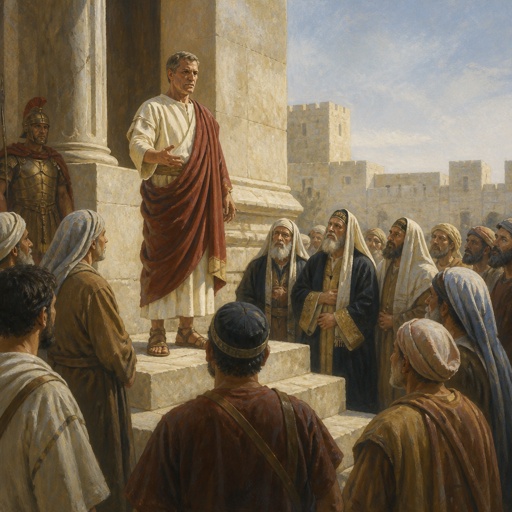
"¶ And Pilate, when he had called together the chief priests and the rulers and the people," - Luke 23:13

Luke 13:23 - "Then said one unto him, Lord, are there few that be saved? And he said unto them,"

"Then said one unto him, Lord, are there few that be saved? And he said unto them," - Luke 13:23

Luke 23:53

Luke 19:23

luke 11:23

Luke 19:23

luke 11:23

Luke 15:23

luke 11:23

luke 11:23

Luke 23:54 - "And that day was the preparation, and the sabbath drew on."

Luke 23:23 - "And they were instant with loud voices, requiring that he might be crucified. And the voices of them and of the chief priests prevailed."

Luke 13:18-19

Luke 13:20-21

Luke 13:20-21

Luke 13:18-19
Luke 13:20-21

Luke 13:20-21

Luke 13:20-21

Luke 23:24 - "And Pilate gave sentence that it should be as they required."

Jeremiah 13:23

Genesis 23-13

Luke 1:13

Luke 1:13

Luke 8:13

Luke 13:24

Luke 8:13

Luke 1:13