The Heart of True Worship: Lessons from the Sinful Woman
“And, behold, a woman in the city, which was a sinner, when she knew that Jesus sat at meat in the Pharisee’s house, brought an alabaster box of ointment, And stood at his feet behind him weeping, and began to wash his feet with tears, and did wipe them with the hairs of her head, and kissed his feet, and anointed them with the ointment.” — Luke 7:37-38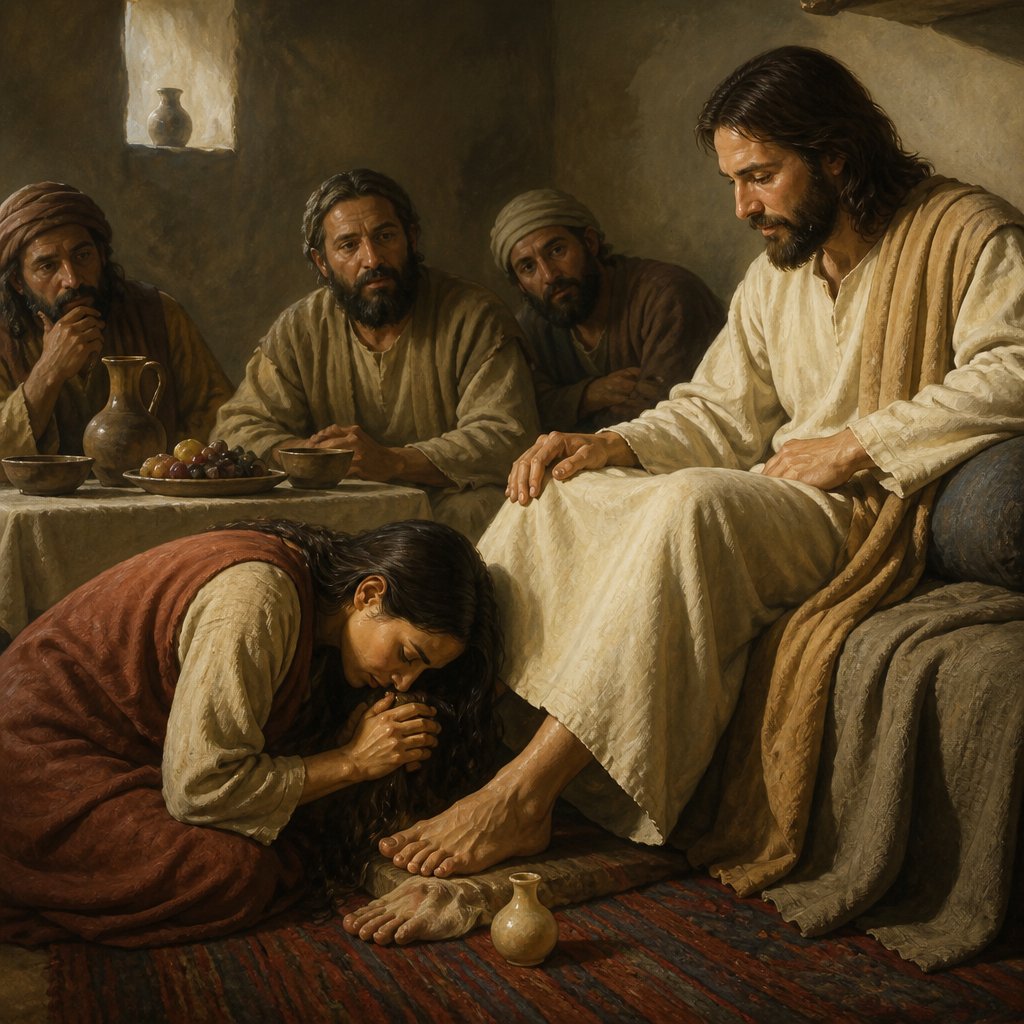
In the Gospel of Luke, chapter 7, we encounter a profound encounter between Jesus and a woman labeled as a sinner. The narrative unfolds in a Pharisee's house, where Jesus is dining. The text reads: "And, behold, a woman in the city, which was a sinner, when she knew that Jesus sat at meat in the Pharisee's house, brought an alabaster box of ointment, And stood at his feet behind him weeping, and began to wash his feet with tears, and did wipe them with the hairs of her head, and kissed his feet, and anointed them with the ointment" (Luke 7:37-38, KJV).
This passage invites us into a moment of heartfelt worship, marking a stark contrast between spiritual posturing and genuine humility. The woman’s actions reveal what it means to encounter Jesus authentically. Despite societal condemnation, she recognizes an opportunity to express her profound gratitude and repentance.
**The Courage of the Broken**
The woman approaches Jesus without hesitation. In a space where she was likely unwelcome and judged, her courage is commendable. She does not shy away due to her reputation; instead, her brokenness drives her toward Jesus. This act of approaching Him highlights a vital truth: no one is beyond the reach of grace.
It challenges us to reflect on what holds us back from coming to Jesus. Unlike the Pharisee, who sits in judgment of others, this woman is acutely aware of her shortcomings and desperately desires a fresh start. She teaches us that the first step toward healing and restoration is the courage to confront our sinfulness honestly.
**A Demonstration of Humility**
Her actions serve as a profound demonstration of humility. She stands behind Jesus, weeping, using her tears to wash His feet. In ancient cultures, washing the feet of a guest was a task assigned to the lowest servant. Yet, here a sinner takes on this humble role. In her heart, she recognizes Jesus for who He is—her Lord and Savior.
In this moment, she relinquishes all pride, shedding societal norms in pursuit of something far greater: redemption.
This teaches us a vital lesson—that true worship cannot be performed from a place of arrogance or pride. It requires us to be humble, acknowledging our faults and our need for God’s mercy.
**Kissed by Grace**
The woman continues with her worship by kissing Jesus' feet. Kissing is an intimate act, signifying deep respect and love. This symbolic gesture reflects her reverence for Jesus and her understanding of what He represents in her life. She's not merely seeking forgiveness; she is embracing the relationship that comes from knowing Him.
Her actions beckon us to ask ourselves: Do we approach Jesus in such reverence? Do we express our love and gratitude for the grace He extends, or do we take it for granted? The kiss serves as a reminder that worship is not just an act but an intimacy with God that should flow from our hearts.
**Anointed by a Gift**
Finally, we notice that she brought an alabaster box of ointment, a precious possession meant for worship. It signifies her complete surrender—not just of her sin but of her very self. By anointing Jesus’ feet, she recognizes His worthiness of her best offering. What do we bring to Jesus in our acts of worship?
True worship involves giving our best, be it our time, resources, or love, as a tribute to the Savior who gave His all.
In conclusion, the encounter between the sinful woman and Jesus reminds us of the path to true worship. It is a journey marked by humility, love, and surrender. When we come to Jesus with a heart of repentance, recognizing our need for His grace, we are met with mercy and acceptance. Let us not shy away from bringing our brokenness to Him but rather, embrace the transformative power of a life laid bare before our Savior. In doing so, we find not only forgiveness but also a deeper relationship with the One who loves us unconditionally.
Get our apps


Artwork for Luke 7:37-38

Luke 7:37-38 - "And behold, a woman in the city who was a sinner, when she knew that Jesus was sitting at the table in the Pharisee's house, brought an alabaster flask of fragrant oil, and stood at His feet behind Him weeping; and she began to wash His feet with her tears, and wiped them with the hair of her head; and she kissed His feet and anointed them with the fragrant oil."
"And behold, a woman in the city who was a sinner, when she knew that Jesus was sitting at the table in the Pharisee's house, brought an alabaster flask of fragrant oil, and stood at His feet behind Him weeping; and she began to wash His feet with her tears, and wiped them with the hair of her head; and she kissed His feet and anointed them with the fragrant oil." - Luke 7:37-38

Matthew 9:37-38

Luke 7:37 - "And, behold, a woman in the city, which was a sinner, when she knew that Jesus sat at meat in the Pharisee's house, brought an alabaster box of ointment,"

John 7:37-38 - "On the last and greatest day of the festival, Jesus stood and said in a loud voice, “Let anyone who is thirsty come to me and drink. Whoever believes in me, as Scripture has said, rivers of living water will flow from within them.”"

Psalms 37:38 - "But the transgressors shall be destroyed together: the end of the wicked shall be cut off."

Luke 7:38 - "And stood at his feet behind him weeping, and began to wash his feet with tears, and did wipe them with the hairs of her head, and kissed his feet, and anointed them with the ointment."

Job 38:37 - "Who can number the clouds in wisdom? or who can stay the bottles of heaven,"

Luke 2:37

Luke 2:37

Luke 2:37

Luke 2:37

Luke 2:37

Luke 6:27-38

Luke (1:37) For nothing will be impossible with God.”

Luke (1:37) For nothing will be impossible with God.”

Luke (1:37) For nothing will be impossible with God.”

Luke (1:37) For nothing will be impossible with God.”

Luke (1:37) For nothing will be impossible with God.”

Luke (1:37) For nothing will be impossible with God.”

Luke (1:37) For nothing will be impossible with God.”

Luke (1:37) For nothing will be impossible with God.”

Luke 6: 27-38

Luke (1:37) For nothing will be impossible with God.”

Luke (1:37) For nothing will be impossible with God.”

Luke (1:37) For nothing will be impossible with God.”

Luke (1:37) For nothing will be impossible with God.”

Luke (1:37) For nothing will be impossible with God.”

Luke (1:37) For nothing will be impossible with God.”

Luke (1:37) For nothing will be impossible with God.”