A Legacy of Faith and Generosity
“For he loveth our nation, and he hath built us a synagogue.” — Luke 7:5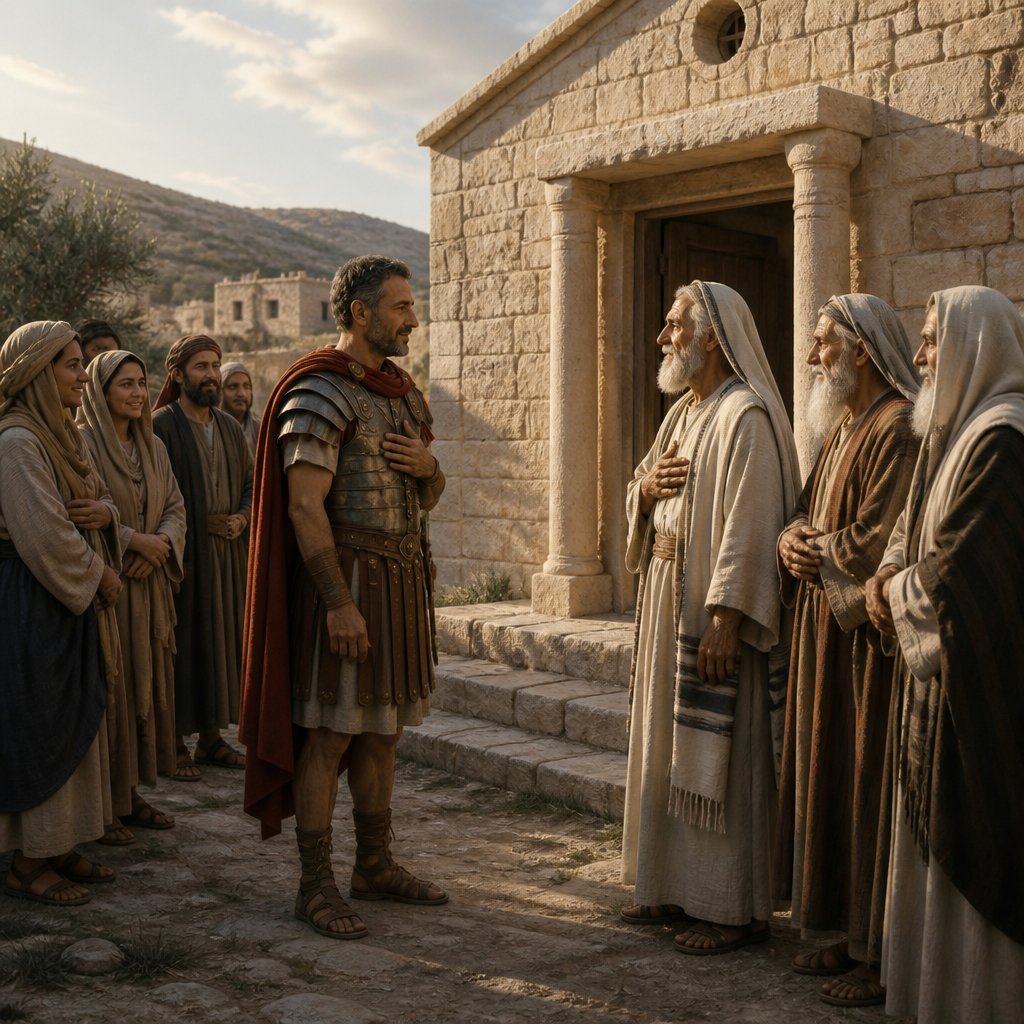
In Luke 7:5, we read, "For he loveth our nation, and he hath built us a synagogue." This powerful verse encapsulates a true testament to the character of a centurion whose actions spoke volumes about his faith and love for the Jewish people, despite being a Roman soldier. This verse opens up a profound discussion on how our actions can reflect our love and commitment to God and His people.
The centurion in this passage is a remarkable figure. He is a Gentile who defies the societal norms of his time by holding an affection for the Jewish nation and a reverence for their customs and God. In the context of first-century Judea, a Roman centurion would generally be viewed as a figure of oppression to the Jewish people; yet, this man chooses a different path. He builds a synagogue, a place of worship, not out of obligation or expectation of reward, but from a deep and genuine respect for the Jewish faith and people.
What prompts an outsider to act in such a manner? It highlights a foundational principle embedded in the heart of God: love transcends boundaries. This man's love for a nation that is not his own is a reflection of God's own heart for all peoples. Just as God demonstrated His immeasurable love through the gift of His Son, Jesus Christ, this centurion also embodies what it means to truly love by serving and supporting those around him.
The act of building a synagogue represented the deep commitment this centurion had toward the people of God. It was not merely a structure made of wood and stone; it was a sacred place of worship, a community gathering point, and a hub of spiritual life. By investing his resources to build a synagogue, he was aligning himself with God’s purposes within the nation he genuinely admired and respected. This invites us to reflect on our own lives: how are we investing our time, resources, and love into building up the body of Christ? Are we creating spaces that welcome others and nurture faith?
Moreover, this centurion’s actions serve as an important reminder that faith can emerge from unexpected places. The man was not a Pharisee or a rabbi; he was a soldier, a pagan by birth, yet his belief in God was genuine. This enhances our understanding that God’s grace can draw anyone to Himself, regardless of their background or societal status. It opens the door for us to recognize faith that exists in unlikely individuals, and challenges us to keep our hearts open to what God can do through them.
In addition to the personal dedication of the centurion, this verse underscores a communal aspect of faith. The Jewish leaders who came to speak on behalf of the centurion refer to his deeds, saying, "he loveth our nation." His actions impacted the community as a whole. It prompts us to consider how our individual acts of kindness and generosity can have widespread implications. In a world increasingly divided by various barriers, acts of service and love serve to unify and reflect the true message of the Gospel.
As we contemplate Luke 7:5, let us ask ourselves: How are we loving those around us? Are we willing to step outside of our comfort zones to serve others—not just those who believe as we do, but all of humanity? How can our actions create a legacy of love and faith in our communities, much like the centurion whose legacy is recorded in Scripture?
In closing, let us pray for courage to show love in tangible ways, and for hearts that break for the things that God’s heart breaks for. May we strive to be like the centurion, recognizing our role within our wider community to build, support, and care for the body of Christ. In doing so, we honor God and reflect His love in our actions.
Get our apps


Artwork for Luke 7:5

Luke 7:5 - "For he loveth our nation, and he hath built us a synagogue."
"For he loveth our nation, and he hath built us a synagogue." - Luke 7:5

Luke 5:7 - "And they beckoned unto their partners, which were in the other ship, that they should come and help them. And they came, and filled both the ships, so that they began to sink."

luke 5:5

Luke 10:5

Luke 10:5

Luke 10:5

Luke 5:36

Luke 5:39

Luke 7:33

Luke 7:50

Luke 7:50

Luke 7:36-50

Luke 8:5-8

Luke 5:1-11

Luke 5:17-26

Luke 5:1-11

luke 21:5-19

Luke 7:41-47

Luke 15: 4-7

Luke 7:36–50

Luke 20:7 - "And they answered, that they could not tell whence it was."

Luke 5:16 - "¶ And he withdrew himself into the wilderness, and prayed."

Luke 7:35 - "But wisdom is justified of all her children."

Luke 22:5 - "And they were glad, and covenanted to give him money."

Luke 5:32 - "I came not to call the righteous, but sinners to repentance."
Luke 7:18 - "And the disciples of John shewed him of all these things."

Luke 7:23 - "And blessed is he, whosoever shall not be offended in me."

Luke 7:7 - "Wherefore neither thought I myself worthy to come unto thee: but say in a word, and my servant shall be healed."

Luke 5:28 - "And he left all, rose up, and followed him."