What does Luke 7:5 mean?
“For he loveth our nation, and he hath built us a synagogue.” — Luke 7:5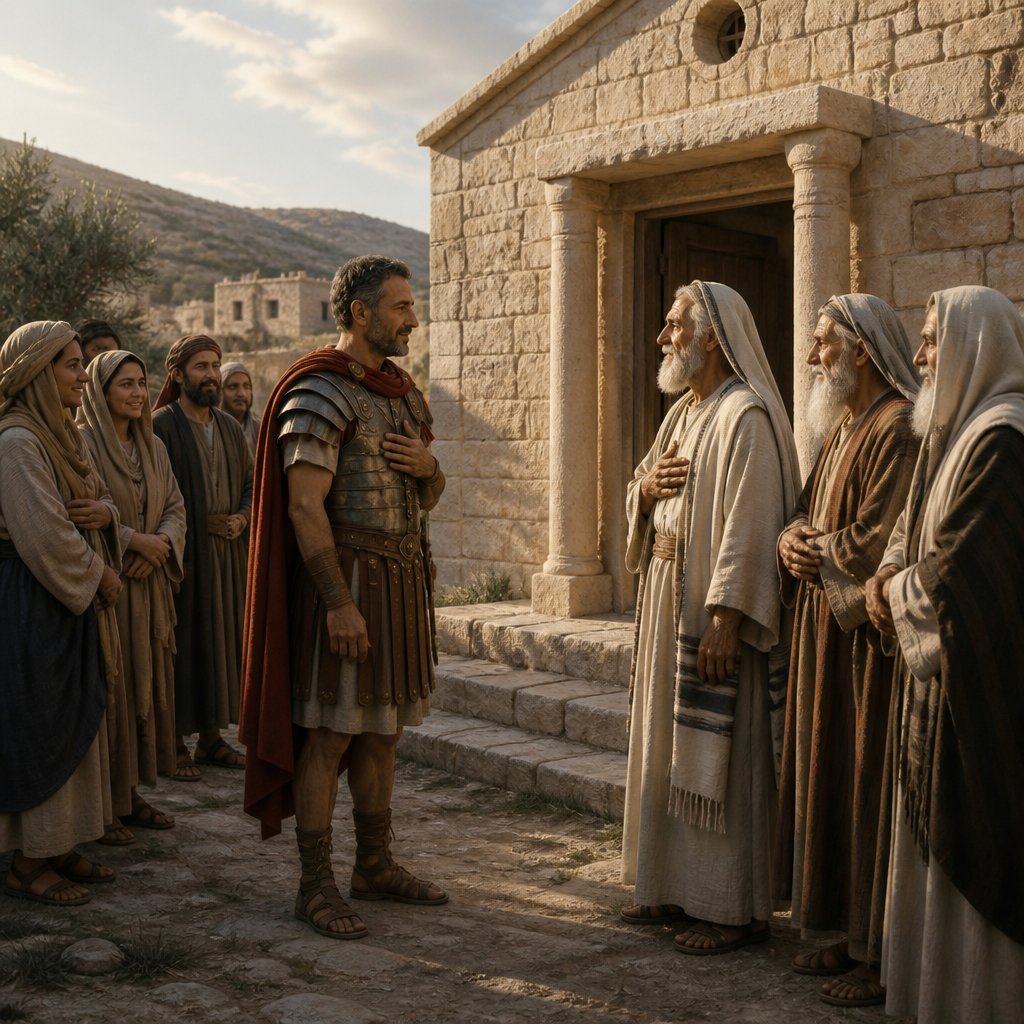
Luke 7:5 in the King James Version of the Bible reads: "For he loveth our nation, and he hath built us a synagogue."
This verse comes from the account of Jesus healing the servant of a centurion in the town of Capernaum. The centurion, a Roman officer, sends Jewish elders to Jesus to ask for his help in healing his beloved servant, whom he holds in high regard. The elders plead with Jesus, saying that the centurion is worthy of his help because "he loveth our nation, and he hath built us a synagogue."
This verse reveals a profound truth about the nature of faith and compassion, and it touches on several important themes found throughout the Bible. One of the central themes in this verse is the power of love and compassion to transcend cultural and religious boundaries. Although the centurion is a Roman, a member of the occupying force, and he is not a Jew, he still shows deep love and care for the Jewish people. He has even gone so far as to build them a place of worship, a synagogue. This act of generosity and compassion on the part of the centurion demonstrates a love that exceeds the bounds imposed by religious and social divisions.
Furthermore, this verse also speaks to the idea of humility and the recognition of one's own unworthiness before God. The centurion, a man of authority and power, humbly approaches Jesus for help, recognizing his own limitations and the need for a higher power to intervene. This act of humility is in stark contrast to the cultural norms of the time, where men of authority were expected to assert their status and power. The centurion's willingness to set aside his own pride and seek help from Jesus illustrates the Christian principle of humility and reliance on God.
The building of the synagogue by the centurion also symbolizes the idea of unity and cooperation among different groups of people. In a time of political and religious tension, the centurion's act of building a place of worship for the Jewish community shows a willingness to work together and bridge the gap between different cultural and religious groups. This can be seen as a foreshadowing of the inclusive nature of the Christian faith, which seeks to bring together people from all walks of life and backgrounds under the banner of love and compassion.
In a broader context, this verse also speaks to the overarching message of the Gospel, which is the universal love and care that God has for all people, regardless of their background or status. The centurion's actions and Jesus' response to them demonstrate the power of love and faith to transcend societal norms and cultural barriers. It is a reminder that God's love knows no bounds and that His compassion is available to all who seek it.
Overall, Luke 7:5 is a powerful and poignant verse that speaks to the themes of love, compassion, humility, and unity. It serves as a reminder of the transformative power of faith and the universal nature of God's love for all people. The account of the centurion's plea for his servant's healing serves as a timeless example of the kind of faith that Jesus commends and the type of love that He desires for His followers to emulate.
Get our apps


Artwork for Luke 7:5

Luke 7:5 - "For he loveth our nation, and he hath built us a synagogue."
"For he loveth our nation, and he hath built us a synagogue." - Luke 7:5

Luke 5:7 - "And they beckoned unto their partners, which were in the other ship, that they should come and help them. And they came, and filled both the ships, so that they began to sink."

luke 5:5

Luke 10:5

Luke 10:5

Luke 10:5

Luke 5:36

Luke 5:39

Luke 7:33

Luke 7:50

Luke 7:50

Luke 7:36-50

Luke 8:5-8

Luke 5:1-11

Luke 5:17-26

Luke 5:1-11

luke 21:5-19

Luke 7:41-47

Luke 15: 4-7

Luke 7:36–50

Luke 20:7 - "And they answered, that they could not tell whence it was."

Luke 5:16 - "¶ And he withdrew himself into the wilderness, and prayed."

Luke 7:35 - "But wisdom is justified of all her children."

Luke 22:5 - "And they were glad, and covenanted to give him money."

Luke 5:32 - "I came not to call the righteous, but sinners to repentance."

Luke 7:18 - "And the disciples of John shewed him of all these things."

Luke 7:23 - "And blessed is he, whosoever shall not be offended in me."

Luke 7:7 - "Wherefore neither thought I myself worthy to come unto thee: but say in a word, and my servant shall be healed."

Luke 5:28 - "And he left all, rose up, and followed him."