Crossing Boundaries: The Encounter in Gadarenes
“And they arrived at the country of the Gadarenes, which is over against Galilee.” — Luke 8:26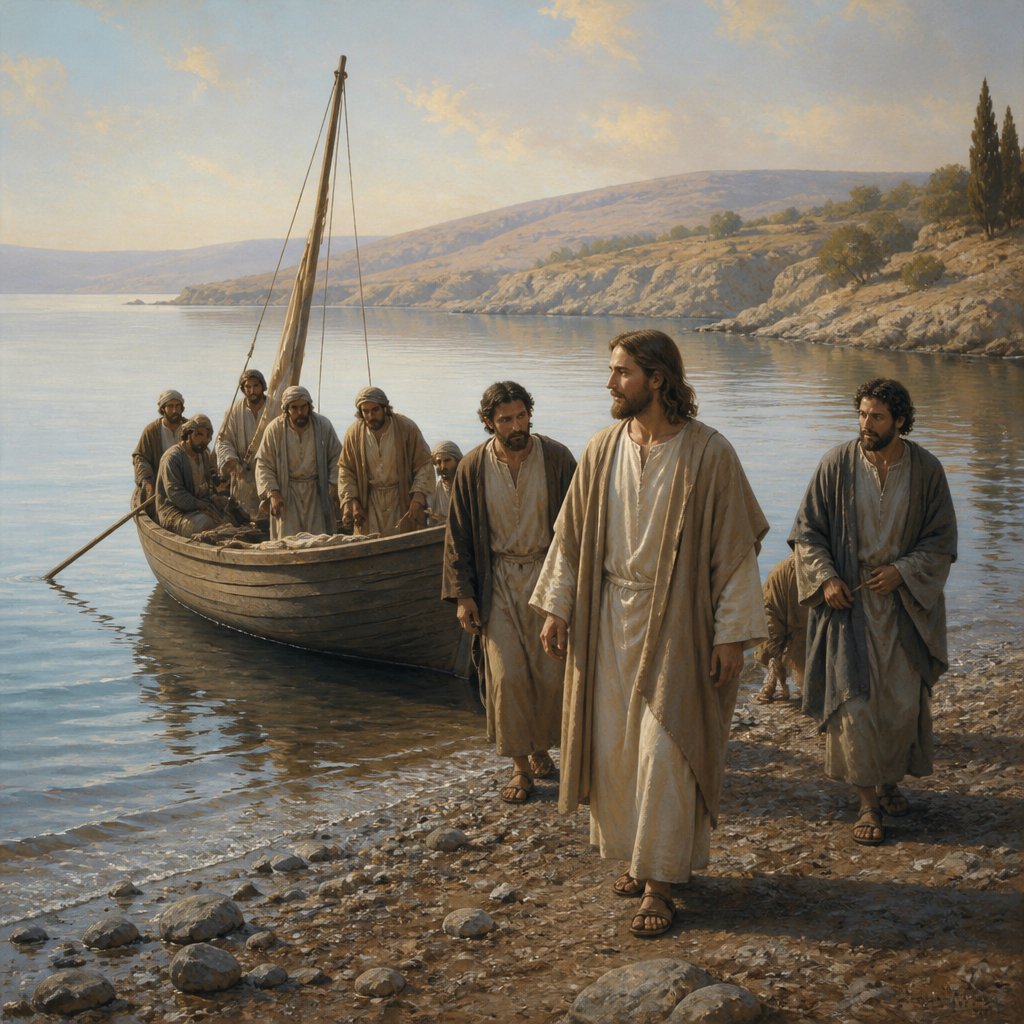
In Luke 8:26, we read, "And they arrived at the country of the Gadarenes, which is over against Galilee." This verse marks a significant transition in Jesus' ministry and reveals profound truths about His mission and our own calling to reach beyond familiar borders.
To fully grasp the importance of this passage, we must consider the context. Jesus and His disciples had just endured a tumultuous journey across the Sea of Galilee, during which a fierce storm arose, threatening their lives. Yet, through a simple command, Jesus calmed the waves and wind. This miracle not only demonstrated His power over nature but also prepared His disciples for what lay ahead – an encounter that would challenge their understanding of God's mission and grace.
The Gadarenes were a Gentile population. They lived in a region characterized by a mixture of cultures, idolatry, and a distinct Hebrew heritage that had wandered into Hellenistic practices. To enter this area, the disciples crossed a boundary that many pious Jews would have avoided. This action alone speaks volumes about the heart of Christ and the boundaries He calls us to cross in our own lives.
When we reflect on Jesus arriving at the Gadarenes, we witness a critical aspect of His ministry: the inclusion of the marginalized and the outcast. The act of entering a Gentile territory demonstrates a bold declaration that the message of the Gospel is not confined to a specific people or cultural background. Jesus was about to meet a man possessed by demons, a figure considered unclean and beyond redemption in the eyes of many.
This man embodied the very essence of despair and brokenness. He lived among the tombs, a place of death and isolation, unable to be tamed or brought back into society. Yet, to Jesus, he was not a lost cause; he was an opportunity for redemption. Jesus' journey to Gadarenes exemplifies His willingness to pursue those whom society deems unworthy or irredeemable. This is the heart of our Savior: He goes to the darkest places, to the abandoned souls, and offers them hope and healing.
As Christians, we are called to mirror this aspect of Christ’s character. We often find ourselves in comfort zones, clinging to the known and familiar. But Jesus challenges us to step out, to engage with those who are different, those who may provoke our discomfort. He invites us to cross the boundaries of our own prejudices and fears, to embrace the Gospel's radical inclusivity. Every person, regardless of background, struggles, or sinfulness, is within reach of His grace.
In our modern world, the ‘Gadarenes’ may be represented by those we encounter daily who are marginalized – the homeless, the mentally ill, the addicts, the rejected. These populations may reflect societal fears or biases, yet they are precisely where we need to head. Jesus did not wait for the perfect person to come to Him; He went out, seeking and saving the lost. Our call is similar. We are not just to preach to 'our kind' but to reach those who feel they have no place in God’s family.
Moreover, we shouldn't forget that the terrain of the Gadarenes was not only geographical but also metaphorical. As we navigate our lives, we encounter emotional and spiritual Gadarenes as well. Places filled with fear, despair, and hopelessness may exist even in our closest circles. Jesus invites us to walk with Him into those spaces, bringing light and love.
As we meditate on this verse, let us ponder where God might be calling us to go. Are we willing to cross our own boundaries and step into the lives of those who need the life-giving message of Jesus? Reflect on the opportunities around you, pray for the courage to act, and be the light in someone else's darkness. In doing so, we embody Christ's heart—a heart that never ceases to seek and save the lost.
Get our apps


Artwork for Luke 8:26

Luke 8:26 - "¶ And they arrived at the country of the Gadarenes, which is over against Galilee."
"¶ And they arrived at the country of the Gadarenes, which is over against Galilee." - Luke 8:26

luke 1:26

luke 1:26

Luke 1:26

Luke 12:25-26

Luke 12:25-26

Luke 16:22-26

Luke 12:25-26

Luke 6:21-26

Luke 12:25-26
Luke 12:25-26

Luke 12:25-26

Luke 6:21-26

Luke 5:17-26

Luke 12:25-26

Luke 18:26 - "And they that heard it said, Who then can be saved?"

Luke 8:5-8

Luke 17:26 - "And as it was in the days of Noe, so shall it be also in the days of the Son of man."

Luke 15:26 - "And he called one of the servants, and asked what these things meant."

Numbers 26:8 - "And the sons of Pallu; Eliab."

romans 8:26-28

Luke 8:16

Luke 10:26 - "He said unto him, What is written in the law? how readest thou?"

Luke 8:11

Luke 8:17

Luke 8:13

Luke 8:13

Luke 8:13

1 Chronicles 8:26 - "And Shamsherai, and Shehariah, and Athaliah,"