The Sacred Space of Worship: A Reflection on Mark 11:16
“And would not suffer that any man should carry any vessel through the temple.” — Mark 11:16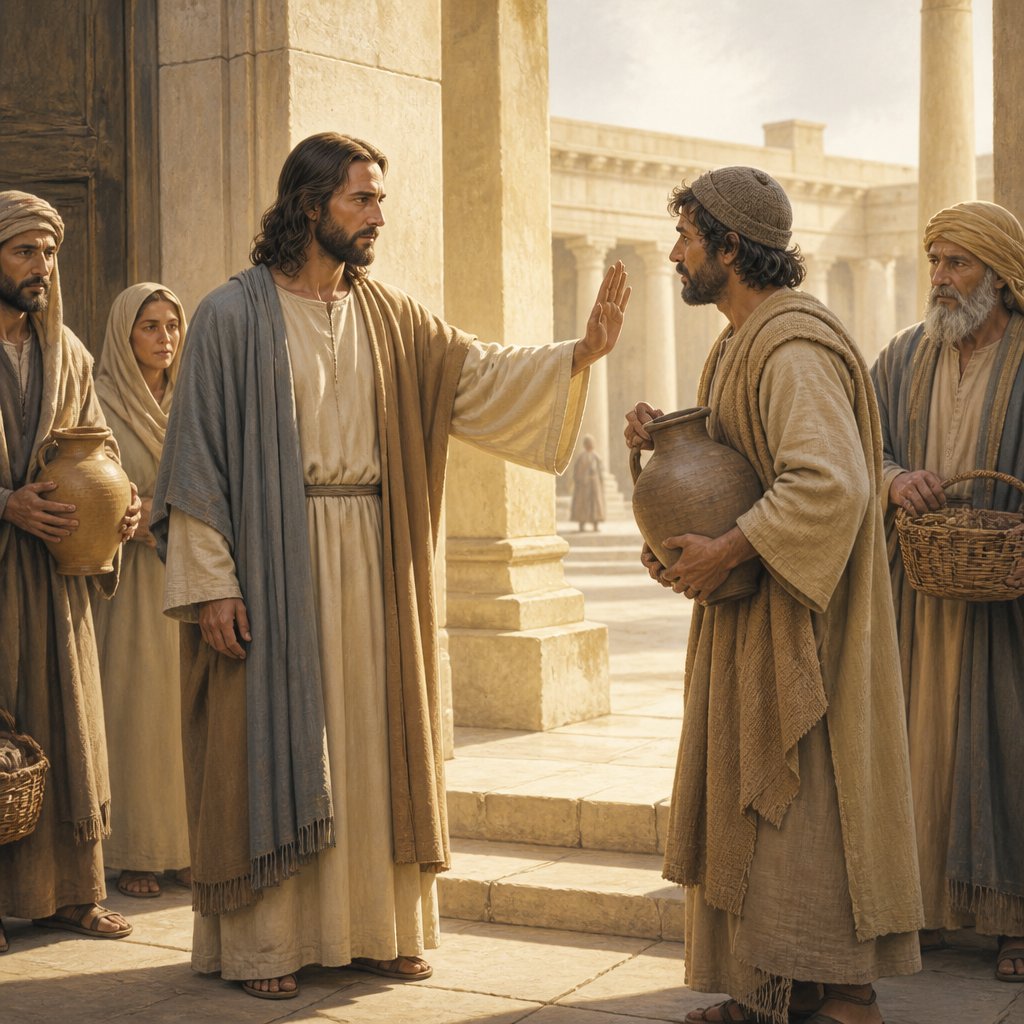
In the Gospel of Mark, we see a powerful scene unfold in the temple as Jesus walks among the crowds. It is here that He demonstrates righteous anger against the irreverence of the sacred space established for worship. Mark 11:16 states, "And would not suffer that any man should carry any vessel through the temple." In this single verse lies a profound message about the holiness of God, the sanctity of worship, and the deep reverence that should permeate our interactions with the divine.
Initially, we must understand the context of Jesus' actions. In the days leading up to this moment, the temple had been turned into a marketplace rather than a house of prayer. Merchants and money changers occupied the sacred space, focusing more on profit than on the presence of God. Jesus's refusal to allow anyone to carry vessels through the temple symbolizes His refusal to permit distractions from the essence of worship and communion with God.
Imagine the scene: a place meant for prayer, contemplation, and connection with the Almighty is filled with the chaos of trade. The sacredness of the temple, a place where heaven meets earth, was diluted by the noise of commerce. Jesus' actions can be seen not merely as a rebuke to those who conducted business within the temple walls, but as a loving reminder to all of us about the importance of maintaining sanctity in our spiritual lives.
In our modern world, the distractions may not be physical vessels or money changers, but rather the myriad of things that vie for our attention—social media, work commitments, personal ambitions, and even good deeds that draw us away from the quiet solitude we are called to with our Creator. The temple represents our heart and our lives, and just like the physical temple, we must guard it against distractions.
Jesus’s act of restricting the carrying of vessels is a call to us to inspect our own lives. Are we allowing distractions to infiltrate our time with God? Do we come to worship with our minds preoccupied, or is our focus wholly on the God we serve? By emphasizing the prohibition against carrying vessels, Jesus underlines the necessity of creating a space—both in our hearts and in our worship—where only God should dwell.
When we consider the implications of this scripture, we must remember that our worship must be intentional. The word 'worship' comes from an old English word "worth-ship," which denotes giving worth to something. If we are to give our worth to God, our corporate and private gatherings must be infused with holiness and respect.
Furthermore, this verse also reminds us of our responsibility as believers to ensure that spaces designated for collective worship remain conducive to honoring God. Each Sunday, when we gather in churches, we must be mindful that we are entering a sacred space—a space where God's presence is honored, where believers come together to edify one another, and where hearts are aligned toward worship. We must collectively strive to maintain the integrity of these spaces, ensuring that they remain free from distraction and focused on glorifying God.
Let us take a moment to reflect on our approach to worship—both in our personal quiet time and our corporate gatherings. Mark 11:16 invites us to dedicate our thoughts, our prayers, and our worship to God, free from the vessels that weigh us down. In doing so, we honor the divine purpose of our hearts and the sanctity of the holy spaces where we meet with our Savior. May our worship remain untainted by distractions, filled with reverence, and centered around the One who is worthy of our undivided attention.
Get our apps


Artwork for Mark 11:16

Mark 11:16 - "And would not suffer that any man should carry any vessel through the temple."
"And would not suffer that any man should carry any vessel through the temple." - Mark 11:16

african american mark 16:11

Mark 16:11 - "And they, when they had heard that he was alive, and had been seen of her, believed not."
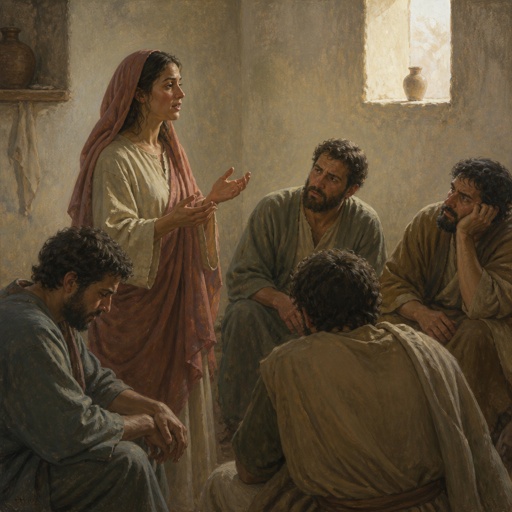
"And they, when they had heard that he was alive, and had been seen of her, believed not." - Mark 16:11

Zechariah 1:1-6

Mark 16:20
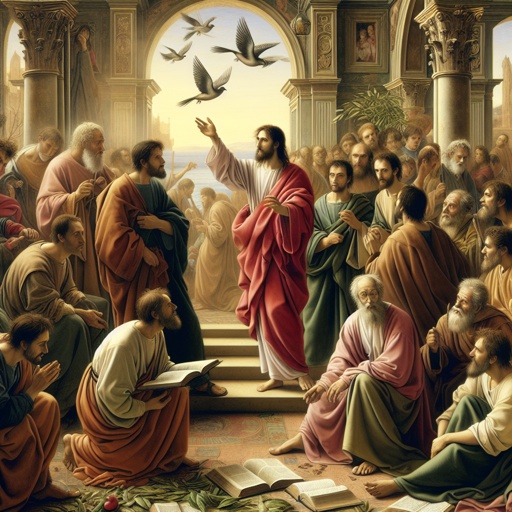
Mark 16:20

Mark 16:20
Mark 16:20

Mark 16:20
Mark 11:36

Mark 16:1-2

Mark 16:6-8

Mark 16:4-5

Mark 16:4-5

Mark 16:6-8

Mark 16:4-5

Mark 10:13–16

Mark 16:6-8

Mark 3:16 - "And Simon he surnamed Peter;"

Mark 12:11 - "This was the Lord's doing, and it is marvellous in our eyes?"

african american mary magdalene, mark 16: 9

Mark 9:16 - "And he asked the scribes, What question ye with them?"

Mark 16:13 - "And they went and told it unto the residue: neither believed they them."

Mark 7:16 - "If any man have ears to hear, let him hear."

Mark 8:16 - "And they reasoned among themselves, saying, It is because we have no bread."

Mark 16:4 - "And when they looked, they saw that the stone was rolled away: for it was very great."

Mark 11:19 - "And when even was come, he went out of the city."

Mark 16:10 - "And she went and told them that had been with him, as they mourned and wept."