An Alabaster Box of Devotion
“And being in Bethany in the house of Simon the leper, as he sat at meat, there came a woman having an alabaster box of ointment of spikenard very precious; and she brake the box, and poured it on his head.” — Mark 14:3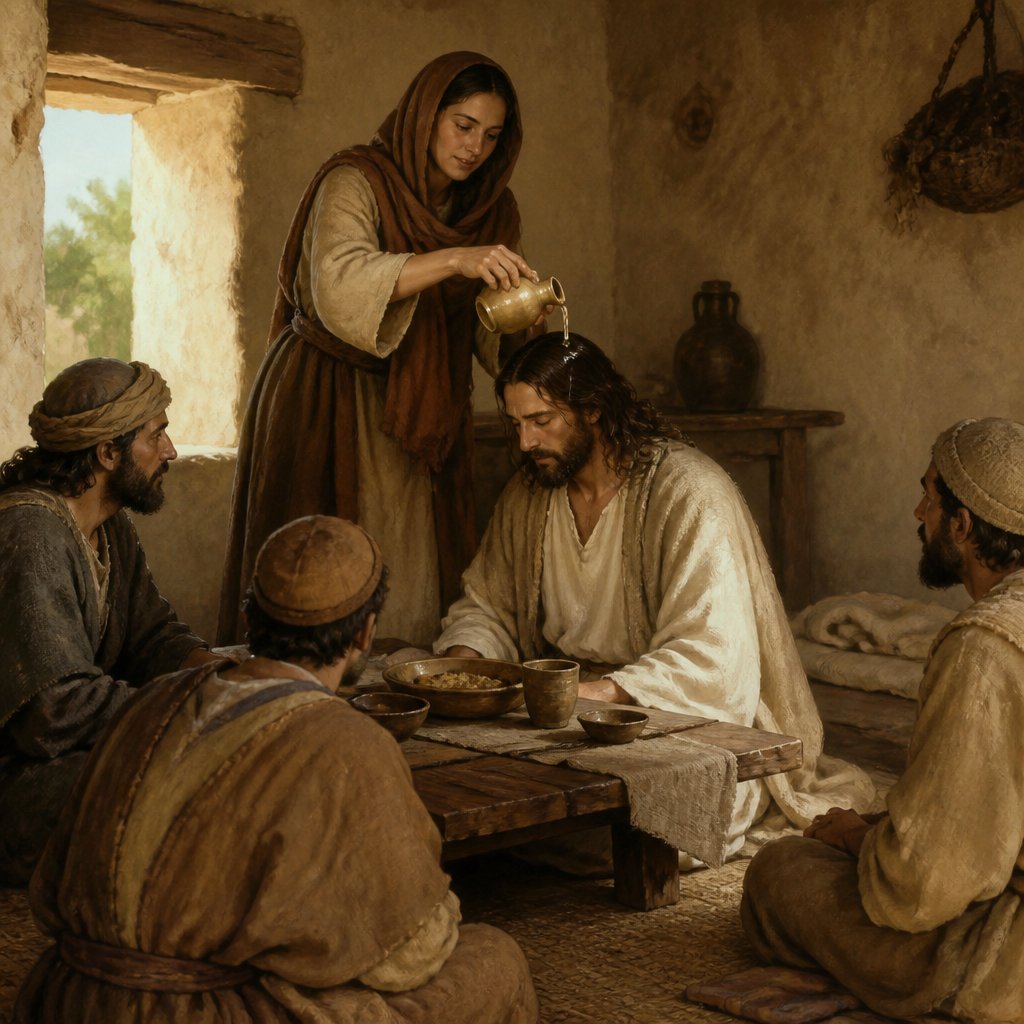
In Mark 14:3, we find a poignant moment that unfurls within the walls of Simon the leper's house in Bethany. The King James Version recounts: "And being in Bethany in the house of Simon the leper, as he sat at meat, there came a woman having an alabaster box of ointment of spikenard very precious; and she brake the box, and poured it on his head." This scene, rich with significance, invites us to explore the depths of true devotion and the power of sacrificial love.
As we envision the setting—dinner at Simon's house—we realize it is more than a mere meal. It is a gathering of friends, including Jesus, who has just triumphed over death, sickness, and sin throughout His ministry. In the midst of this celebration, a woman breaks the silence and convention. She embodies the heart of worship and the essence of contrition, thrusting her devotion and love toward the Messiah in an act that is both shocking and beautiful.
The alabaster box itself was a stunning artifact, often made from a fine stone, carefully crafted, and holding within it precious spikenard—a fragrant oil extracted from the roots of a low-growing plant found in the Himalayas. This substance was expensive, and its use in this context signifies something profound; it was not merely an offering but a representation of personal sacrifice. This woman, unnamed in the Gospel of Mark, steps into the narrative as a powerful symbol of costly, radical love.
As we ponder the act of breaking the box, we are reminded that she had to choose to let go of something valuable that was hers. To break the box is a symbolic gesture of releasing what she held dear to anoint the One she adored. This act demonstrates that true devotion often requires us to break through our own reservations and societal norms. It causes us to question: what is our alabaster box? What are the things we hold onto tightly that may need to be broken for the sake of our relationship with Christ?
Within her act of love, there is another layer: the audacity of her worship in the presence of Jesus. In verse 5, we read that the cost of the ointment was equivalent to a year’s wages. How many of us would have the courage to lay down our yearly earnings at the feet of Jesus? Yet, this woman did just that. Her action prompts us to examine our willingness to give to God—time, resources, talents—and to do so without hesitation or expectation of return.
Moreover, we see from the onlookers' reaction that such an act of worship is often met with criticism. The disciples are indignant, suggesting the ointment could have been sold and given to the poor. Their concern, while seemingly noble, reveals an inward misunderstanding of Jesus’s mission and the depth of the woman’s love. Jesus responds in defense of the woman, affirming that she has done a good deed and speaks to the importance of recognizing opportunities to honor Him, for He would soon be taken from them. In His eyes, the act transcends mere monetary value; it speaks to the richness of heartfelt devotion.
Ultimately, the story of the alabaster box engages us in a powerful invitation. We are called to consider what we are willing to pour out for Christ and to reflect on the ways we express our devotion. Are we prepared to break our boxes, sacrificing our comforts and securities to honor Him? This devotion leads not only to personal transformation but also to the advancement of His Kingdom, as Jesus promised that wherever the Gospel is preached, this act of love will be told in memory of her.
As we remember this unnamed woman today, may her actions inspire us to offer our finest treasures, whether they be time, talents, or resources, not out of obligation but from a heart filled with love. Let us break our alabaster boxes—breaking social norms, expectations, and fears—and pour out our precious devotion to our Lord, who gave everything for us.
Get our apps


Artwork for Mark 14:3

Mark 14:3 - "¶ And being in Bethany in the house of Simon the leper, as he sat at meat, there came a woman having an alabaster box of ointment of spikenard very precious; and she brake the box, and poured it on his head."
"¶ And being in Bethany in the house of Simon the leper, as he sat at meat, there came a woman having an alabaster box of ointment of spikenard very precious; and she brake the box, and poured it on his head." - Mark 14:3

Mark 14:3-9 - "And while he was at Bethany in the house of Simon the leper, as he was reclining at table, a woman came with an alabaster flask of ointment of pure nard, very costly, and she broke the flask and poured it over his head. There were some who said to themselves indignantly, “Why was the ointment wasted like that? For this ointment could have been sold for more than three hundred denarii and given to the poor.” And they scolded her. But Jesus said, “Leave her alone. Why do you trouble her? She has done a beautiful thing to me. For you always have the poor with you, and whenever you want, you can do good for them. But you will not always have me. She has done what she could; she has anointed my body beforehand for burial. And truly, I say to you, wherever the gospel is proclaimed in the whole world, what she has done will be told in memory of her."
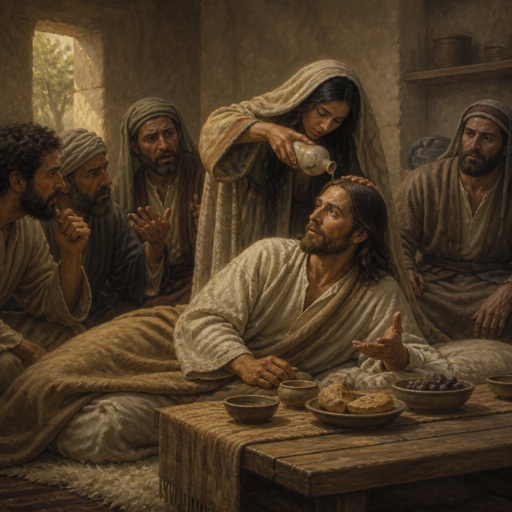
"And while he was at Bethany in the house of Simon the leper, as he was reclining at table, a woman came with an alabaster flask of ointment of pure nard, very costly, and she broke the flask and poured it over his head. There were some who said to themselves indignantly, “Why was the ointment wasted like that? For this ointment could have been sold for more than three hundred denarii and given to the poor.” And they scolded her. But Jesus said, “Leave her alone. Why do you trouble her? She has done a beautiful thing to me. For you always have the poor with you, and whenever you want, you can do good for them. But you will not always have me. She has done what she could; she has anointed my body beforehand for burial. And truly, I say to you, wherever the gospel is proclaimed in the whole world, what she has done will be told in memory of her." - Mark 14:3-9

Philippians 3:14 - "I press toward the mark for the prize of the high calling of God in Christ Jesus."

Mark 3:14 - "And he ordained twelve, that they should be with him, and that he might send them forth to preach,"

"I press toward the mark for the prize of the high calling of God in Christ Jesus." - Philippians 3:14
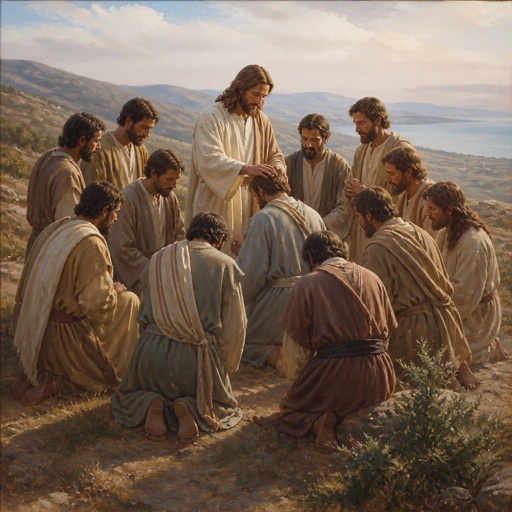
"And he ordained twelve, that they should be with him, and that he might send them forth to preach," - Mark 3:14

Mark 14:51

Mark 4:14 - "¶ The sower soweth the word."

Mark 14:17 - "And in the evening he cometh with the twelve."

Mark 14:50 - "And they all forsook him, and fled."

Mark 14:46 - "¶ And they laid their hands on him, and took him."

Philippians 3:13-14 - "Brethren, I count not myself to have apprehended: but this one thing I do, forgetting those things which are behind, and reaching forth unto those things which are before, I press toward the mark for the prize of the high calling of God in Christ Jesus."

Mark 14:59 - "But neither so did their witness agree together."

Mark 14:2 - "But they said, Not on the feast day, lest there be an uproar of the people."

Mark 3:3 - "And he saith unto the man which had the withered hand, Stand forth."

"¶ The sower soweth the word." - Mark 4:14

Mark 14:39 - "And again he went away, and prayed, and spake the same words."

Mark 14:57 - "And there arose certain, and bare false witness against him, saying,"

Mark 3:31-34

Mark 14:26 - "¶ And when they had sung an hymn, they went out into the mount of Olives."

Mark 14:66 - "¶ And as Peter was beneath in the palace, there cometh one of the maids of the high priest:"

Mark 14:52 - "And he left the linen cloth, and fled from them naked."

Mark 3:16 - "And Simon he surnamed Peter;"
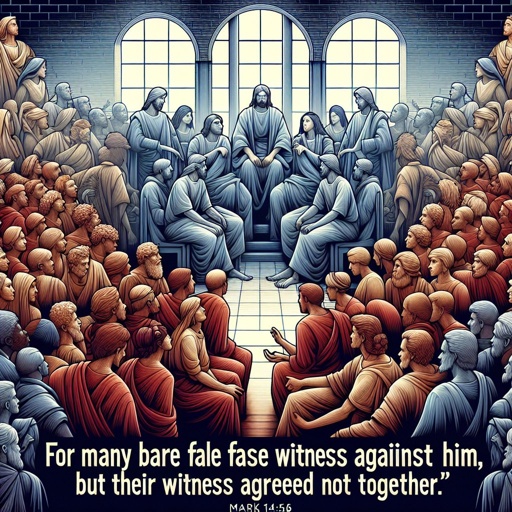
Mark 14:56 - "For many bare false witness against him, but their witness agreed not together."

Mark 14:14 - "And wheresoever he shall go in, say ye to the goodman of the house, The Master saith, Where is the guestchamber, where I shall eat the passover with my disciples?"

Mark 14:28 - "But after that I am risen, I will go before you into Galilee."

"And in the evening he cometh with the twelve." - Mark 14:17

Mark 14:29 - "But Peter said unto him, Although all shall be offended, yet will not I."