What does Mark 14:3 mean?
“And being in Bethany in the house of Simon the leper, as he sat at meat, there came a woman having an alabaster box of ointment of spikenard very precious; and she brake the box, and poured it on his head.” — Mark 14:3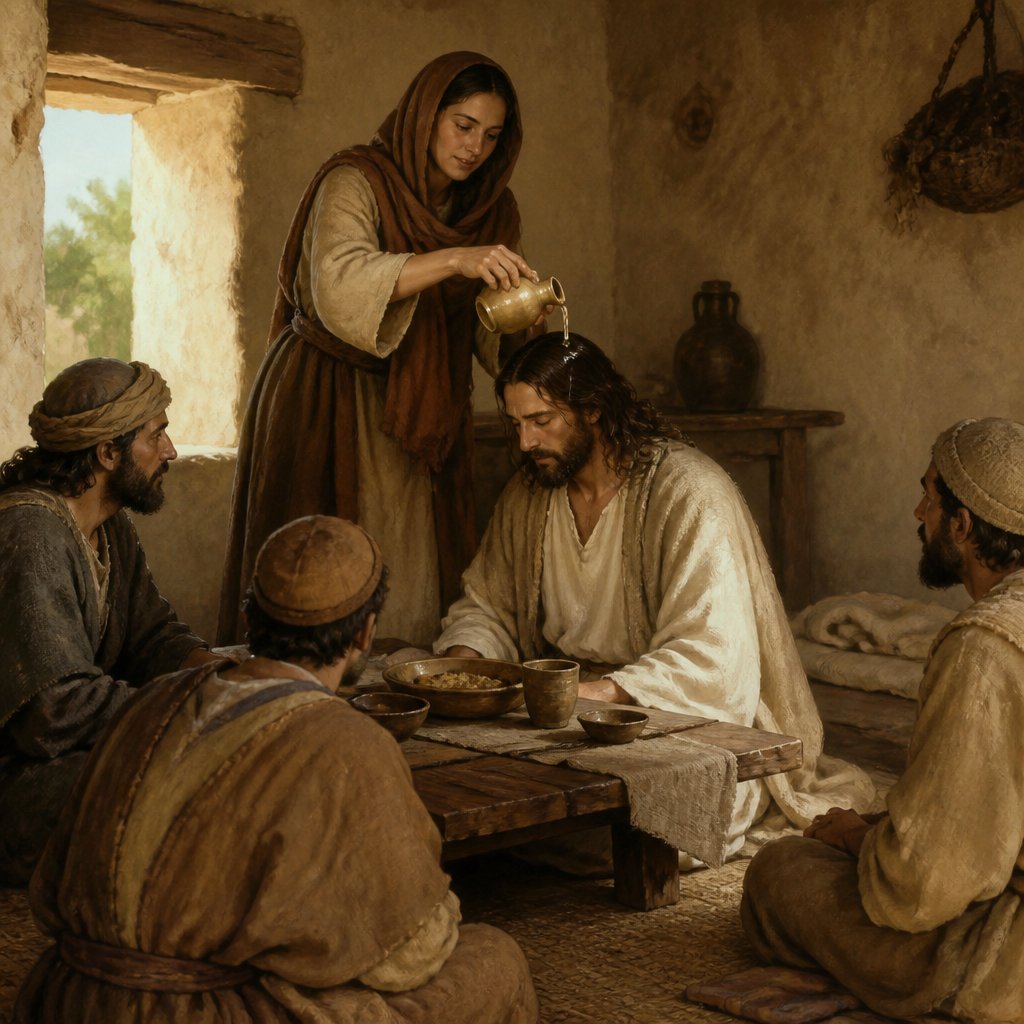
The verse Mark 14:3 from the King James Version of the Bible reads, "And being in Bethany in the house of Simon the leper, as he sat at meat, there came a woman having an alabaster box of ointment of spikenard very precious; and she brake the box, and poured it on his head."
This verse is a simple and yet profound moment in the life of Jesus Christ, which holds a lot of significance and symbolism. To understand the depth of its meaning, it is essential to take a closer look at the context and the themes that are interwoven within this verse.
The setting of this verse is in Bethany, at the house of Simon the leper. Bethany is a small town located on the eastern slope of the Mount of Olives, just a few miles from Jerusalem. This town holds particular significance in the life of Jesus, as it is where he raised Lazarus from the dead, and now, it is also the location of this touching moment with the woman and the alabaster box.
The presence of Simon the leper in this verse is noteworthy as well. In biblical times, leprosy was viewed as a highly contagious and incurable disease. Those afflicted with it were ostracized from society and forced to live outside of the community. The fact that Jesus is sitting in the house of a leper demonstrates his compassion and willingness to associate with those who were outcast and marginalized in society.
As Jesus is sitting at meat, a woman enters the scene with an alabaster box of ointment of spikenard, a very precious and expensive perfume. The breaking of the alabaster box signifies the costliness of the ointment, and the act of pouring it on Jesus' head is a symbolic and extravagant gesture of worship and devotion.
This verse speaks to the themes of sacrifice, love, and devotion. The woman's act of breaking the alabaster box and pouring the ointment on Jesus' head is a sacrificial offering, demonstrating her deep love and devotion to him. The use of expensive and precious perfume underscores the extravagance of her act, as she spares no cost in expressing her reverence for Jesus.
It is also important to note the contrast between the woman's gesture and the attitudes of those around her. In the verses following Mark 14:3, some of the disciples criticize the woman for her seemingly wasteful act, questioning why the ointment could not have been sold and the money given to the poor. However, Jesus reaffirms the significance of her actions by commending her for her devotion and stating that she has anointed him for his burial.
This verse also holds symbolic significance in the context of Jesus' impending crucifixion. The woman's act of anointing Jesus' head with precious ointment can be seen as a foreshadowing of his death and burial. By anointing him with the costly perfume, the woman is acknowledging that Jesus is the Messiah and is preparing him for his ultimate sacrifice.
In conclusion, the verse Mark 14:3 from the King James Version of the Bible captures a poignant and significant moment in the life of Jesus Christ. It speaks to themes of sacrifice, love, devotion, and the impending crucifixion of Jesus. The woman's extravagant gesture of anointing Jesus' head with precious ointment serves as a powerful symbol of her deep reverence for him and foreshadows the ultimate sacrifice that Jesus is soon to make for the salvation of humanity.
Get our apps


Artwork for Mark 14:3

Mark 14:3 - "¶ And being in Bethany in the house of Simon the leper, as he sat at meat, there came a woman having an alabaster box of ointment of spikenard very precious; and she brake the box, and poured it on his head."
"¶ And being in Bethany in the house of Simon the leper, as he sat at meat, there came a woman having an alabaster box of ointment of spikenard very precious; and she brake the box, and poured it on his head." - Mark 14:3

Mark 14:3-9 - "And while he was at Bethany in the house of Simon the leper, as he was reclining at table, a woman came with an alabaster flask of ointment of pure nard, very costly, and she broke the flask and poured it over his head. There were some who said to themselves indignantly, “Why was the ointment wasted like that? For this ointment could have been sold for more than three hundred denarii and given to the poor.” And they scolded her. But Jesus said, “Leave her alone. Why do you trouble her? She has done a beautiful thing to me. For you always have the poor with you, and whenever you want, you can do good for them. But you will not always have me. She has done what she could; she has anointed my body beforehand for burial. And truly, I say to you, wherever the gospel is proclaimed in the whole world, what she has done will be told in memory of her."
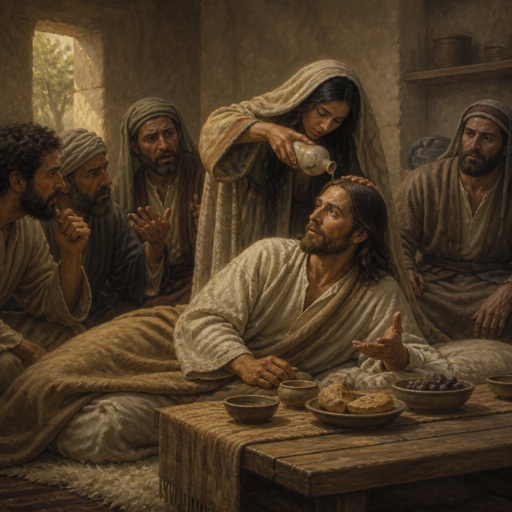
"And while he was at Bethany in the house of Simon the leper, as he was reclining at table, a woman came with an alabaster flask of ointment of pure nard, very costly, and she broke the flask and poured it over his head. There were some who said to themselves indignantly, “Why was the ointment wasted like that? For this ointment could have been sold for more than three hundred denarii and given to the poor.” And they scolded her. But Jesus said, “Leave her alone. Why do you trouble her? She has done a beautiful thing to me. For you always have the poor with you, and whenever you want, you can do good for them. But you will not always have me. She has done what she could; she has anointed my body beforehand for burial. And truly, I say to you, wherever the gospel is proclaimed in the whole world, what she has done will be told in memory of her." - Mark 14:3-9

Philippians 3:14 - "I press toward the mark for the prize of the high calling of God in Christ Jesus."

Mark 3:14 - "And he ordained twelve, that they should be with him, and that he might send them forth to preach,"

"I press toward the mark for the prize of the high calling of God in Christ Jesus." - Philippians 3:14
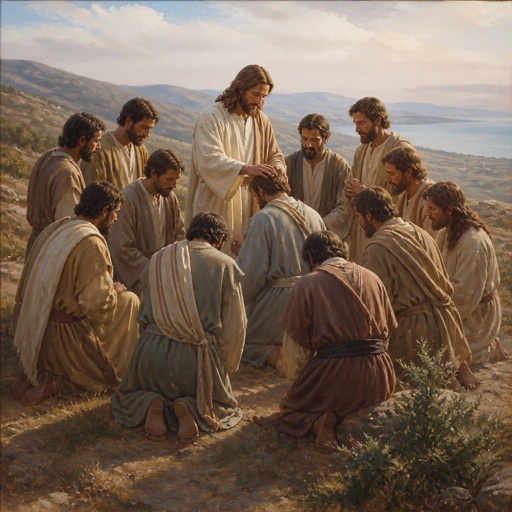
"And he ordained twelve, that they should be with him, and that he might send them forth to preach," - Mark 3:14

Mark 14:51

Mark 4:14 - "¶ The sower soweth the word."

Mark 14:17 - "And in the evening he cometh with the twelve."

Mark 14:50 - "And they all forsook him, and fled."

Mark 14:46 - "¶ And they laid their hands on him, and took him."

Philippians 3:13-14 - "Brethren, I count not myself to have apprehended: but this one thing I do, forgetting those things which are behind, and reaching forth unto those things which are before, I press toward the mark for the prize of the high calling of God in Christ Jesus."

Mark 14:59 - "But neither so did their witness agree together."

Mark 14:2 - "But they said, Not on the feast day, lest there be an uproar of the people."

Mark 3:3 - "And he saith unto the man which had the withered hand, Stand forth."

"¶ The sower soweth the word." - Mark 4:14

Mark 14:39 - "And again he went away, and prayed, and spake the same words."

Mark 14:57 - "And there arose certain, and bare false witness against him, saying,"

Mark 3:31-34

Mark 14:26 - "¶ And when they had sung an hymn, they went out into the mount of Olives."

Mark 14:66 - "¶ And as Peter was beneath in the palace, there cometh one of the maids of the high priest:"

Mark 14:52 - "And he left the linen cloth, and fled from them naked."

Mark 3:16 - "And Simon he surnamed Peter;"
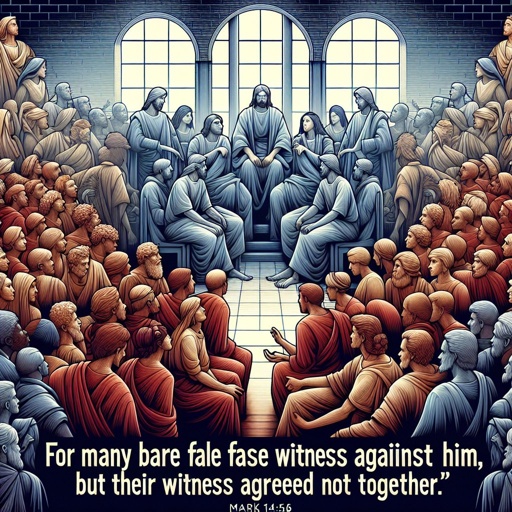
Mark 14:56 - "For many bare false witness against him, but their witness agreed not together."

Mark 14:14 - "And wheresoever he shall go in, say ye to the goodman of the house, The Master saith, Where is the guestchamber, where I shall eat the passover with my disciples?"

Mark 14:28 - "But after that I am risen, I will go before you into Galilee."

"And in the evening he cometh with the twelve." - Mark 14:17

Mark 14:29 - "But Peter said unto him, Although all shall be offended, yet will not I."