Hope in the Bruised and the Broken
“A bruised reed shall he not break, and smoking flax shall he not quench, till he send forth judgment unto victory.” — Matthew 12:20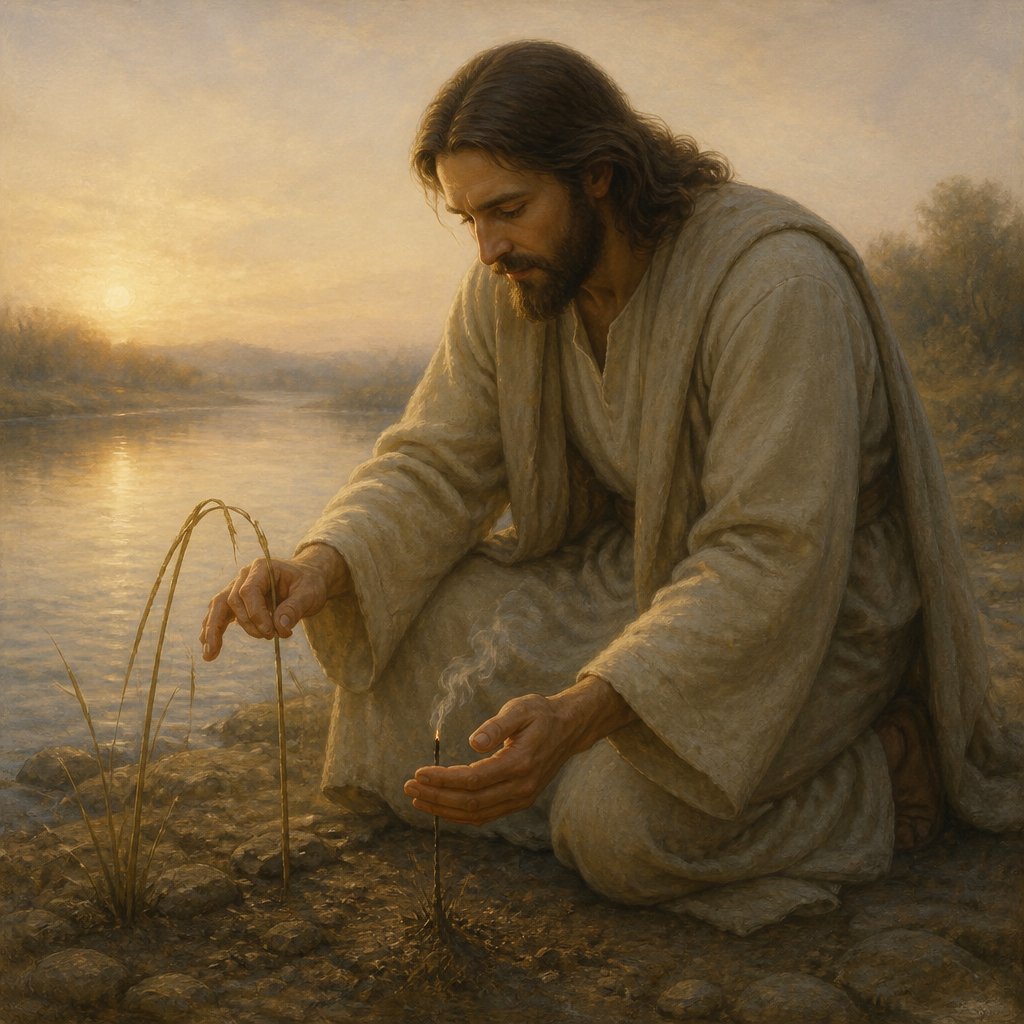
In the heart of the Gospel of Matthew, we find a verse that is filled with profound truth and gentle hope: "A bruised reed shall he not break, and smoking flax shall he not quench, till he send forth judgment unto victory" (Matthew 12:20 KJV). This verse, while concise, beckons us to delve deeper into its meaning and the comforting image of our Savior's compassion.
To understand the richness of this passage, we must first explore the imagery of the bruised reed and the smoking flax. A reeds are typically slender and fragile; when bruised, they do not stand tall as they once did. Instead, they bend and may seem more fit for the refuse than for the garden. Similarly, smoking flax, which refers to the wick of a lamp that is barely lit—struggling yet still flickering—represents those at the brink of extinguishment. These metaphors encapsulate the condition of so many in our world today.
Life inevitably brings bruises—times when we feel weak, weary, and on the verge of collapse. It might be situations such as a painful loss, fractured relationships, or failures that seem insurmountable. In our vulnerability, it’s easy to feel discarded or overlooked, often questioning if we are worthy of care or renewal. Yet, in this verse, we witness an astonishing declaration of our Lord's heart towards the broken.
Jesus does not shun the bruised; He does not break the reed that bends beneath the pressures of life. Instead, He draws near. This verse is a direct reflection of His compassionate nature—He does not discard us or leave us to wither. Instead, He offers restoration and hope. Many, like the bruised reeds, may feel they have nothing to offer God. However, it is precisely the weak and the broken that He seeks to uplift.
In knowing this, we can reflect on our own lives. What are the bruises we hold? What are the smoky embers within us, teetering between hope and despair? It can be easy to believe our imperfections and struggles mean we are beyond help, but this verse reveals the radical grace of Christ. He looks upon our brokenness not with disdain but with tenderness, desiring to gently restore us rather than crush us further.
The latter part of the verse, "till he send forth judgment unto victory," reveals the promise that God will ultimately bring forth justice and restoration. Even when circumstances feel dire, there is a divine assurance—victory is the end result of His overarching plan. Jesus may take His time, working within the nuances of our lives, but we must hold on to the hope that His judgment will come, bringing clarity, justice, and renewal.
Furthermore, it reminds us of His righteous judgment—a judgment wrapped in love that does not scorn the weak but instead lifts them up. When we lean into Christ and allow ourselves to be vulnerable before Him, we open up channels for His restorative work. We become vessels of His love, lights that can shine brightly even after having been dimmed.
In our own lives, we are called to reflect this attitude of Christ. Are we quick to judge and discard others who are bruised and broken? Or do we embody His love and bring hope to the weary? We have been given an example of how to treat the fragile among us—with gentleness, understanding, and compassion.
As we meditate on this verse today, let us carry it with us—not only as a source of comfort in our struggles but also as a guiding principle in how we relate to others. Remember, in the hands of the Savior, even the bruised reed can stand tall again, and the smoking flax can blaze brightly. With Jesus, there is always hope for restoration, no matter how far we feel from victory.
Get our apps


Artwork for Matthew 12:20

Matthew 12:20 - "A bruised reed shall he not break, and smoking flax shall he not quench, till he send forth judgment unto victory."

「壓傷的蘆葦,祂不折斷; 將殘的燈火,祂不吹滅; 祂終必使正義得勝。」 馬太福音 12:20 CCB https://bible.com/bible/1392/mat.12.20.CCB

「壓傷的蘆葦,祂不折斷; 將殘的燈火,祂不吹滅; 祂終必使正義得勝。」 馬太福音 12:20 CCB https://bible.com/bible/1392/mat.12.20.CCB
"A bruised reed shall he not break, and smoking flax shall he not quench, till he send forth judgment unto victory." - Matthew 12:20

Matthew 20:12 - "Saying, These last have wrought but one hour, and thou hast made them equal unto us, which have borne the burden and heat of the day."

Matthew 17:20

Matthew 18:20

matthew 20:3

Matthew 18:20

Matthew 18:20

Matthew 17:20

Matthew 28:19-20

matthew 5 13-20

Matthew 20:29-34

Matthew 3:11-12

Matthew 28: 19-20

Matthew 28:19-20

Matthew 28:19-20

Matthew 15 : 1-20

Matthew 3:11-12

Matthew 20:20 - "¶ Then came to him the mother of Zebedee's children with her sons, worshipping him, and desiring a certain thing of him."

Matthew 3:12

Matthew 3:12

Matthew 23:12

Matthew 7:12

Matthew 23:12

Matthew 4:20 - "And they straightway left their nets, and followed him."

Matthew 7:12

Matthew 3:12

Matthew 7:20 - "Wherefore by their fruits ye shall know them."