The Parable of Growth and Judgment: A Call to Patience and Discernment
“Let both grow together until the harvest: and in the time of harvest I will say to the reapers, Gather ye together first the tares, and bind them in bundles to burn them: but gather the wheat into my barn.” — Matthew 13:30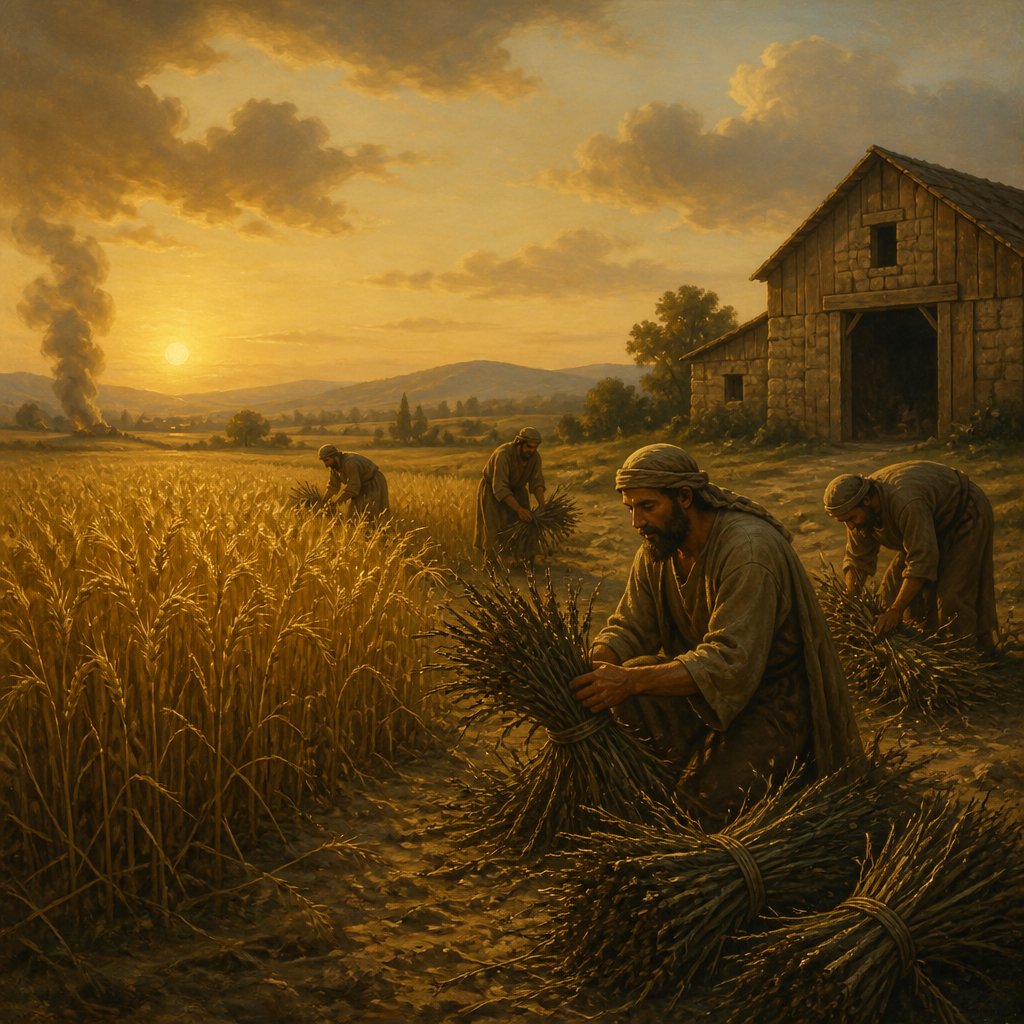
Matthew 13:30 presents a striking image of agricultural life in the first-century Jewish context, encapsulating profound spiritual truths. The verse states: "Let both grow together until the harvest: and in the time of harvest I will say to the reapers, Gather ye together first the tares, and bind them in bundles to burn them: but gather the wheat into my barn." This simple yet powerful statement serves as a reminder of God’s ultimate sovereignty over the world He created and the judgment that awaits at the end of the age.
The imagery of wheat and tares (weeds) growing together is particularly poignant. In ancient times, it was common for weeds to be sown among the crops, sometimes accidentally, as both species could look remarkably similar in their early stages of growth. This resemblance symbolizes the reality that, within the kingdom of heaven, both true believers and false ones coexist. This coexistence invites us to reflect deeply on our own lives, our communities, and the global church today.
The command, "Let both grow together," can be a source of both comfort and conviction. It speaks to the patience that our Lord exhibits as He allows this intermingling to happen. God knows that there are difficulties and dangers of living in a world where good and evil exist side by side. However, He also understands the potential for growth and the transformation of lives, even among those who might appear as ‘tares’ right now.
This raises an important question: How do we respond to the presence of tares in our lives? The immediate human desire is often to separate the wheat from the tares before the time is right. We are quick to judge, to categorize, and to condemn. Yet, God in His wisdom instructs us to allow both to grow together until the harvest. This reveals our limited perspective; we do not possess the insight to recognize the hearts of individuals fully.
We must remember that our role is not to be the judges but to be the bearers of light and grace. Jesus, in other passages, emphasizes love and patience. In Matthew 7:1, He warns us, "Judge not, that ye be not judged." In practicing discernment with compassion, we can allow God to work in lives that may currently reflect more tare than wheat.
Further, the harvest signifies the ultimate time of reckoning. The phrase, "in the time of harvest," indicates that God has appointed a specific season when full revelation will occur. Until that time, we are called to remain vigilant and prayerful, nurturing the wheat in our midst while trusting in God's timing and justice.
Moreover, the directive to gather the tares first and bind them to be burned serves as a sobering reminder of the eternal consequences of our life choices. While we focus on God’s love, we must also understand His holiness. He will positively gather the wheat into His barn, symbolizing eternal life and salvation, while the tares face destruction. This weighting of judgment encourages us to engage actively in our spiritual growth and the growth of others.
Let this truth inspire urgency in our hearts—not fear, but a desire to witness and grow alongside others, inviting them into the barn of salvation. We must be diligent in prayer, in sharing the Gospel, and in living lives that exemplify Christ. The air is charged with purpose; hearts filled with the knowledge that our influence may lead others from being tares to becoming wheat.
In conclusion, Matthew 13:30 challenges us to embrace our dual calling: to discern rightly and to love deeply. As we navigate life, may we cultivate patience as God works out His plan, knowing that the ultimate harvest is under His lordship. Let us be found as faithful laborers in His vineyard, joyfully anticipating that day when we will see the ultimate fulfillment of His promise, gathering in the wheat to His barn.
Get our apps


Artwork for Matthew 13:30

Matthew 13:30 - "Let both grow together until the harvest: and in the time of harvest I will say to the reapers, Gather ye together first the tares, and bind them in bundles to burn them: but gather the wheat into my barn."
"Let both grow together until the harvest: and in the time of harvest I will say to the reapers, Gather ye together first the tares, and bind them in bundles to burn them: but gather the wheat into my barn." - Matthew 13:30

Matthew 6:30

Matthew 5:30

Matthew 5:30

Matthew 24:30-31

Matthew 24:30-31

Matthew 24:30-31

Matthew 24:30-31

Matthew 24:30-31

Matthew 24:30-31

Matthew 24:30-31

Matthew 24:30-31

Matthew 24:30-31

Matthew 24:30-31

Matthew 11:30 - "For my yoke is easy, and my burden is light."

Matthew 10:30 - "But the very hairs of your head are all numbered."

Matthew 19:30 - "But many that are first shall be last; and the last shall be first."

Matthew 26:30 - "And when they had sung an hymn, they went out into the mount of Olives."

Matthew 13

Matthew 27:30 - "And they spit upon him, and took the reed, and smote him on the head."

Matthew 8:13

Matthew 8:13

Matthew 8:13

Matthew 13

Matthew 12:30 - "He that is not with me is against me; and he that gathereth not with me scattereth abroad."

Matthew 8:30 - "And there was a good way off from them an herd of many swine feeding."

Matthew 22:30 - "For in the resurrection they neither marry, nor are given in marriage, but are as the angels of God in heaven."

Acts 13:30 - "But God raised him from the dead:"

Matthew 7:13-14