Confrontation with Holy Intent: Understanding Matthew 15:1
“Then came to Jesus scribes and Pharisees, which were of Jerusalem, saying,” — Matthew 15:1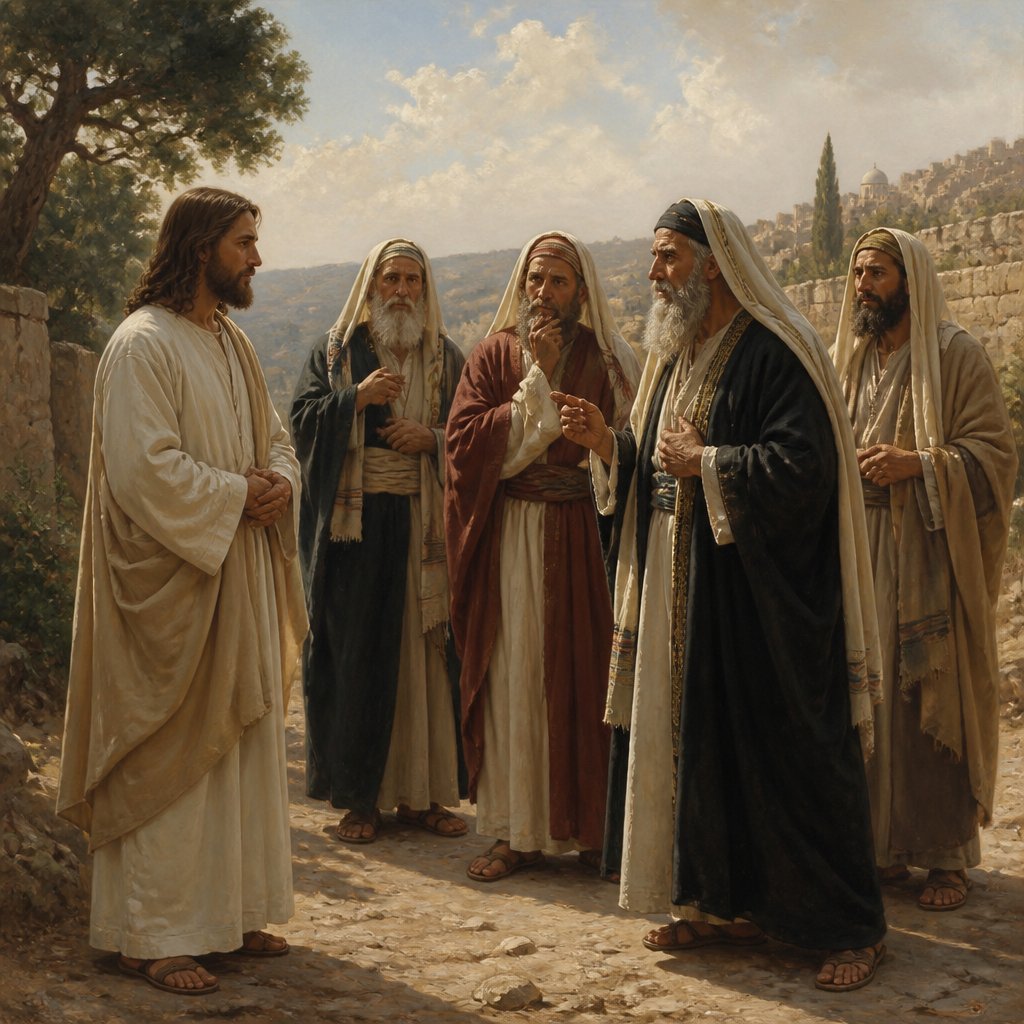
In the book of Matthew, chapter 15 verse 1, we encounter a poignant moment in the life of Jesus, marked by tension and confrontation: "Then came to Jesus scribes and Pharisees, which were of Jerusalem, saying," (KJV). This verse serves as an entryway into understanding the dynamics between Jesus and the religious leaders of His time. The implication of this engagement is profound, for it not only reveals the opposition Jesus faced but also highlights His radical teachings in the context of Jewish laws and traditions.
To comprehend the significance of this moment, we must first understand who the scribes and Pharisees were. Scribes were experts in the Law of Moses, well-versed in its intricate details, while the Pharisees were a religious group known for their strict adherence to tradition and the Law. When these leaders came to Jesus from Jerusalem—the epicenter of Jewish authority—they brought with them not just inquiries but the weight of tradition, authority, and the burden of Jewish law.
Their coming was not an innocent visit; it bore the intent of scrutiny and challenge. They approached Jesus with questions aimed to undermine His authority and challenge His interpretations of the Law. At this instant, we see the collision of human tradition versus divine truth, the established order confronting the radical grace of God embodied in Jesus Christ.
The context of the confrontation reveals deeper truths about our relationship with God and the nature of true faith. The Pharisees and scribes were meticulous in their traditions, often placing their interpretations of the Law above the spirit of it. This adherence to human traditions can lead to legalism, where the essence of faith becomes lost under layers of rules and rituals. This moment serves as a reminder to examine our own hearts: do we value tradition and human-made laws over the holy calling to love and serve?
When the scribes and Pharisees came to Jesus, their inquiry soon led to the exposure of their hearts. Jesus, as He often did, turned the question back upon them, revealing their hypocrisy and highlighting their neglect of true righteousness. He pointed out the ways they had allowed tradition to take precedence over compassion, mercy, and the fundamental principles of loving God and neighbor. This presents a vital lesson for us today: God desires obedience rooted in love rather than a sterile adherence to rules.
In Jesus’ response to their challenge, we see the heart of the Gospel—a call to pivot away from rituals that bind us and instead embrace the grace that liberates. As followers of Christ today, we are reminded that our faith should not be boxed into tradition or limited to mere observances, but should flow from a vibrant relationship with the living God. We ought to continuously seek the truth of Scripture, allowing its transformative power to confront our hearts and realign us to God’s greater purpose.
As we reflect on Matthew 15:1, we must also understand its contemporary relevance. In a world filled with religious division and interpretations, this scripture challenges us to move beyond appearances and engage with the heart of our faith. Are we coming to Jesus, seeking to know Him more deeply, or are we merely upholding traditions for tradition’s sake?
Let us invite the Spirit of God to work in us, transforming our hearts to seek justice, mercy, and humility. In embracing Jesus, we find the freedom to express our faith authentically, a faith that speaks of His love to a world hungry for hope, love, and true righteousness. In every confrontation we face, whether from outside or within, may we always pursue the heart of Jesus—unashamedly, boldly, and with unwavering love.
Get our apps


Artwork for Matthew 15:1

Matthew 15 : 1-20

Matthew 15:1 - "Then came to Jesus scribes and Pharisees, which were of Jerusalem, saying,"
"Then came to Jesus scribes and Pharisees, which were of Jerusalem, saying," - Matthew 15:1

Matthew 1:15 - "And Eliud begat Eleazar; and Eleazar begat Matthan; and Matthan begat Jacob;"

matthew 15 matthew 15:10
"And Eliud begat Eleazar; and Eleazar begat Matthan; and Matthan begat Jacob;" - Matthew 1:15

Matthew 26:15

Matthew 26:15

Matthew 15:23

Matthew 24:15

Matthew 15:15 - "Then answered Peter and said unto him, Declare unto us this parable."

Matthew 5:15

Matthew 15:23

Matthew 5:15

Matthew 17:14-15

Matthew 15:35 - "And he commanded the multitude to sit down on the ground."

Matthew 11:15 - "He that hath ears to hear, let him hear."

Matthew 15:16 - "And Jesus said, Are ye also yet without understanding?"

Matthew 19:15 - "And he laid his hands on them, and departed thence."

Matthew 15:21 - "¶ Then Jesus went thence, and departed into the coasts of Tyre and Sidon."

Matthew 15:9 - "But in vain they do worship me, teaching for doctrines the commandments of men."

Matthew 15:7 - "Ye hypocrites, well did Esaias prophesy of you, saying,"

Luke 6:15 - "Matthew and Thomas, James the son of Alphaeus, and Simon called Zelotes,"

Matthew 15:25 - "Then came she and worshipped him, saying, Lord, help me."

Matthew 15:10 - "¶ And he called the multitude, and said unto them, Hear, and understand:"

Matthew 15:38 - "And they that did eat were four thousand men, beside women and children."

Matthew 15:20 - "These are the things which defile a man: but to eat with unwashen hands defileth not a man."

Matthew 15:39 - "And he sent away the multitude, and took ship, and came into the coasts of Magdala."

Matthew 15:26 - "But he answered and said, It is not meet to take the children's bread, and to cast it to dogs."

Matthew 16:15 - "He saith unto them, But whom say ye that I am?"