Called Out of the Desert: The Fulfillment of Prophecy
“And was there until the death of Herod: that it might be fulfilled which was spoken of the Lord by the prophet, saying, Out of Egypt have I called my son.” — Matthew 2:15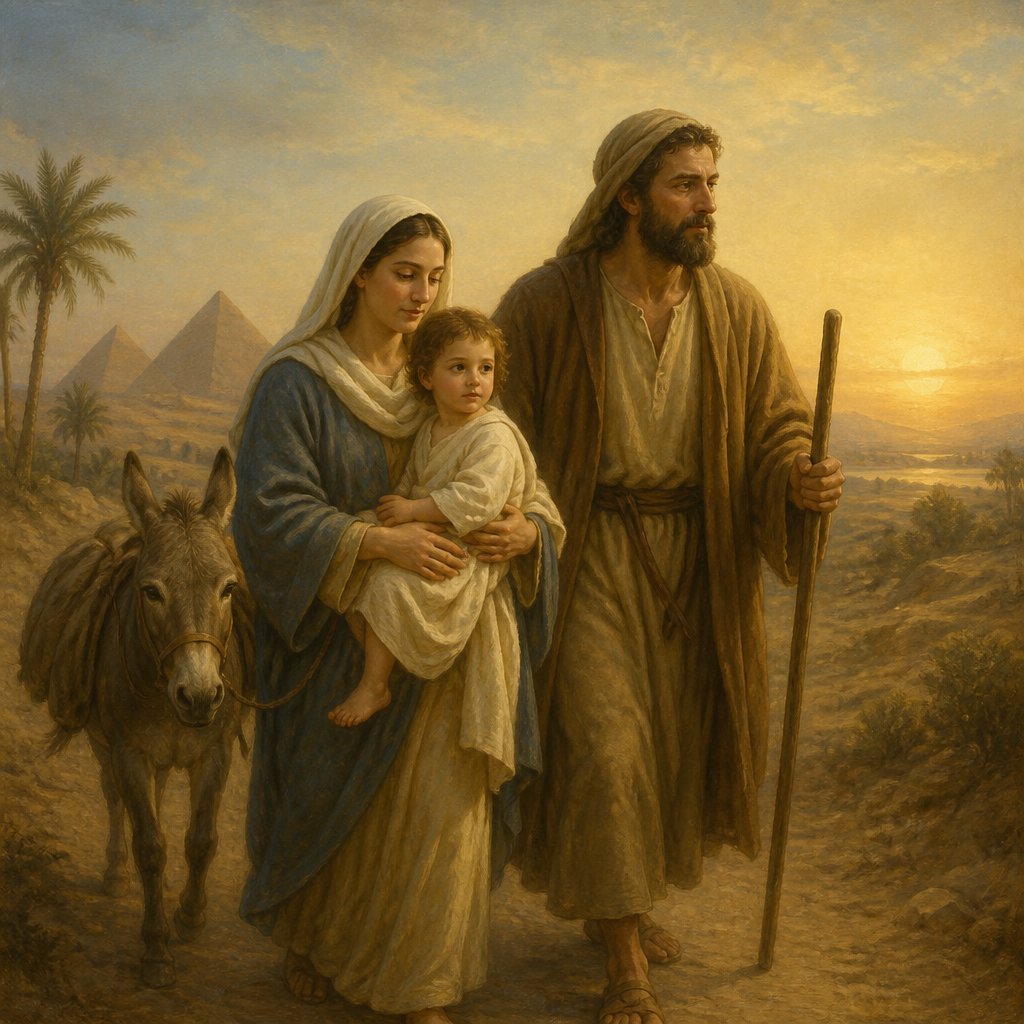
In the intricate tapestry of the Bible, few verses convey the profound interconnectedness of God’s promises and the fulfillment of prophecy as clearly as Matthew 2:15. The verse reads:
"And was there until the death of Herod: that it might be fulfilled which was spoken of the Lord by the prophet, saying, Out of Egypt have I called my son." (KJV)
This passage invites us into a profound reflection on the nature of God’s calling, His divine timing, and the fulfillment of His word.
**The Journey to Egypt**
To truly understand this scripture, we must first recognize the context in which it is set. After Jesus' birth, King Herod sought to kill the infant Messiah, driven by paranoia and desire to protect his throne. Consequently, Joseph, under divine instruction through a dream, took Mary and Jesus to Egypt, fleeing from Herod's wrath (Matthew 2:13). Here in a foreign land, the Holy Family stayed, safe yet separated from their homeland, until Herod’s death. While Egypt served as a refuge, it also represented a place of exile and uncertainty—a fitting metaphor for the trials and tribulations that we may encounter in our own lives.
**God’s Timing and Providence**
God's plan unfolded in His perfect timing: Jesus did not return to Israel until Herod died. This moment was not mere chance; it was a deliberate act of divine providence. God had a purpose for every moment of Jesus’s early life. Just as God protected the Holy Family amidst peril, He also makes provision for us even when we feel as if we are in a foreign land, estranged from our promises and dreams. Our periods of exile can feel fraught with despair, but we must trust in God's timing, knowing He is working all things together for good (Romans 8:28).
The phrase, "that it might be fulfilled which was spoken of the Lord by the prophet," emphasizes not only the prophecy’s fulfillment but also God's faithfulness to His word. The reference to “Out of Egypt have I called my son” comes from Hosea 11:1. This connection demonstrates how the New Testament continually points back to the Old Testament, revealing the unified narrative of God’s redemptive plan throughout Scriptures.
**A Call to Remember**
Matthew’s readers, primarily Jewish, would have recognized this prophetic connection and understood the significance of Jesus as God’s Son—this marked His identity and mission. Just like the Israelites were called out of Egypt during the Exodus, Jesus, the fulfillment of this prophecy, would lead humanity from the bondage of sin to freedom and eternal life.
This calls us to reflect on our own journeys. When we find ourselves in our own Egypt—places of hardship, despair, or waiting—do we remember that God has called us out? Just as He called Jesus, He calls us too. We are reminded that our identity is rooted in Him, that through Jesus, we are made sons and daughters of the Most High (John 1:12).
**Conclusion: From Exile to Embrace**
As we journey through life, may we be assured that God’s purposes are being fulfilled, even in our wilderness seasons. Herod’s death marked the end of danger for the Holy Family and the beginning of their return to the land of promise. In our lives, the end of one season often heralds the start of another that is more fruitful and aligned with God’s everlasting plan. We must not forget that every call from God involves a transition. Whether we feel the shackles of our own oppression or the benign waiting in Egypt, He promises us deliverance.
In ultimate fulfillment of His promise—to call us out of our despair into the light of His grace—may we embrace the truth that we are never outside the reach of His love and purpose. Like the Holy Family, let us await the call to return to our promise, ever mindful that God’s faithfulness prevails.
In every moment of waiting, cling to the hope that God has called His children out of Egypt—into a destiny woven intricately through prayer, faith, and divine timing.
Get our apps


Artwork for Matthew 2:15

Matthew 2:15 - "And was there until the death of Herod: that it might be fulfilled which was spoken of the Lord by the prophet, saying, Out of Egypt have I called my son."
"And was there until the death of Herod: that it might be fulfilled which was spoken of the Lord by the prophet, saying, Out of Egypt have I called my son." - Matthew 2:15

matthew 15 matthew 15:10

Matthew 15:2 - "Why do thy disciples transgress the tradition of the elders? for they wash not their hands when they eat bread."

Matthew 26:15

Matthew 26:15

Matthew 15:23

Matthew 24:15

Matthew 15:15 - "Then answered Peter and said unto him, Declare unto us this parable."

Matthew 5:15

Matthew 15:23

Matthew 5:15

Matthew 17:14-15

Matthew 15 : 1-20
"Why do thy disciples transgress the tradition of the elders? for they wash not their hands when they eat bread." - Matthew 15:2

Matthew 1:15 - "And Eliud begat Eleazar; and Eleazar begat Matthan; and Matthan begat Jacob;"

Matthew 15:35 - "And he commanded the multitude to sit down on the ground."

Matthew 11:15 - "He that hath ears to hear, let him hear."

Matthew 15:16 - "And Jesus said, Are ye also yet without understanding?"

Matthew 19:15 - "And he laid his hands on them, and departed thence."

Matthew 15:21 - "¶ Then Jesus went thence, and departed into the coasts of Tyre and Sidon."

Matthew 15:9 - "But in vain they do worship me, teaching for doctrines the commandments of men."

Matthew 15:7 - "Ye hypocrites, well did Esaias prophesy of you, saying,"

Matthew 15:1 - "Then came to Jesus scribes and Pharisees, which were of Jerusalem, saying,"

Luke 6:15 - "Matthew and Thomas, James the son of Alphaeus, and Simon called Zelotes,"

Matthew 15:25 - "Then came she and worshipped him, saying, Lord, help me."

Matthew 15:10 - "¶ And he called the multitude, and said unto them, Hear, and understand:"

Matthew 15:38 - "And they that did eat were four thousand men, beside women and children."

Matthew 15:20 - "These are the things which defile a man: but to eat with unwashen hands defileth not a man."

Matthew 15:39 - "And he sent away the multitude, and took ship, and came into the coasts of Magdala."