The Call to Holiness: Understanding the Wedding Garment
“And he saith unto him, Friend, how camest thou in hither not having a wedding garment? And he was speechless.” — Matthew 22:12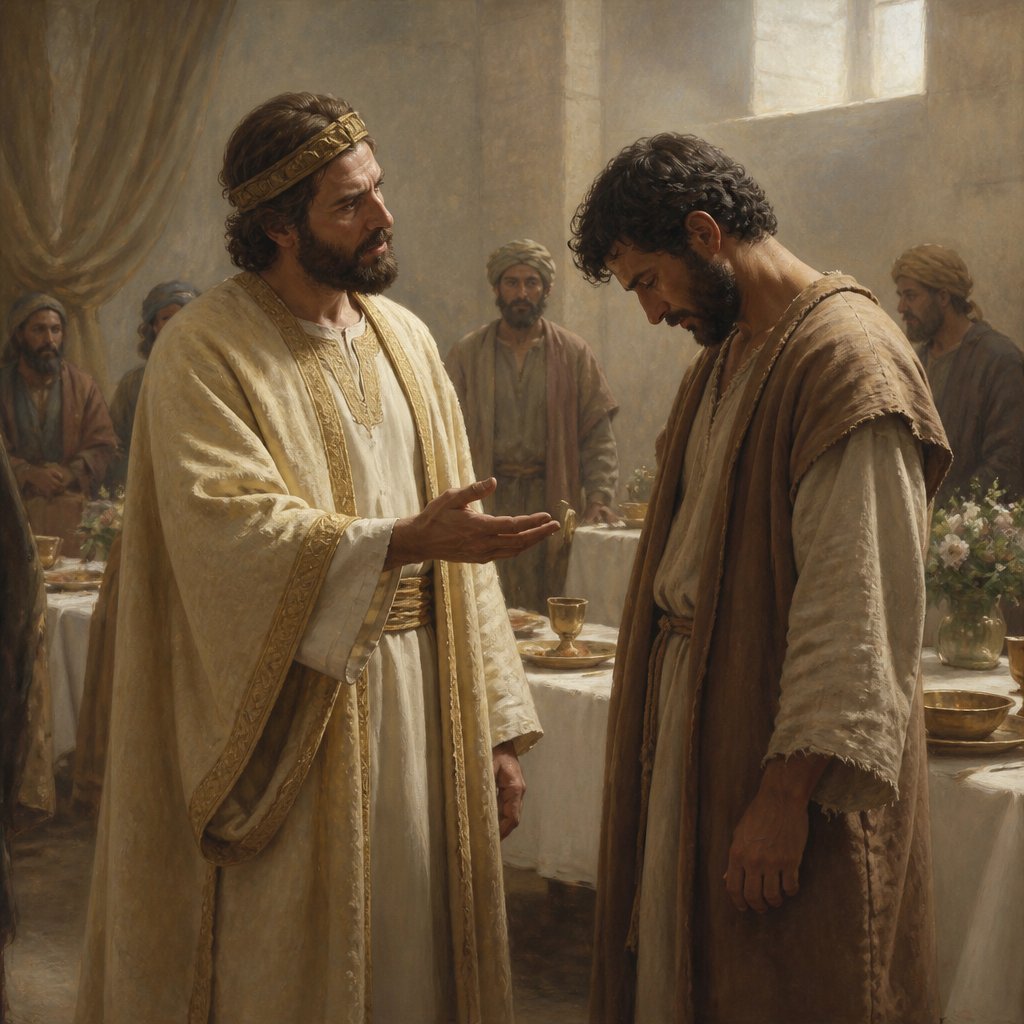
In the parable of the wedding feast found in Matthew 22:1-14, we encounter several profound truths about the nature of the Kingdom of God and its expectations for those who are invited. Verse 12 captures the moment where the king confronts a guest who has entered the banquet without a wedding garment: "And he saith unto him, Friend, how camest thou in hither not having a wedding garment? And he was speechless."
To fully appreciate this passage, we need to unpack the symbolism of the wedding garment and what it represents in our relationship with God. In biblical times, wedding garments symbolized honor and preparation. When invited to such an important occasion, guests were expected to adorn themselves appropriately. A king's wedding, especially, would demand the utmost respect and reverence in attire. The absence of a wedding garment in this parable points to a critical attitude of the heart: an unwelcome presumption that one can enter into the presence of the King, the Almighty God, without the necessary preparations.
The king's question, "Friend, how camest thou in hither not having a wedding garment?" is both direct and probing. It suggests an intimate relationship; the term "friend" implies a level of familiarity and expectation. The tone is not just accusatory but carries an element of deep disappointment. God extends an invitation to all who would accept, but with that invitation comes an expectation of holiness and righteousness.
In Isaiah 61:10, we find the beautiful imagery of garments: "I will greatly rejoice in the LORD, my soul shall be joyful in my God; for he hath clothed me with the garments of salvation, he hath covered me with the robe of righteousness." These garments are not merely physical outfits but divine gifts that represent our standing before God. They illustrate our need for salvation and righteousness, which can only be obtained through faith in Jesus Christ.
The man’s silence when confronted by the king reveals a profound truth about the spiritual state of those who do not don the wedding garment. Without the righteousness of Christ, who is our wedding garment, one stands before God guilty and unprepared. Romans 3:23 tells us, "For all have sinned, and come short of the glory of God." Without this garment, this essential covering, we are left speechless, lacking a defense when confronted with our sins.
Throughout this parable, we see the contrast between those who are genuinely engaged in God's invitation to enter His Kingdom and those who take it lightly. The guest without the wedding garment represents those who accept the invitation but neglect to prepare themselves, perhaps underestimating the importance of holiness and righteousness in the eyes of the King.
The call to holiness is not a burden but rather an essential aspect of our abundant life in Christ. 1 Peter 1:16 reminds us to be holy as He is holy. The wedding garment signifies our place in the banquet of eternal life, and we must never assume that our presence is secured without the proper attire of faith, repentance, and righteousness.
As we reflect on this message, let us assess our own lives. Are we wearing the wedding garments of salvation and righteousness, or are we trying to enter the presence of God under our own merits? The king’s banquet is open to everyone, but we must approach with humility and a heart prepared for the feast. Let us don the garments prepared for us with the blood of Jesus, recognizing that it is through His righteousness that we may enter into joyous communion with our Heavenly Father.
In conclusion, as we wait for Christ's return, let us ensure we are dressed for the occasion—a wedding feast ready for us in glory. Let us seek the Lord's grace daily to maintain our garments, shining brightly as we follow His commands and live in a manner worthy of the calling with which we have been called (Ephesians 4:1). The question remains: will we be found clothed in righteousness, or will we stand speechless before the King?
Get our apps


Artwork for Matthew 22:12
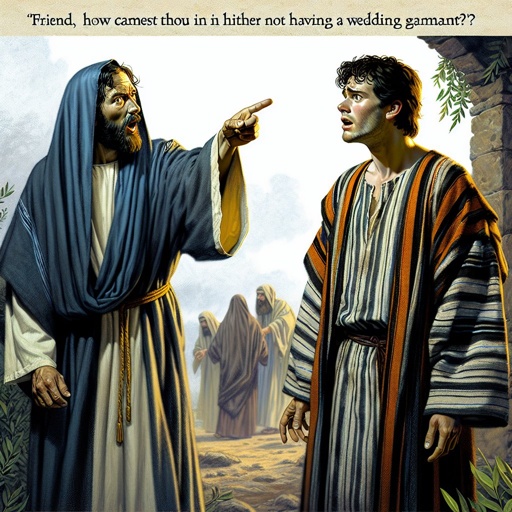
Matthew 22:12 - "And he saith unto him, Friend, how camest thou in hither not having a wedding garment? And he was speechless."
"And he saith unto him, Friend, how camest thou in hither not having a wedding garment? And he was speechless." - Matthew 22:12

Matthew 12:22 - "¶ Then was brought unto him one possessed with a devil, blind, and dumb: and he healed him, insomuch that the blind and dumb both spake and saw."

Matthew 9:21-22

Matthew 9:21-22

Matthew 9:21-22

Matthew 9:21-22

Matthew 9:21-22

Matthew 22:22 - "When they had heard these words, they marvelled, and left him, and went their way."

Matthew 6:22

Matthew 6:22

Matthew 6:22

Matthew 22:38 - "This is the first and great commandment."

Matthew 14:22-33

Matthew 22:37-39

1 Corinthians 12:12-22

Matthew 3:11-12

Matthew 22:14 - "For many are called, but few are chosen."

Matthew 3:11-12

Matthew 22:36 - "Master, which is the great commandment in the law?"

Matthew 3:12

Matthew 3:12

Matthew 23:12

Matthew 7:12

Matthew 23:12

Matthew 22:27 - "And last of all the woman died also."

Matthew 22:26 - "Likewise the second also, and the third, unto the seventh."

Matthew 22:40 - "On these two commandments hang all the law and the prophets."

Matthew 7:12

Matthew 3:12