The Fragrance of Sacrifice: Understanding Matthew 26:9
“For this ointment might have been sold for much, and given to the poor.” — Matthew 26:9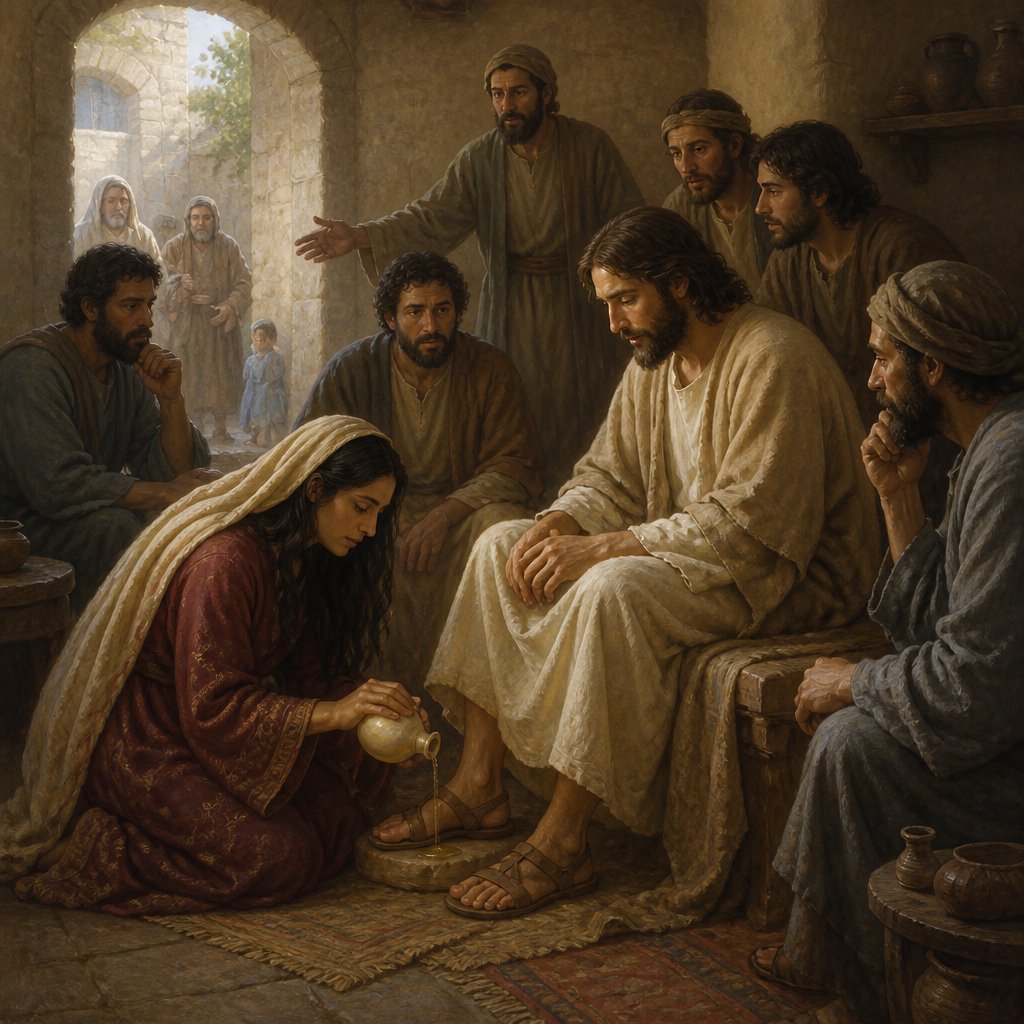
In the quiet moments of life, we often find ourselves faced with decisions that weigh on our conscience and challenge our priorities. One such pivotal moment in the life of Jesus is captured in Matthew 26:9, which reads, "For this ointment might have been sold for much, and given to the poor." This statement was made by one of the disciples, Judas Iscariot, in response to Mary’s extravagant act of anointing Jesus with precious ointment that cost nearly a year’s wages.
Mary’s act is a profound declaration of love and devotion, one that illustrates the depth of her worship. In a culture that often values measurable contributions to society, Judas’s objection reflects a common mindset: that resources should be used pragmatically, especially when the poor are in need. It is a sentiment that echoes through the ages, urging us to consider practicality over passion, and calculations over compassion. However, Jesus’ response offers a richer layer to this narrative.
To understand Jesus’ perspective, we must first appreciate the significance of what Mary did. The precious ointment was not just a luxury; it was a symbol of profound honor and love reserved for royalty or the deceased. In pouring it on Jesus, Mary acknowledged His impending death and burials—a truth perhaps only she and a few others fully grasped at that moment. Her act was not merely about the oil; it was a sacred offering that recognized who Jesus truly was. The anointing foretold His burial and proclaimed His identity as the Messiah.
In contrast, Judas’s concern for the poor, while seemingly noble, revealed a heart that was not aligned with the kingdom principles that Jesus taught. His focus was on the tangible, the measurable—the wealth that might have been distributed—but he failed to see the immeasurable value of worship. This is a critical point for us today as we often find ourselves prioritizing duties and agendas over divine encounters.
The challenge within this passage is to recognize the balance between our acts of service and our moments of worship. It’s easy to become so consumed with meeting the needs of the world that we overlook the deeper relational aspect of our faith. Jesus did not rebuke Judas for caring about the poor; rather, He redirected the conversation toward the significance of honoring Him. "For ye have the poor always with you; but me ye have not always" (Matthew 26:11). In Jesus’ reply, we find an invitation to engage with the Divine by offering our hearts in lavish devotion.
As we reflect on Matthew 26:9, we are called to evaluate our own lives. Are we more like Judas, measuring worth by what can be seen and quantified? Or are we more like Mary, daring to give extravagantly, trusting that our worship is a valuable contribution to God’s kingdom? What would it look like for us to pour out our time, our resources, or our talents in an act of adoration to Christ?
The lavish act of Mary speaks to the possibility of our worship being an investment into eternity. The fragrance of her expression lingered long after the act itself, serving as a reminder of the beauty of sacrificial love. As we seek to honor God in our lives, let us remember that our greatest offerings might not fit within the conventional confines of practicality.
In conclusion, Matthew 26:9 invites us to embrace a life of radical devotion. We are encouraged to pour out not just our possessions, but also our hearts and our lives before Christ. May our worship be extravagant, just as Mary’s was, and may it serve as a sweet aroma to God, transcending earthly concerns toward the eternal significance of our relationship with Him.
Get our apps


Artwork for Matthew 26:9

Matthew 26:9 - "For this ointment might have been sold for much, and given to the poor."
"For this ointment might have been sold for much, and given to the poor." - Matthew 26:9

Matthew 9:26 - "And the fame hereof went abroad into all that land."
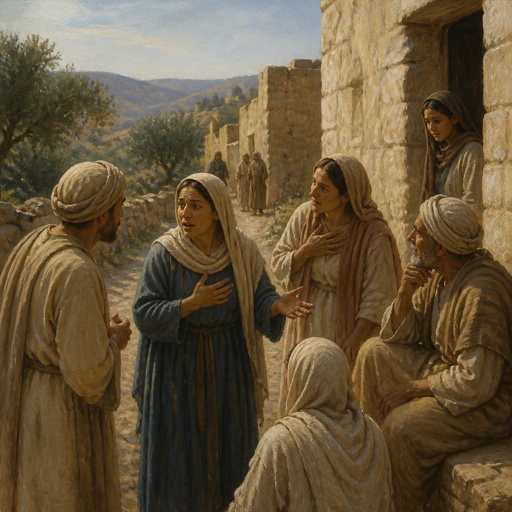
"And the fame hereof went abroad into all that land." - Matthew 9:26

Matthew 26:25

Matthew 26:15

Matthew 19:26

Matthew 26:15

Matthew 27:26

Matthew 27:26

Matthew 26:53

Matthew 26:65

Matthew 26:41

Matthew 26:53
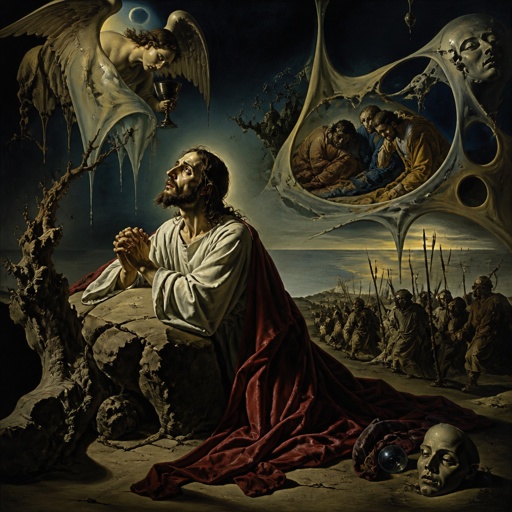
Matthew 26:36-46
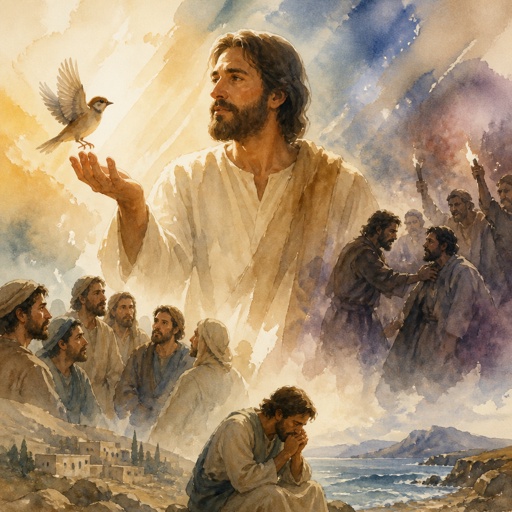
Matthew 10:26-33

Matthew 26:26 - "¶ And as they were eating, Jesus took bread, and blessed it, and brake it, and gave it to the disciples, and said, Take, eat; this is my body."

Matthew 22:26 - "Likewise the second also, and the third, unto the seventh."

Matthew 26:54 - "But how then shall the scriptures be fulfilled, that thus it must be?"

Genesis 26:9

Matthew 26:6 - "¶ Now when Jesus was in Bethany, in the house of Simon the leper,"

Matthew 26:4 - "And consulted that they might take Jesus by subtilty, and kill him."

Matthew 9:21

Matthew 26:5 - "But they said, Not on the feast day, lest there be an uproar among the people."

Matthew 26:16 - "And from that time he sought opportunity to betray him."

Matthew 9:21-22

Matthew 26:72 - "And again he denied with an oath, I do not know the man."

Matthew 11:26 - "Even so, Father: for so it seemed good in thy sight."

Matthew 26:20 - "Now when the even was come, he sat down with the twelve."

Matthew 26:30 - "And when they had sung an hymn, they went out into the mount of Olives."