The Timing of Divine Purpose
“But they said, Not on the feast day, lest there be an uproar among the people.” — Matthew 26:5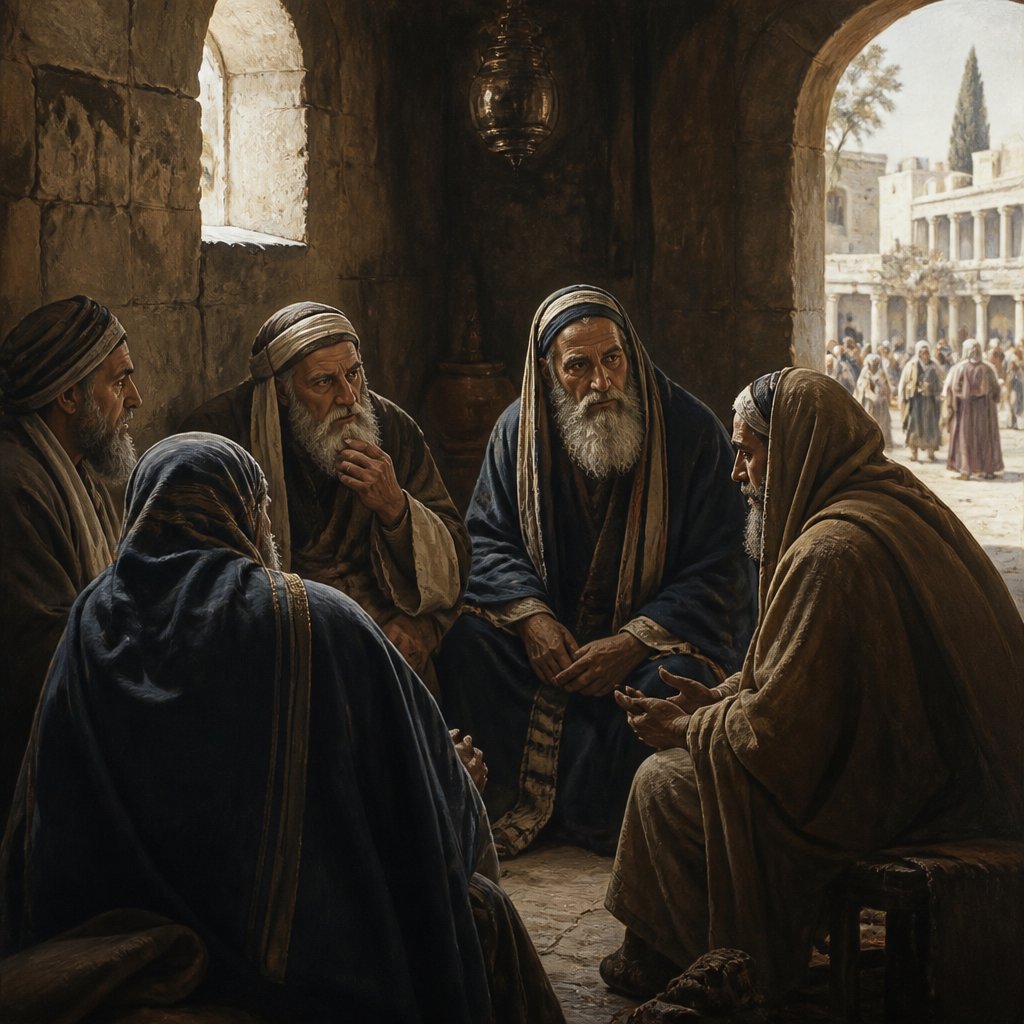
In Matthew 26:5 (KJV), we encounter a pivotal moment in the unfolding narrative of Jesus' passion: "But they said, Not on the feast day, lest there be an uproar among the people." This verse highlights a significant tension between human plans and divine timing, illustrating how the motives of the religious leaders and the enveloping crowd juxtaposed against the overarching divine narrative of redemption.
As we explore this verse, we must appreciate the backdrop of the Jewish tradition at the time of Passover – a feast that commemorates the Israelites’ deliverance from slavery in Egypt. For the people, this holy day was steeped in deep significance, filled with remembrance, solemnity, and a collective unity centered around their identity as God’s chosen people. It was a time marked by anticipation and celebration, creating an atmosphere charged with fervor. The religious leaders, fearful of potential uprisings, chose to defer their plans to arrest Jesus, reflecting their desire to maintain control and order amidst the social chaos that might ensue.
Yet, their hesitation reveals an ironic truth about human understanding versus divine purpose. While they saw a risk in acting during this sacred time, God had orchestrated this moment as part of His grand design, where the Lamb of God would soon become the ultimate sacrifice for humanity’s sin. The leaders’ rational concerns were dwarfed by God’s sovereign plan, which unfolded without regard to human calendars and social conventions.
In our own lives, we often navigate similar tensions. We make plans, set timelines, and construct timelines based on what makes sense to us within our understanding of the world. However, God may have a different agenda, one that perhaps doesn’t align with our expectations or desires. How many times have we anxiously awaited an answer to prayer, feeling the urgency of our circumstances, only to find God’s response unfolding in His own perfect timing?
The religious leaders’ concerns about an uproar hint at a larger question: how do we respond when our world feels chaotic and out of control? Just as they were attempting to preserve their status quo, we too might be tempted to resist changes brought on by God’s disruptive grace in our lives, fearing the repercussions—both internal and external. We might worry about how God’s timing, when perceived as slow or inconvenient, could affect our relationships, our careers, or even our spiritual lives.
The beauty of God’s timing is encapsulated by the truth that His delays are not denials. The timing of Passover marked an essential divine appointment that prefigured Jesus' crucifixion, and His timing culminated in heavenly glory that reshaped human history. We can rest assured that God is not bound by our calendars or our capacity to comprehend the sweeping narratives surrounding us. His plans are often higher and broader than we can fathom. The Apostle Paul succinctly states in Ephesians 3:20 (KJV) that God is "able to do exceeding abundantly above all that we ask or think."
As we meditate on Matthew 26:5, let it remind us to surrender our timelines to God’s divine orchestration. When we face moments of uncertainty, let us lean upon the understanding that God’s purpose is rarely struck down by our apprehensions. Instead, we are invited into a journey of faith, trusting that our lives, filled with potential upheaval, are carefully guided by the One who knows all things.
May we pray for wisdom to recognize God's hand at work in the timing of our lives, joyfully embracing both the feast days and the mysteries that unfold therein. As we surrender our anxiety for divine purpose, we can rest assured that God’s love transcends our fears and doubts, beckoning us ever closer to Him in trust and expectation.
Get our apps


Artwork for Matthew 26:5

Matthew 26:5 - "But they said, Not on the feast day, lest there be an uproar among the people."
"But they said, Not on the feast day, lest there be an uproar among the people." - Matthew 26:5

Matthew 5:26 - "Verily I say unto thee, Thou shalt by no means come out thence, till thou hast paid the uttermost farthing."

Matthieu 5:23-26

Matthew 26:25

Matthew 26:15

Matthew 19:26

Matthew 26:15

Matthew 27:26

Matthew 27:26

Matthew 26:53

Matthew 26:65

Matthew 26:41

Matthew 26:53

Matthew 26:36-46
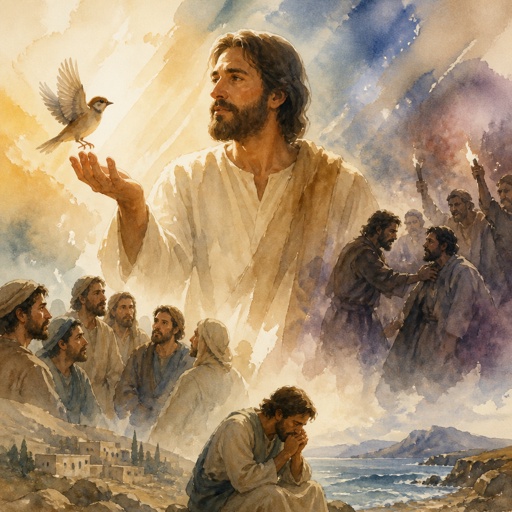
Matthew 10:26-33

Matthew 26:26 - "¶ And as they were eating, Jesus took bread, and blessed it, and brake it, and gave it to the disciples, and said, Take, eat; this is my body."

Matthew 22:26 - "Likewise the second also, and the third, unto the seventh."

Matthew 9:26 - "And the fame hereof went abroad into all that land."

Matthew 26:54 - "But how then shall the scriptures be fulfilled, that thus it must be?"

Matthew 26:6 - "¶ Now when Jesus was in Bethany, in the house of Simon the leper,"

Matthew 26:4 - "And consulted that they might take Jesus by subtilty, and kill him."

Matthew 26:16 - "And from that time he sought opportunity to betray him."

Matthew 5:5 - "Blessed are the meek: for they shall inherit the earth."

Matthew 5:44

Matthew 5:44

Matthew 5

Matthew 5
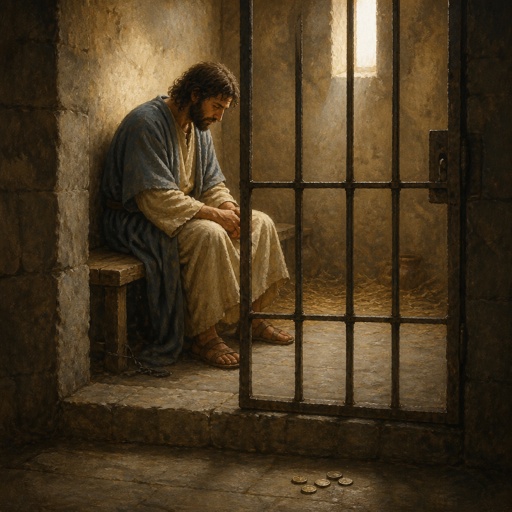
"Verily I say unto thee, Thou shalt by no means come out thence, till thou hast paid the uttermost farthing." - Matthew 5:26

Matthew 26:72 - "And again he denied with an oath, I do not know the man."