What does Matthew 26:5 mean?
“But they said, Not on the feast day, lest there be an uproar among the people.” — Matthew 26:5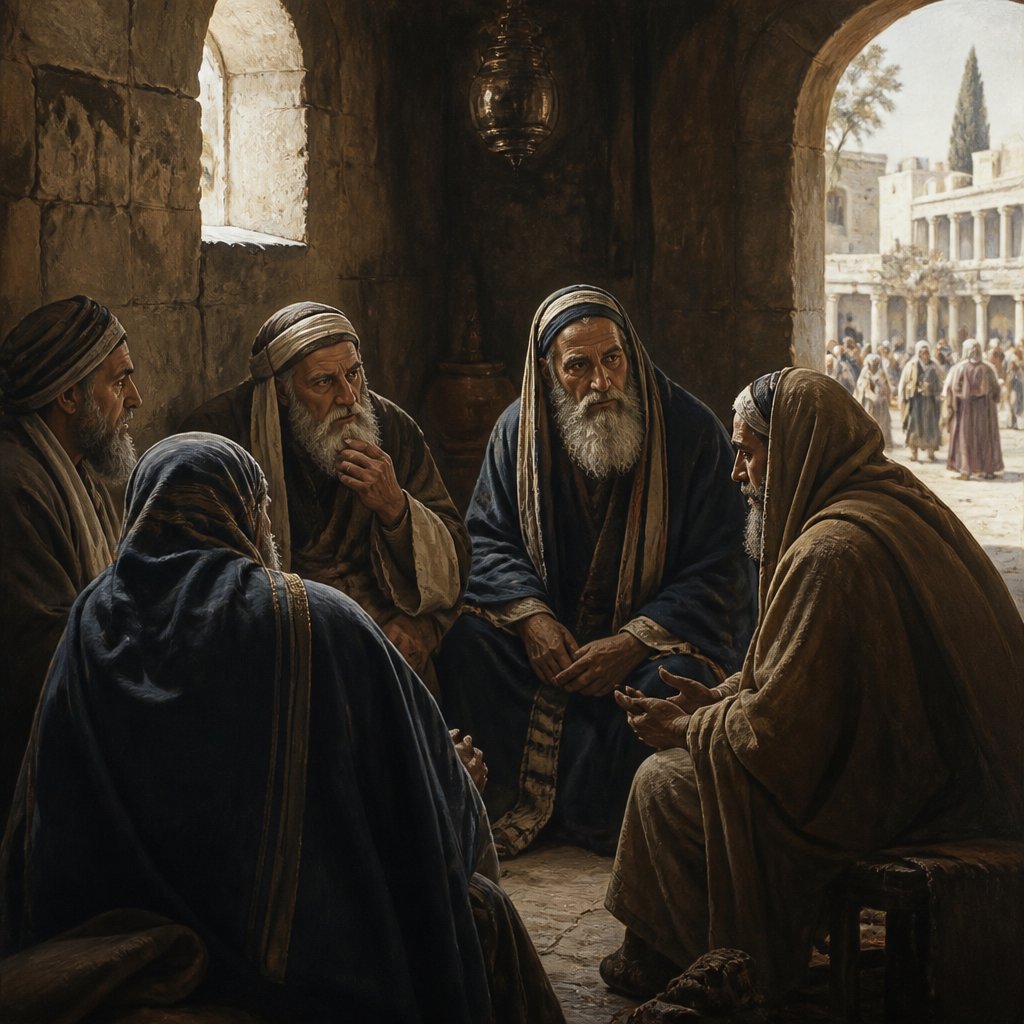
The verse Matthew 26:5 from the King James Version of the Bible reads, "But they said, Not on the feast day, lest there be an uproar among the people." This particular verse comes from the narrative in the Gospel of Matthew that details the events leading up to Jesus' arrest, trial, and crucifixion.
In this particular passage, the religious leaders and chief priests are plotting to arrest and kill Jesus, but they are concerned about the potential reaction from the people, especially during the upcoming feast day. The feast day referred to here is likely the Passover, a significant event in the Jewish calendar that would have drawn large crowds to Jerusalem. The religious leaders feared that if they were to arrest Jesus during the feast, it might incite a riot or rebellion among the people.
This verse is part of a larger narrative that underscores the political and religious tension surrounding Jesus' ministry. The religious leaders viewed Jesus as a threat to their authority and were actively seeking ways to eliminate him. On the other hand, the common people were drawn to Jesus and his teachings, creating a volatile situation that was ripe for conflict.
In a broader context, this verse speaks to the political and social climate of the time, where the religious elite held power and were willing to go to great lengths to maintain their control. It also emphasizes the threat that Jesus posed to the existing religious and social order, as his message of love, forgiveness, and salvation was seen as a direct challenge to the traditional religious hierarchy.
From a thematic perspective, this verse highlights the contrast between the motives of the religious leaders and the mission of Jesus. The religious leaders were driven by fear and self-interest, seeking to protect their own power and authority, while Jesus was motivated by love and a desire to bring salvation to all people. Additionally, the verse also underscores the tumultuous and unpredictable nature of the political and social climate at the time, as well as the deep-seated opposition that Jesus faced from those in positions of power.
Symbolically, the decision to avoid arresting Jesus during the feast day carries a deeper significance. The Passover feast was a time of remembrance and celebration of God's deliverance of the Israelites from slavery in Egypt. By choosing to defer Jesus' arrest to a later time, the religious leaders unwittingly aligned themselves with the oppressive forces of the past, standing in contrast to the liberating message that Jesus proclaimed.
Ultimately, this verse serves as a pivotal moment in the narrative leading up to Jesus' crucifixion, highlighting the brewing conflict and the mounting tension between Jesus and the religious establishment. It foreshadows the impending confrontation that will culminate in Jesus' arrest, trial, and eventual crucifixion. Additionally, it sets the stage for the dramatic events that will unfold in the following chapters, as Jesus' mission comes into direct conflict with the entrenched powers of the time.
In conclusion, Matthew 26:5 from the King James Version of the Bible encapsulates the larger themes of political and religious tension, contrasting motives, and impending conflict that are central to the narrative of Jesus' arrest and crucifixion. It serves as a poignant reminder of the opposition and sacrifice that Jesus faced in his quest to bring salvation and redemption to all people.
Get our apps


Artwork for Matthew 26:5

Matthew 26:5 - "But they said, Not on the feast day, lest there be an uproar among the people."
"But they said, Not on the feast day, lest there be an uproar among the people." - Matthew 26:5

Matthew 5:26 - "Verily I say unto thee, Thou shalt by no means come out thence, till thou hast paid the uttermost farthing."

Matthieu 5:23-26

Matthew 26:25

Matthew 26:15

Matthew 19:26

Matthew 26:15

Matthew 27:26

Matthew 27:26

Matthew 26:53

Matthew 26:65

Matthew 26:41

Matthew 26:53
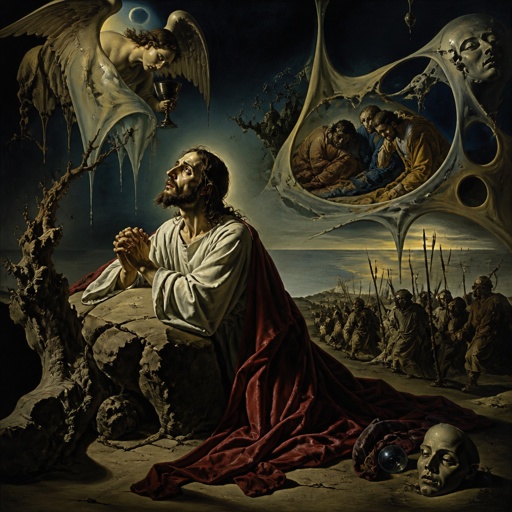
Matthew 26:36-46
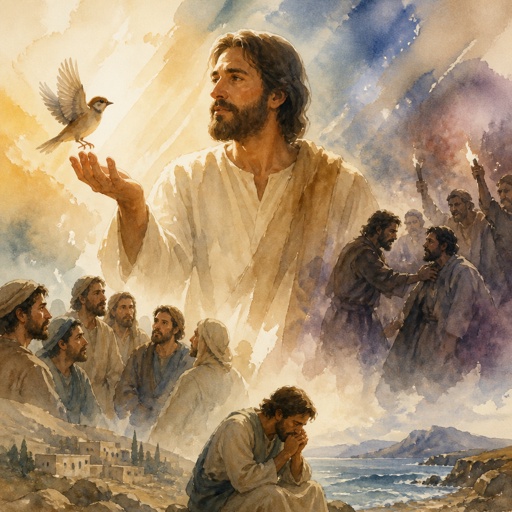
Matthew 10:26-33

Matthew 26:26 - "¶ And as they were eating, Jesus took bread, and blessed it, and brake it, and gave it to the disciples, and said, Take, eat; this is my body."

Matthew 22:26 - "Likewise the second also, and the third, unto the seventh."

Matthew 9:26 - "And the fame hereof went abroad into all that land."

Matthew 26:54 - "But how then shall the scriptures be fulfilled, that thus it must be?"

Matthew 26:6 - "¶ Now when Jesus was in Bethany, in the house of Simon the leper,"

Matthew 26:4 - "And consulted that they might take Jesus by subtilty, and kill him."

Matthew 26:16 - "And from that time he sought opportunity to betray him."

Matthew 5:5 - "Blessed are the meek: for they shall inherit the earth."

Matthew 5:44

Matthew 5:44

Matthew 5

Matthew 5
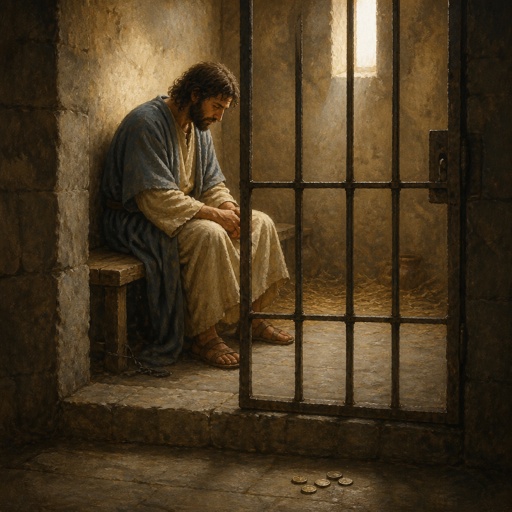
"Verily I say unto thee, Thou shalt by no means come out thence, till thou hast paid the uttermost farthing." - Matthew 5:26

Matthew 26:72 - "And again he denied with an oath, I do not know the man."