The Cost of True Worship
“But when his disciples saw it, they had indignation, saying, To what purpose is this waste?” — Matthew 26:8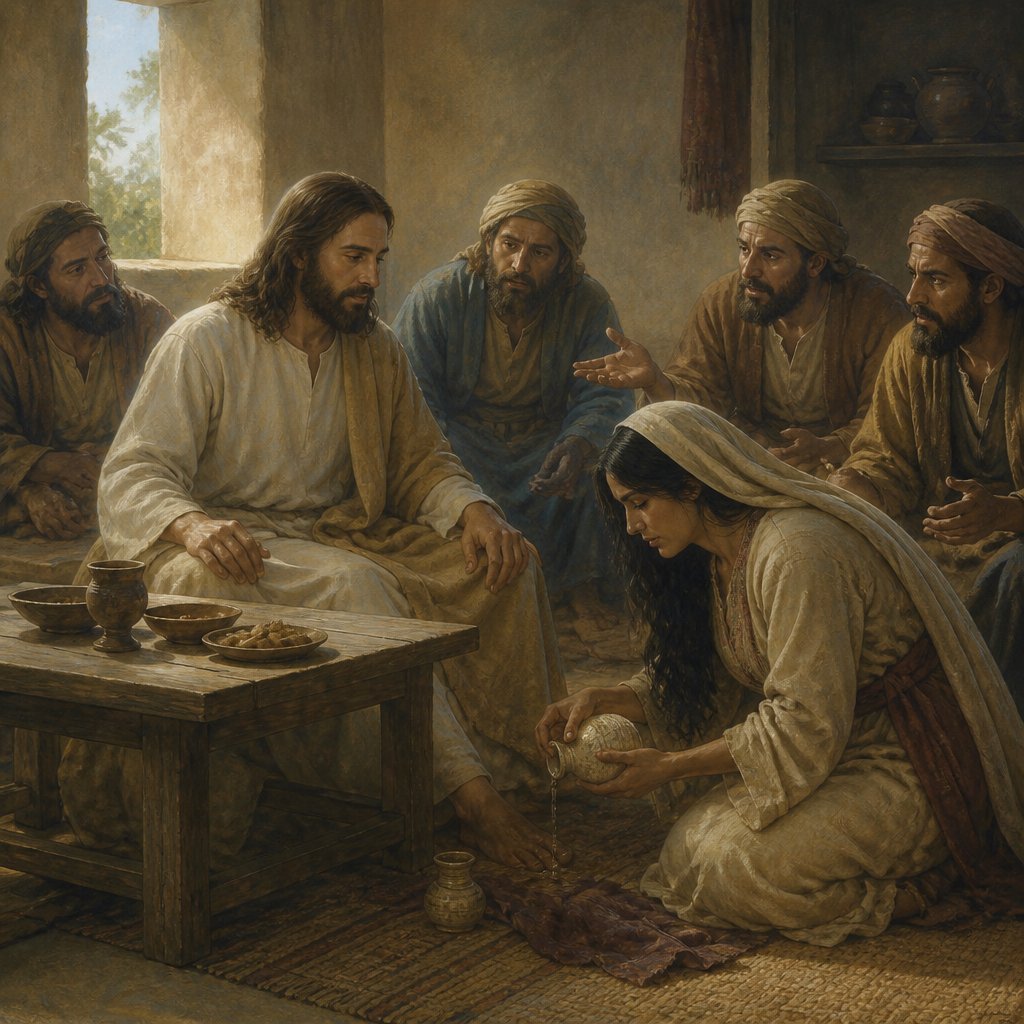
Matthew 26:8 tells us, "But when his disciples saw it, they had indignation, saying, To what purpose is this waste?" This verse captures a moment of profound tension between the value of material possessions and the heart of true worship. It takes us into a critical scene in the life of Christ, where the extravagant act of worship by Mary, sister of Lazarus, challenges the disciples' understanding of value, purpose, and devotion.
In the preceding verses, Mary pours an expensive ointment, made of spikenard, over Jesus' head. This gesture of deep love and reverence was not merely an act of kindness; it was a declaration of her understanding of who Jesus was—the Messiah, the Savior, the Holy One. Yet, the reaction of the disciples serves as an indictment not only of their spiritual blindness but also of our own propensity to value earthly concerns over divine devotion.
The word "indignation" indicates a strong displeasure, a feeling of anger and resentment. The disciples, despite being close followers of Christ, fail to grasp the significance of the moment. They see the expensive perfume as a waste of resources. Their perspective is engendered by worldly logic, which prioritizes practicality and economy over generosity and sacrifice. It’s easy to fall into this same trap today, measuring acts of devotion by their earthly worth rather than their spiritual significance.
Mary's act of worship can teach us so much about the nature of true devotion. In a culture that often equates success with material gain, her actions remind us that worship often requires sacrifice. What she poured out was not just a costly ointment but the very essence of her love and gratitude toward Jesus. Many of us may ponder: Are we pouring our ‘oil’ out for Jesus in our daily lives, or are we hoarding it, fearing the cost?
In essence, Mary’s act of devotion was prophetic—a foreshadowing of Jesus’ impending sacrifice on the cross. Jesus himself interprets her act by saying, "For in that she hath poured this ointment on my body, she did it for my burial" (Matthew 26:12 KJV). This profound insight challenges our understanding of the purpose behind sacrificial worship. It calls us to question: Are we prepared to give our all to Christ, even when it might appear foolish to others? The disciples’ reaction mirrors the world’s perception of value; however, God's economy operates under different rules—where the heart behind the giving holds far greater weight than the material cost.
This passage strikes at the very core of our motivations as worshippers. Each moment we spend in worship invites us to assess our priorities. Are we genuinely sacrificing for God, or are we saving our best for ourselves, allowing fear and pragmatism to dictate our actions? In our churches, our communities, and our private lives, we may find opportunities to express extravagant love towards God, even when it feels counterintuitive. It is an invitation to pour out our lives, dreams, and resources for the sake of the Kingdom, unconcerned with how it might look on the surface.
Finally, let us also learn from Jesus' response. He defends Mary's actions by stating, "For ye have the poor always with you; but me ye have not always" (Matthew 26:11 KJV). Here, He emphasizes the importance of seizing the moment to honor God. This reminds us that our worship should vigorously respond to the revelation of Christ in our lives.
As we ponder this verse today, let’s ask ourselves: What is holding us back from fully committing to Christ? Are there things we deem too valuable to let go? May we embrace the heart of Mary—a heart that sees beyond the 'waste' and chooses to lavish love upon our Savior without restraint. True worship, after all, is about recognizing Jesus and responding with everything we have, regardless of what the world may think.
Get our apps


Artwork for Matthew 26:8

Matthew 26:8 - "But when his disciples saw it, they had indignation, saying, To what purpose is this waste?"
"But when his disciples saw it, they had indignation, saying, To what purpose is this waste?" - Matthew 26:8

Matthew 8:26 - "And he saith unto them, Why are ye fearful, O ye of little faith? Then he arose, and rebuked the winds and the sea; and there was a great calm."

"And he saith unto them, Why are ye fearful, O ye of little faith? Then he arose, and rebuked the winds and the sea; and there was a great calm." - Matthew 8:26

Matthew 26:25

Matthew 26:15

Matthew 19:26

Matthew 26:15

Matthew 27:26

Matthew 27:26

Matthew 26:53

Matthew 26:41

Matthew 26:65

Matthew 26:53
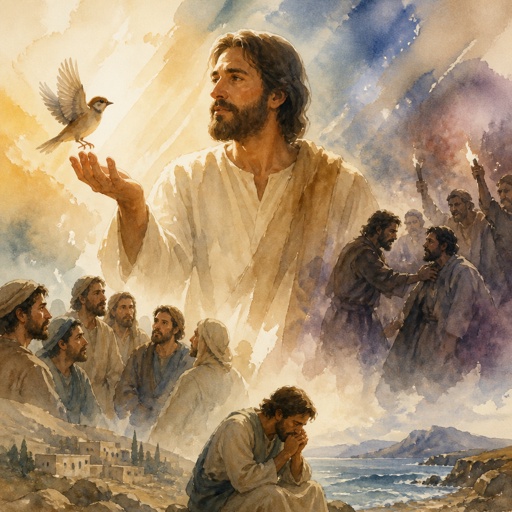
Matthew 10:26-33
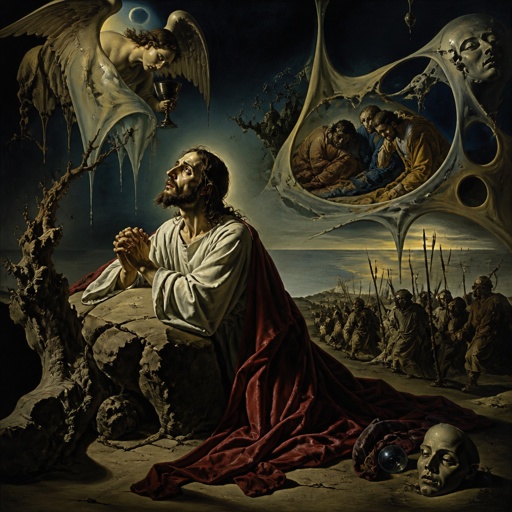
Matthew 26:36-46

Matthew 26:26 - "¶ And as they were eating, Jesus took bread, and blessed it, and brake it, and gave it to the disciples, and said, Take, eat; this is my body."

Matthew 22:26 - "Likewise the second also, and the third, unto the seventh."

Matthew 9:26 - "And the fame hereof went abroad into all that land."

Matthew 26:54 - "But how then shall the scriptures be fulfilled, that thus it must be?"

Matthew 26:6 - "¶ Now when Jesus was in Bethany, in the house of Simon the leper,"

Matthew 26:4 - "And consulted that they might take Jesus by subtilty, and kill him."

Matthew 26:5 - "But they said, Not on the feast day, lest there be an uproar among the people."

Matthew 26:16 - "And from that time he sought opportunity to betray him."

Matthew 8:13

Matthew 8:13

Matthew 8:13

Matthew 8:32

Matthew 8:32

Matthew 8:32