The Lament of Rachel: A Reflection on Loss and Hope
“In Rama was there a voice heard, lamentation, and weeping, and great mourning, Rachel weeping for her children, and would not be comforted, because they are not.” — Matthew 2:18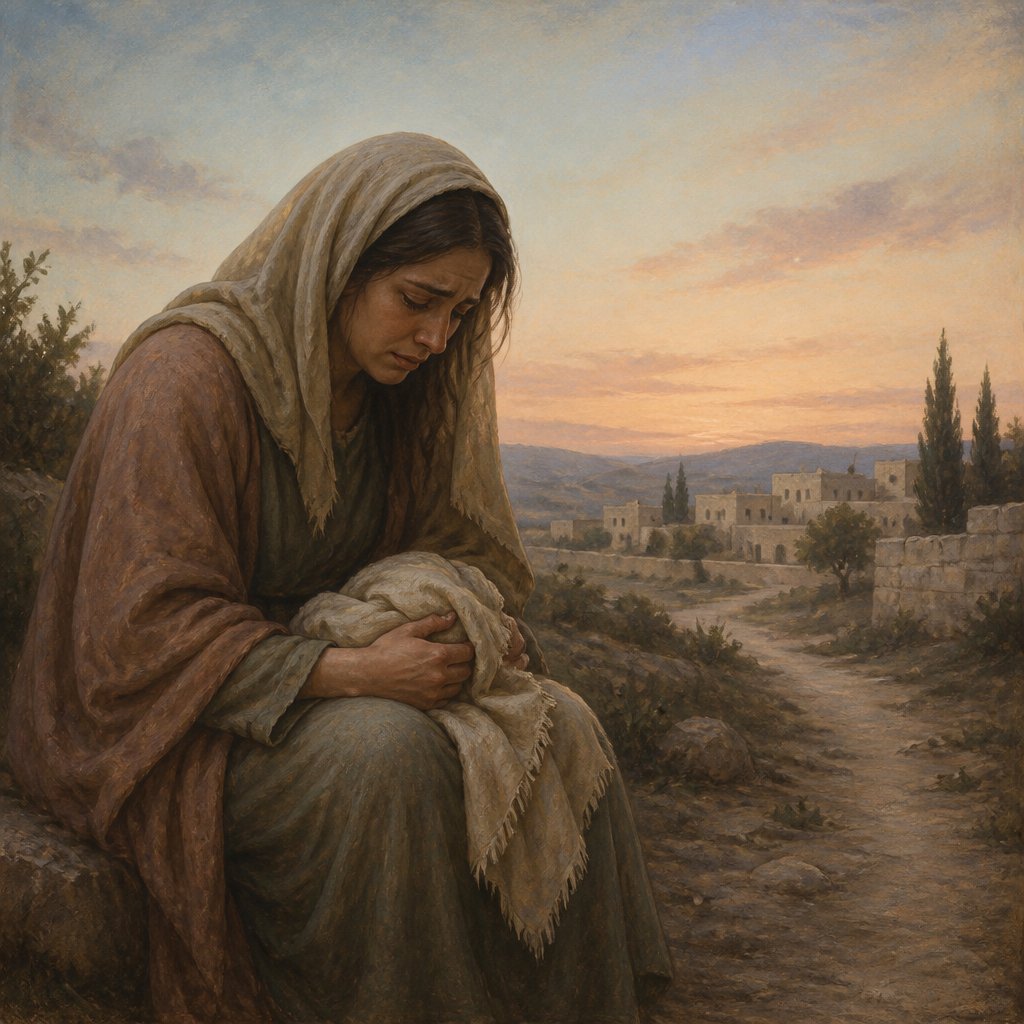
In our lives, we often encounter the depths of sorrow and profound grief. The verse from Matthew 2:18 reminds us of a deep historical and emotional pain: "In Rama was there a voice heard, lamentation, and weeping, and great mourning, Rachel weeping for her children, and would not be comforted, because they are not." (KJV) This lamentation evokes an image of devastating loss, a resonating cry of a mother mourning for her children—a scene that transcends time, echoing in the lives of many who have experienced the piercing pain of bereavement.
To comprehend this verse fully, we must first understand its context. In the narrative, King Herod, in a desperate attempt to eliminate any perceived threat to his throne, ordered the slaughter of all male children under the age of two in Bethlehem. It was not a mere political maneuver; it was an act of barbarism that struck at the very heart of families and communities. Matthew quotes the prophecy of Jeremiah to emphasize the depth of despair that blanketed the land. Rachel, representing the mothers of Israel, becomes a symbol for every parent who has faced the unfathomable pain of losing a child.
Rachel’s weeping is not just an ancient story; it resonates with countless modern-day scenarios where parents mourn for lost children—be it through death, estrangement, or the dangers of a world that often seems against them. In our contemporary context, the lamentation can emerge from various forms of loss: through violence, addiction, illness, or even the gradual drifting apart in relationships. When we encounter loss, we, like Rachel, may feel compelled to weep and lament, often finding it difficult to receive comfort.
The emotional intensity of this verse reminds us that it is okay to grieve fully and genuinely. For many, the mourning process is not linear. It can be cyclical, often bringing waves of sorrow. We may find ourselves in moments of unexpected tears, or isolated grief; Rachel’s anguish speaks beautifully to this experience. There is a place for lament in our spiritual journey. It acknowledges our pain and reminds us that we are human, that we are created with the capacity to love deeply and to suffer significantly.
Yet, in the midst of this profound sorrow, we are reminded of a hope that transcends our present circumstances. While Rachel's weeping is sorrowful, it is important to recognize that the narrative does not end with her lament. The very next chapter unfolds with the arrival of hope through Christ, who entered our world to bring healing and restoration. This hope calls us to believe that, alongside our weeping, there is a promise of comfort and renewed life. Thus, while mourning is a natural response, we are invited to move toward healing.
As we reflect upon the depth of Rachel’s sorrow, we must also acknowledge the broader narrative of redemption and restoration that runs throughout Scripture. God hears the cries of His people. Throughout the Bible, we see that mourning does not go unnoticed by our Creator. He is near to the brokenhearted and saves those who are crushed in spirit (Psalm 34:18). In our pain, we are never alone. We have a Savior who understands our plight, who walked the path of suffering and transformed death into life.
In practical terms, how can we engage with our sorrow while holding onto hope? We must honor our grief. Share our feelings with trusted friends or communities; do not withdraw in isolation. We might find solace in prayer, asking God to pour His comfort into our lives and guide us as we navigate our feelings of loss. Let us also seek healthy expressions of grief through creative outlets, remembering those we've lost while allowing joy and hope to slip back into our hearts.
As we close this reflection, let us embrace both the heaviness of Rachel’s lamentation and the promise of resurrection. May we acknowledge our losses but also remember that every end in our lives heralds the possibility of a new beginning through Christ. Let us hold onto the truth that, although we may weep, joy will come in the morning (Psalm 30:5). In the tension between mourning and hope, we find the breadth of God’s love and the promise of His everlasting presence.
Get our apps


Artwork for Matthew 2:18

Matthew 2:18 - "In Rama was there a voice heard, lamentation, and weeping, and great mourning, Rachel weeping for her children, and would not be comforted, because they are not."
"In Rama was there a voice heard, lamentation, and weeping, and great mourning, Rachel weeping for her children, and would not be comforted, because they are not." - Matthew 2:18

Matthew 18:2 - "And Jesus called a little child unto him, and set him in the midst of them,"

Matthew 18:6

Matthew 18:10

Matthew 18:6

Matthew 18:20

Matthew 6:18

Matthew 6:18

Matthew 18:20

Matthew 18:6

Matthew 18:20

"And Jesus called a little child unto him, and set him in the midst of them," - Matthew 18:2

Matthew 18:23-34

Matthew 17:17-18

Matthew 18:23-34

Matthew 18:23-34

Matthew 6:17-18

Matthew 18:23-34

Matthew 17:17-18

Matthew 13:18 - "¶ Hear ye therefore the parable of the sower."

Matthew 18:11 - "For the Son of man is come to save that which was lost."

Matthew 27:18 - "For he knew that for envy they had delivered him."

Matthew 14:18 - "He said, Bring them hither to me."

Matthew 21:18 - "Now in the morning as he returned into the city, he hungered."

Matthew 18:27 - "Then the lord of that servant was moved with compassion, and loosed him, and forgave him the debt."

Matthew 18:18 - "Verily I say unto you, Whatsoever ye shall bind on earth shall be bound in heaven: and whatsoever ye shall loose on earth shall be loosed in heaven."

Matthew 24:18 - "Neither let him which is in the field return back to take his clothes."

Matthew 11:18 - "For John came neither eating nor drinking, and they say, He hath a devil."

Matthew 22:18 - "But Jesus perceived their wickedness, and said, Why tempt ye me, ye hypocrites?"