A Journey of Transformation: Fulfilling God's Purpose in Our Lives
“And he arose, and departed to his house.” — Matthew 9:7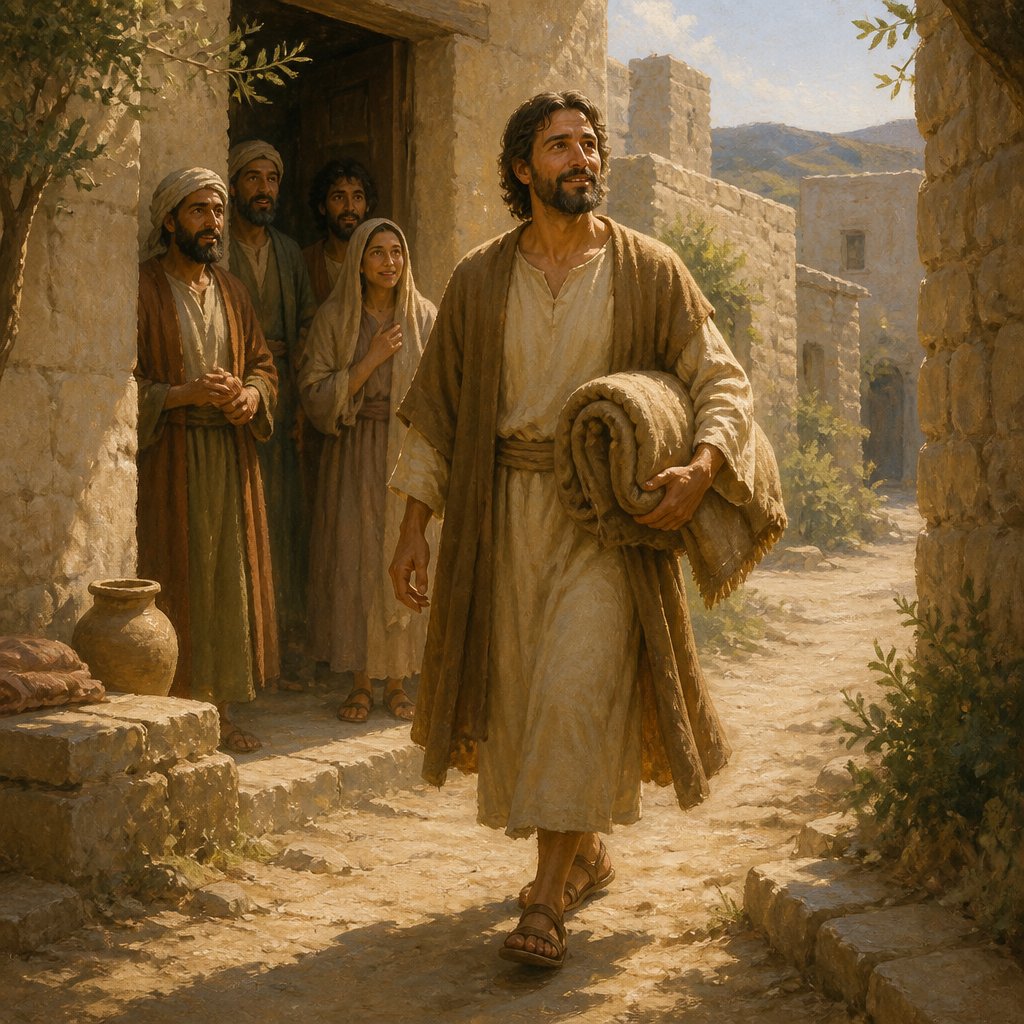
Matthew 9:7 states, "And he arose, and departed to his house." At first glance, this verse appears simple, but it is infused with profound spiritual significance. It captures a pivotal moment in the life of a man who experienced the transformative power of Jesus and emphasizes the importance of obedience and purposeful living.
In the preceding context of this passage, we find Jesus healing a paralytic man. When approached by the paralytic, Jesus first addresses his spiritual condition rather than his physical ailment. "Son, be of good cheer; thy sins be forgiven thee" (Matthew 9:2). This initial declaration underscores the priority that Jesus places on healing the soul before the body. The act of forgiving sins is a declaration of authority and love, pointing to the identity of Christ as not only a healer but also a redeemer.
Following His reassuring words, the crowd witnesses the healing of the paralytic: "And he arose, and departed to his house." This moment can encapsulate two significant aspects of our spiritual journey: the need for restoration and the call to action. To arise and depart indicates a transformation – a shift from one state to another. This man, once bound by his condition, is now free to go home, with his life forever altered by Christ's intervention.
Firstly, we must recognize that the act of rising signifies more than just physical movement. It represents an awakening to new possibilities. In our own lives, we might find ourselves in states of paralysis: whether emotional, spiritual, or situational, we are often trapped, feeling hopeless or stagnant. But Jesus offers us a chance to arise from that state, inviting us into a journey that leads to wholeness and purpose. This is not just about physical healing; it is about spiritual renewal. As Paul writes in 2 Corinthians 5:17, "Therefore if any man be in Christ, he is a new creature: old things are passed away; behold, all things are become new." The moment we decide to follow Christ, we are invited to leave behind our old selves and journey towards the new life He has for us.
Secondly, departing to his house marks a significant element of the man’s witness and testimony. In choosing to return home, he embodies the call to share the good news of Jesus Christ with those around him. It is a profound reminder that our transformation is not solely for our benefit but is also meant to touch the lives of others. Each one of us carries the responsibility to share our stories of grace, healing, and forgiveness with our families, friends, and communities. The way we live our lives should reflect the transformative power of Christ who has called us out of darkness and into His marvelous light (1 Peter 2:9).
This verse also serves as a call to action in terms of obedience. The act of rising and departing can also reveal an important truth about executing God's will for our lives. What does it mean to respond to God’s calling? It implies we must let go of our comfort zones and embrace the unknown. Just as the paralytic rose to walk home, we, too, must make the conscious decision to rise up and follow God’s leading, allowing Him to guide us in our next steps. Sometimes, the most daunting steps are the ones that lead us closer to fulfilling our purpose.
As we meditate on Matthew 9:7, let us ask ourselves: What do I need to arise from today? What constraints are holding me back? How is God calling me to depart into my own life as a witness of His greatness? Embracing the transformation God has in store means accepting our new identity in Christ and stepping into the life He has paved before us. Let us remember that we are not merely recipients of His grace but also ambassadors of His love, empowered to return and make an impact wherever we go. Let us arise and depart, carrying the light of Christ into our homes and beyond.
Get our apps


Artwork for Matthew 9:7

Matthew 9:7 - "And he arose, and departed to his house."
"And he arose, and departed to his house." - Matthew 9:7

Matthew 7:9 - "Or what man is there of you, whom if his son ask bread, will he give him a stone?"

Matthew 7:9-10 - "Or what man is there of you, whom if his son ask bread, will he give him a stone? Or if he ask a fish, will he give him a serpent?"

Matthew 7:7

"Or what man is there of you, whom if his son ask bread, will he give him a stone?" - Matthew 7:9

Matthew 9:21

Matthew 9:21-22

Matthew 9:21-22

Matthew 9:21-22

Matthew 9:21-22

Matthew 9:21-22

Matthew 7:13-14

Matthew 7:13-14

Matthew 7:13-14

Matthew 7:13-14

Matthew 7:13-14

Matthew 7:13-14

Matthew 7:13-14

Matthew 2:9

Matthew 7:13-14

Matthew 7:13-14

Matthew 7:13-14

Matthew 7:13-14

Matthew 9:9 - "¶ And as Jesus passed forth from thence, he saw a man, named Matthew, sitting at the receipt of custom: and he saith unto him, Follow me. And he arose, and followed him."

Matthew 2:9

Matthew 7:13

Matthew 7:12

Matthew 7:12

matthew 7:23