Dining with Grace: Understanding Jesus' Heart for Sinners
“And when the Pharisees saw it, they said unto his disciples, Why eateth your Master with publicans and sinners?” — Matthew 9:11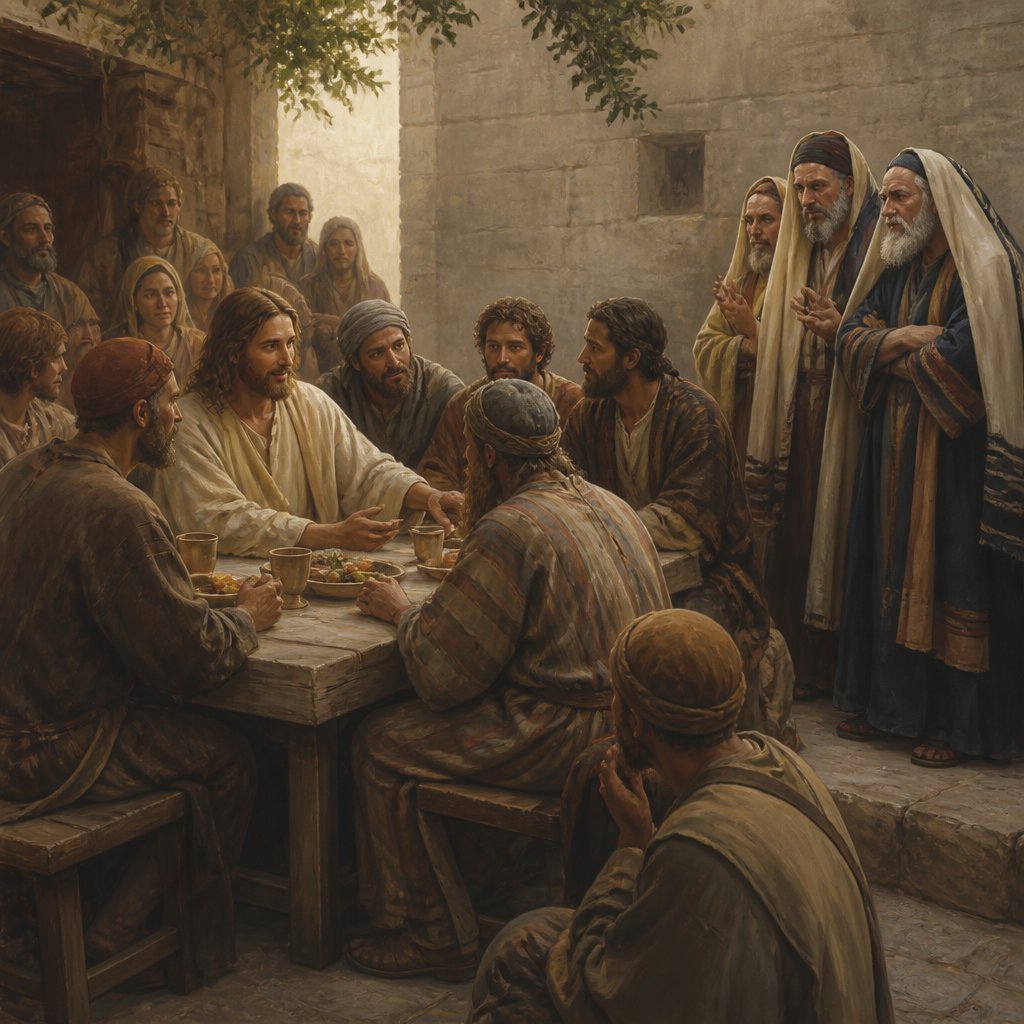
In Matthew 9:11, we encounter a pivotal moment in the ministry of Jesus: "And when the Pharisees saw it, they said unto his disciples, Why eateth your Master with publicans and sinners?" This verse opens a window into the contrasting attitudes of the religious elite and Jesus, the embodiment of grace and mercy.
The setting is significant. Jesus has just called Matthew, a tax collector, to be one of His disciples. Tax collectors were despised in Jewish society; they were known for their greed, corruption, and betrayal of their own people by collaborating with the Roman oppressors. Publicans and sinners were synonymous terms at that time, painting a picture of those deemed unworthy in the eyes of the religious leaders.
Yet, in the midst of societal disdain, Jesus chooses to dine with these very outcasts. The act of sharing a meal was profound in Jewish culture; it indicated acceptance, fellowship, and mutual trust. By eating with publicans and sinners, Jesus was not only breaking socio-religious norms but was also announcing the arrival of the Kingdom of God—a Kingdom where grace reigns and where the least, the last, and the lost are welcomed.
The Pharisees’ question reveals their misunderstanding of holiness and righteousness. To them, associating with sinners compromised their own purity and spiritual standing. They saw themselves as guardians of the law, convinced that righteous living meant distancing themselves from those they deemed unclean. However, their zeal for the law blinded them to the merciful heart of God—a heart that desires to redeem rather than condemn.
Jesus' response, though not recorded in Matthew 9:11, is explored further in verses 12-13 where He says, "They that be whole need not a physician, but they that are sick. But go ye and learn what that meaneth: I will have mercy, and not sacrifice: for I am not come to call the righteous, but sinners to repentance." This is the crux of the matter; Jesus identifies Himself as the physician for the spiritually sick. His mission is not for the self-righteous but for those who recognize their need for a Savior.
As we reflect on this passage, we are invited to examine our own hearts. Do we harbor a mindset likened to the Pharisees—one that scrutinizes the lives of others while neglecting our own need for grace? Or do we emulate Christ, extending love and compassion to those who may not fit our expectations of ‘the righteous’?
In our modern lives, there are still divisions that mirror the societal structures of Jesus’ time. We, too, can be guilty of forming boundaries based on moral judgments, status, or external appearances. It’s easy to remain within the comfort of our Christian circles, critiquing those outside, rather than reaching out with love to those who are lost. Jesus exemplifies a different approach; He did not shy away from those labeled as ‘sinners’ but instead embraced them. His dining with the outcasts was not merely an act of social rebellion but a proclamation of belonging and community.
Let us heed the call to love extravagantly. To dine with sinners is to share our lives and stories, to invite them into the light of Christ. It is about practicing radical grace—a costly gift that we ourselves have received from Christ. 1 John 4:19 reminds us, "We love him because he first loved us." Our attempt to reflect God's love should spring from our understanding of His unending grace toward us.
In the shadow of the Pharisees’ rigid pronouncements, let us be known for our compassion, for our willingness to break bread with those very people Jesus sought after. The grace of God is a beacon that draws men out of darkness and into His marvelous light. We, too, are called to be agents of that light, inviting others to discover the transformative power of Jesus—our physician, our Redeemer, our Friend.
Get our apps


Artwork for Matthew 9:11
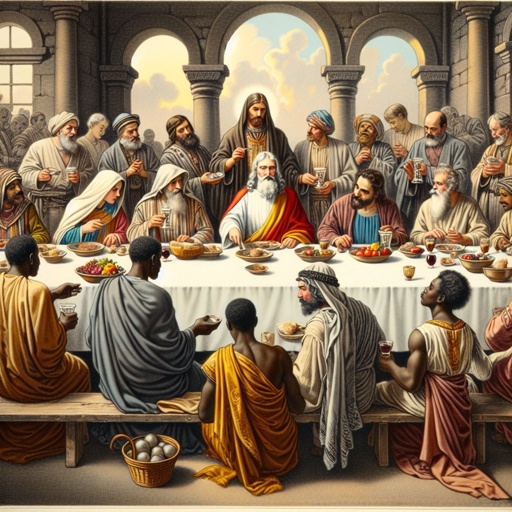
Matthew 9:11 - "And when the Pharisees saw it, they said unto his disciples, Why eateth your Master with publicans and sinners?"
"And when the Pharisees saw it, they said unto his disciples, Why eateth your Master with publicans and sinners?" - Matthew 9:11

Matthew 11:9 - "But what went ye out for to see? A prophet? yea, I say unto you, and more than a prophet."

Matthew 9:37-38

Matthew 3:11

Matthew 3:11

Matthew 3:11

Matthew 3:11

Matthew 3:11

Matthew 3:11

Matthew 9:21

Matthew 3:11-12

Matthew 3:11-12

Matthew 9:21-22

Matthew 9:21-22

Matthew 9:21-22

Matthew 9:21-22

Matthew 9:21-22
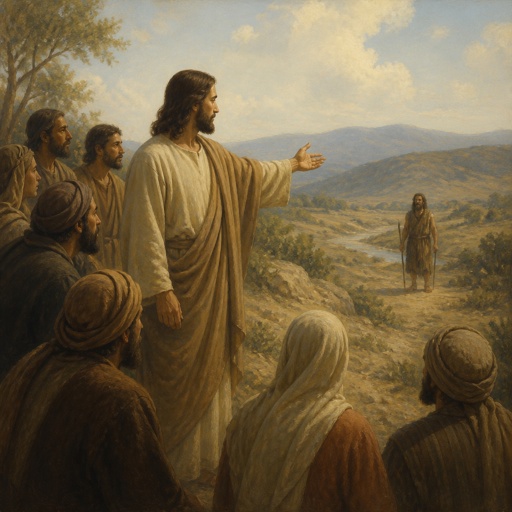
"But what went ye out for to see? A prophet? yea, I say unto you, and more than a prophet." - Matthew 11:9

Matthew 3:11

Matthew 3:11

Matthew 3:11

Matthew 2:9

Matthew 11:1

Matthew 11:1

Matthew 11:3

Matthew 2:11

Matthew 28:11

Matthew 9:9 - "¶ And as Jesus passed forth from thence, he saw a man, named Matthew, sitting at the receipt of custom: and he saith unto him, Follow me. And he arose, and followed him."

Matthew 2:9