The Baldness of Grief: Embracing the Weight of Loss
“Make thee bald, and poll thee for thy delicate children; enlarge thy baldness as the eagle; for they are gone into captivity from thee.” — Micah 1:16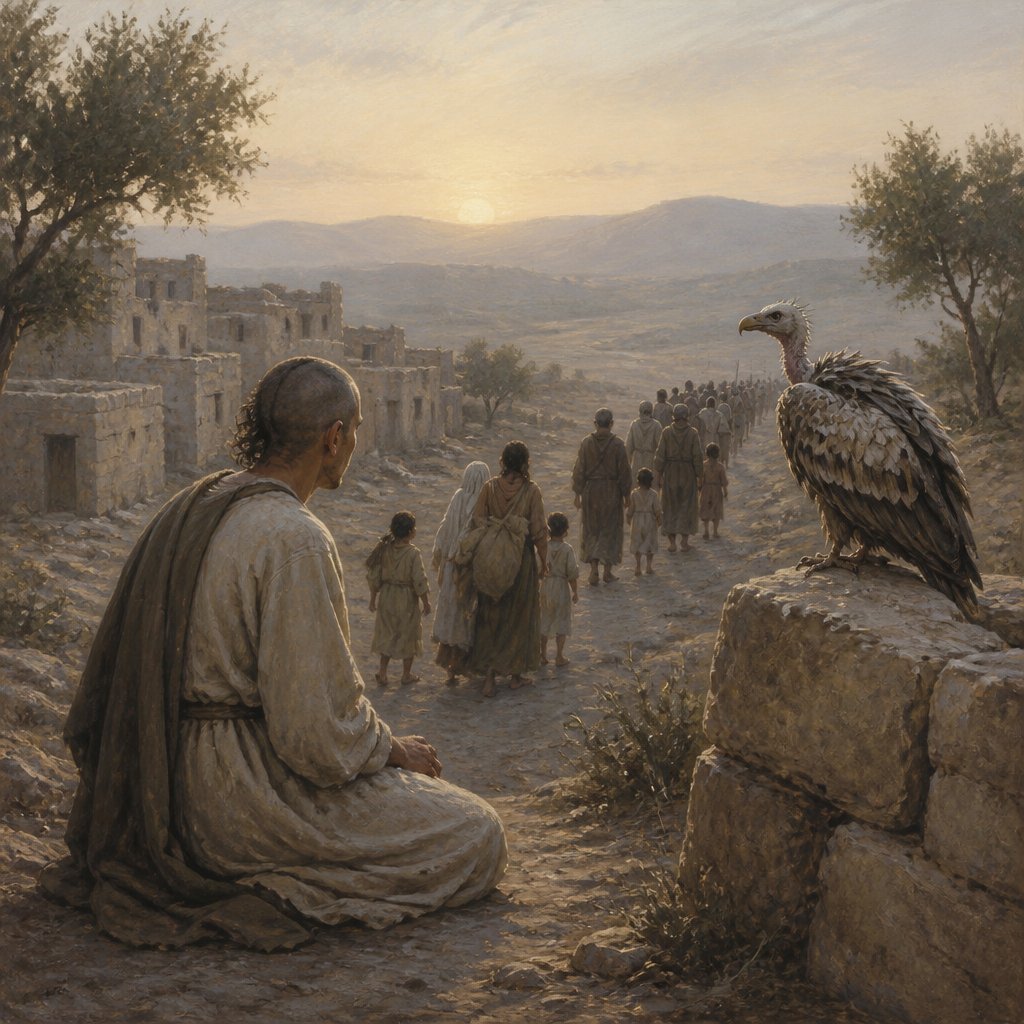
In the book of Micah, we encounter a profound expression of grief and lamentation embedded in the context of divine judgment. Micah 1:16 states, "Make thee bald, and poll thee for thy delicate children; enlarge thy baldness as the eagle; for they are gone into captivity from thee." This verse encapsulates a picture of profound sorrow, illustrating the weight of loss that the people of Israel experienced due to their disobedience and the ensuing consequences.
To fully understand the gravity of this verse, we must explore the customs and imaginaries associated with baldness in ancient Israel. In biblical times, to shave one’s head or to become bald was a clear sign of mourning. It was an external display of the internal anguish one felt due to loss or tragedy—an acknowledgment that something precious was severed or taken away. Whether through the death of a loved one or, in this case, the captivity of children, such an outward sign indicated the profound sorrow that permeated the soul.
When Micah urges the people to make themselves bald, he is not merely suggesting a physical act but rather inviting them to enter deeply into their grief and acknowledge the dire situation they found themselves in. The children, referred to as 'delicate', symbolize innocence and vulnerability—traits that are easily shattered by the harshness of life and by the consequences of sin. These children were not just lost to captivity; their loss represented a far deeper rupture in the fabric of family, society, and covenant relationship with God.
As we reflect on this verse, we are confronted with the stark reality of grief and loss. It beckons us to consider the losses in our own lives—those moments when we have felt the pain of separation, whether through physical death, estrangement, or the fading of dreams we once held dear. The imagery in Micah serves as a call for us to not shy away from this grief but to acknowledge it, to wear it as a badge of our humanity and our experience in a fallen world.
In times of loss, it’s easy to become overwhelmed by despair, to feel as if hope has escaped us. However, it is crucial to understand that grief, while painful, can also be a pathway to deeper healing. When we allow ourselves to grieve fully, we create space for transformation and renewal to occur within our hearts. Just as the loss of the children led to a physical response, so too can our moments of grief lead to spiritual awakening.
Moreover, the call to "enlarge thy baldness as the eagle" paints a vivid picture of embracing our grief in its fullness. The eagle, a powerful and majestic creature, can soar high above its surroundings, available to rise above the storms of life. Just as the eagle possesses the ability to look down upon its challenges, we, too, are invited to rise above our circumstances through prayer and reliance on God. By acknowledging our grief, we position ourselves to seek God’s comfort and strength, enabling us to find hope amidst despair.
As we engage with this verse, it is essential to remember the overarching narrative of God’s faithfulness. For the Israelites, despite their captivity due to their sins, God’s covenant promise remained—His desire to restore and redeem His people. In our own journeys of grief, we can hold onto the assurance that even in our deepest pain, God walks with us. He grieves alongside us and promises that nothing we go through is wasted.
In conclusion, Micah 1:16 is not merely a loss lament but a powerful reminder of God's presence in times of pain. While we may be called to experience and express our grief, we also look forward to the hope of restoration that God promises. Let us not shy away from that baldness of grief but embrace it fully, knowing that through it we are brought closer to the heart of our Father, who weeps with us and guides us towards healing.
Get our apps


Artwork for Micah 1:16

Micah 1:16 - "Make thee bald, and poll thee for thy delicate children; enlarge thy baldness as the eagle; for they are gone into captivity from thee."
"Make thee bald, and poll thee for thy delicate children; enlarge thy baldness as the eagle; for they are gone into captivity from thee." - Micah 1:16

Micah 1:1 - "The word of the LORD that came to Micah the Morasthite in the days of Jotham, Ahaz, and Hezekiah, kings of Judah, which he saw concerning Samaria and Jerusalem."

Micah 1:6 - "Therefore I will make Samaria as an heap of the field, and as plantings of a vineyard: and I will pour down the stones thereof into the valley, and I will discover the foundations thereof."

Micah 7:16 - "¶ The nations shall see and be confounded at all their might: they shall lay their hand upon their mouth, their ears shall be deaf."

Micah 5:2-5

Judges 17:1 - "And there was a man of mount Ephraim, whose name was Micah."

1 Chronicles 8:35 - "And the sons of Micah were, Pithon, and Melech, and Tarea, and Ahaz."

1 Chronicles 9:41 - "And the sons of Micah were, Pithon, and Melech, and Tahrea, and Ahaz."

1 Chronicles 9:40 - "And the son of Jonathan was Merib-baal: and Merib-baal begat Micah."

"The word of the LORD that came to Micah the Morasthite in the days of Jotham, Ahaz, and Hezekiah, kings of Judah, which he saw concerning Samaria and Jerusalem." - Micah 1:1

1 Chronicles 8:34 - "And the son of Jonathan was Merib-baal; and Merib-baal begat Micah."

1 Chronicles 5:5 - "Micah his son, Reaia his son, Baal his son,"

1 Chronicles 9:15 - "And Bakbakkar, Heresh, and Galal, and Mattaniah the son of Micah, the son of Zichri, the son of Asaph;"

Micah 1:10 - "¶ Declare ye it not at Gath, weep ye not at all: in the house of Aphrah roll thyself in the dust."
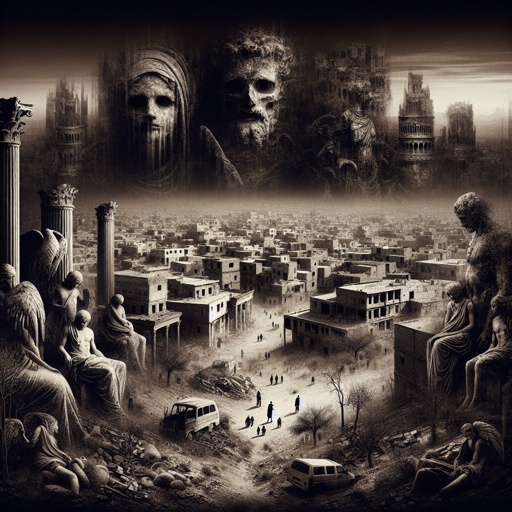
Micah 6:16 - "¶ For the statutes of Omri are kept, and all the works of the house of Ahab, and ye walk in their counsels; that I should make thee a desolation, and the inhabitants thereof an hissing: therefore ye shall bear the reproach of my people."

Micah 1:14 - "Therefore shalt thou give presents to Moresheth-gath: the houses of Achzib shall be a lie to the kings of Israel."

Micah 1:12 - "For the inhabitant of Maroth waited carefully for good: but evil came down from the LORD unto the gate of Jerusalem."

Micah 1:9 - "For her wound is incurable; for it is come unto Judah; he is come unto the gate of my people, even to Jerusalem."

Micah 1:3 - "For, behold, the LORD cometh forth out of his place, and will come down, and tread upon the high places of the earth."

"And there was a man of mount Ephraim, whose name was Micah." - Judges 17:1

Micah 1:8 - "Therefore I will wail and howl, I will go stripped and naked: I will make a wailing like the dragons, and mourning as the owls."

Micah 2:1 - "Woe to them that devise iniquity, and work evil upon their beds! when the morning is light, they practise it, because it is in the power of their hand."

Micah 1:5 - "For the transgression of Jacob is all this, and for the sins of the house of Israel. What is the transgression of Jacob? is it not Samaria? and what are the high places of Judah? are they not Jerusalem?"

Micah 3:1 - "And I said, Hear, I pray you, O heads of Jacob, and ye princes of the house of Israel; Is it not for you to know judgment?"

Micah 1:4 - "And the mountains shall be molten under him, and the valleys shall be cleft, as wax before the fire, and as the waters that are poured down a steep place."
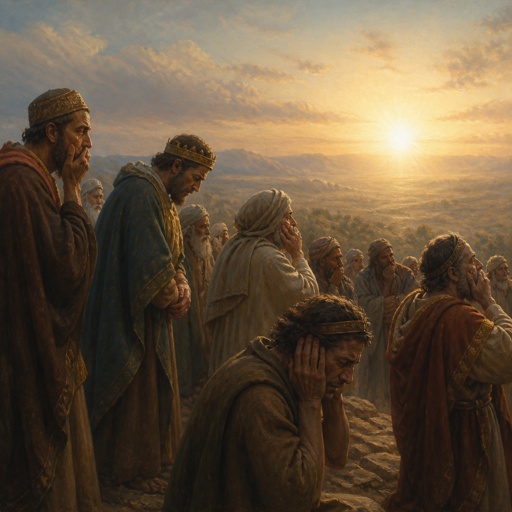
"¶ The nations shall see and be confounded at all their might: they shall lay their hand upon their mouth, their ears shall be deaf." - Micah 7:16

Micah 1:15 - "Yet will I bring an heir unto thee, O inhabitant of Mareshah: he shall come unto Adullam the glory of Israel."

Micah 6:1 - "Hear ye now what the LORD saith; Arise, contend thou before the mountains, and let the hills hear thy voice."

Micah 1:13 - "O thou inhabitant of Lachish, bind the chariot to the swift beast: she is the beginning of the sin to the daughter of Zion: for the transgressions of Israel were found in thee."