Shame, Mourning, and the Call to Stand
“Pass ye away, thou inhabitant of Saphir, having thy shame naked: the inhabitant of Zaanan came not forth in the mourning of Beth-ezel; he shall receive of you his standing.” — Micah 1:11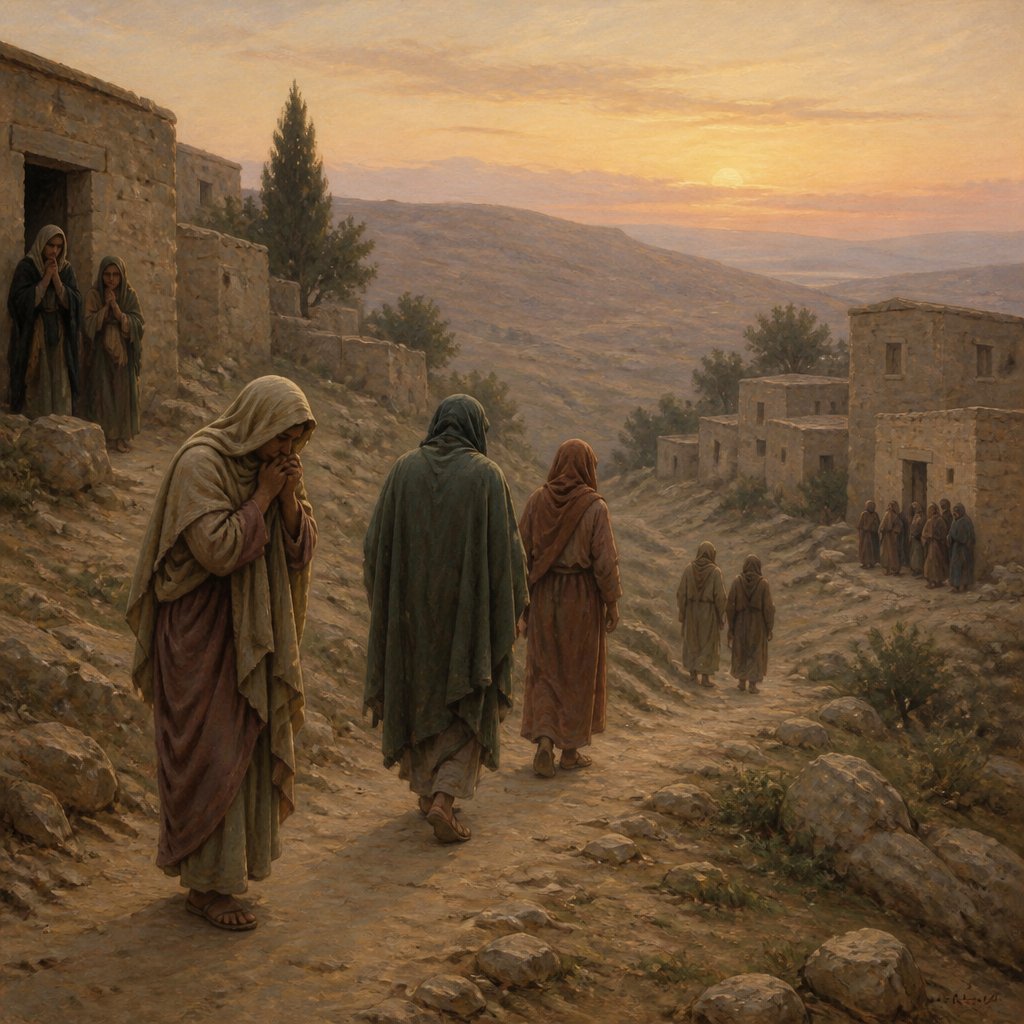
In the book of Micah, a minor prophet with a profound message, we find a powerful verse that speaks to the heart of human experience and divine expectation: "Pass ye away, thou inhabitant of Saphir, having thy shame naked: the inhabitant of Zaanan came not forth in the mourning of Beth-ezel; he shall receive of you his standing" (Micah 1:11, KJV). This verse represents a scene layered with emotion—shame, mourning, and the heavier undercurrents of social and moral accountability.
To fully grasp the significance of this verse, we must first understand its context. Micah prophesied during a tumultuous time in Israel's history, when moral decay, injustice, and social disunion were rampant. The inhabitants of the regions mentioned were facing consequences for their choices and actions, and the weight of their shame was being laid bare.
The phrase "Pass ye away, thou inhabitant of Saphir, having thy shame naked" serves as a stark reminder of vulnerability. Saphir, meaning 'beautiful,' ironically stands as a point of shame when its inhabitants encounter the devastating effects of sin and rebellion against God. To have one’s shame made naked calls to mind the biblical understanding of exposure and judgment—much like Adam and Eve realized their nakedness after the fall. Their actions led to a loss of innocence, highlighting our own tendency to stray from God’s ways and to face the natural consequences of our decisions.
This narrative isn’t just an ancient story; it is a timeless reflection of the human condition. All of us experience moments when our failings are laid bare before God, moments when we recognize our need for repentance, restoration, and accountability. We can identify with Saphir’s inhabitants; there are seasons in our lives when our spiritual nakedness makes us feel vulnerable and exposed. We often try to conceal our shame, wearing masks of false stability, but true healing can only come when we acknowledge our condition before the Lord.
The verse then transitions to the second part: "the inhabitant of Zaanan came not forth in the mourning of Beth-ezel; he shall receive of you his standing." This paints a picture of communal responsibility and the interconnectedness of individuals within a society. Zaanan, a place that means 'to go out,' signifies the reluctance or the decision not to come forth when mourning is warranted. The absence of action in the face of grief and accountability speaks volumes of desensitization and the failure to support one another in times of crisis. Just as it was in ancient Israel, we too can become apathetic to the suffering around us, forgetting that God’s calling is not just a personal journey but a collective mission rooted in love and compassion.
As the body of Christ today, we are called to encourage one another, to mourn with those who mourn (Romans 12:15), and to stand firm together in our faith—bearing each other's burdens (Galatians 6:2). The phrase “he shall receive of you his standing” can be interpreted not as a punishment but as a reminder of the responsibilities we share in our communities and the consequences of overlooking the needs of others. Every omission is a call for us to rise, to take action, and to share in each other's trials.
Ultimately, Micah 1:11 teaches us about the importance of acknowledgment, accountability, and action. It urges us to confront our shame, to grieve together, and to fulfill our role as bearers of hope and care in a fractured world. As we navigate the complexities of our lives today, may we find strength in community, healing in humility, and courage to stand together for righteousness and justice. Let us not shy away from the hard truths but embrace them as we seek the heart of God, knowing that in acknowledging our shame, we open the door to His grace and restoration.
Get our apps


Artwork for Micah 1:11

Micah 1:11 - "Pass ye away, thou inhabitant of Saphir, having thy shame naked: the inhabitant of Zaanan came not forth in the mourning of Beth-ezel; he shall receive of you his standing."
"Pass ye away, thou inhabitant of Saphir, having thy shame naked: the inhabitant of Zaanan came not forth in the mourning of Beth-ezel; he shall receive of you his standing." - Micah 1:11

Micah 1:1 - "The word of the LORD that came to Micah the Morasthite in the days of Jotham, Ahaz, and Hezekiah, kings of Judah, which he saw concerning Samaria and Jerusalem."

Micah 7:11 - "In the day that thy walls are to be built, in that day shall the decree be far removed."

Micah 6:11 - "Shall I count them pure with the wicked balances, and with the bag of deceitful weights?"

Micah 5:11 - "And I will cut off the cities of thy land, and throw down all thy strong holds:"

Acts 1:1-11

Micah 5:2-5

Acts 1:1-11

Judges 17:1 - "And there was a man of mount Ephraim, whose name was Micah."

Micah 4:11 - "¶ Now also many nations are gathered against thee, that say, Let her be defiled, and let our eye look upon Zion."

1 Chronicles 8:35 - "And the sons of Micah were, Pithon, and Melech, and Tarea, and Ahaz."

Micah 2:11 - "If a man walking in the spirit and falsehood do lie, saying, I will prophesy unto thee of wine and of strong drink; he shall even be the prophet of this people."

1 Chronicles 9:41 - "And the sons of Micah were, Pithon, and Melech, and Tahrea, and Ahaz."

1 Chronicles 9:40 - "And the son of Jonathan was Merib-baal: and Merib-baal begat Micah."

"The word of the LORD that came to Micah the Morasthite in the days of Jotham, Ahaz, and Hezekiah, kings of Judah, which he saw concerning Samaria and Jerusalem." - Micah 1:1

"In the day that thy walls are to be built, in that day shall the decree be far removed." - Micah 7:11

1 Chronicles 8:34 - "And the son of Jonathan was Merib-baal; and Merib-baal begat Micah."

1 Chronicles 5:5 - "Micah his son, Reaia his son, Baal his son,"

Revelation 1:11

Isaiah 11:1

1 Chronicles 9:15 - "And Bakbakkar, Heresh, and Galal, and Mattaniah the son of Micah, the son of Zichri, the son of Asaph;"

Revelation 1:11

Micah 1:10 - "¶ Declare ye it not at Gath, weep ye not at all: in the house of Aphrah roll thyself in the dust."

"Shall I count them pure with the wicked balances, and with the bag of deceitful weights?" - Micah 6:11

Nehemiah 11:1-19

Micah 1:14 - "Therefore shalt thou give presents to Moresheth-gath: the houses of Achzib shall be a lie to the kings of Israel."

Micah 1:12 - "For the inhabitant of Maroth waited carefully for good: but evil came down from the LORD unto the gate of Jerusalem."

Micah 1:9 - "For her wound is incurable; for it is come unto Judah; he is come unto the gate of my people, even to Jerusalem."

Micah 1:3 - "For, behold, the LORD cometh forth out of his place, and will come down, and tread upon the high places of the earth."