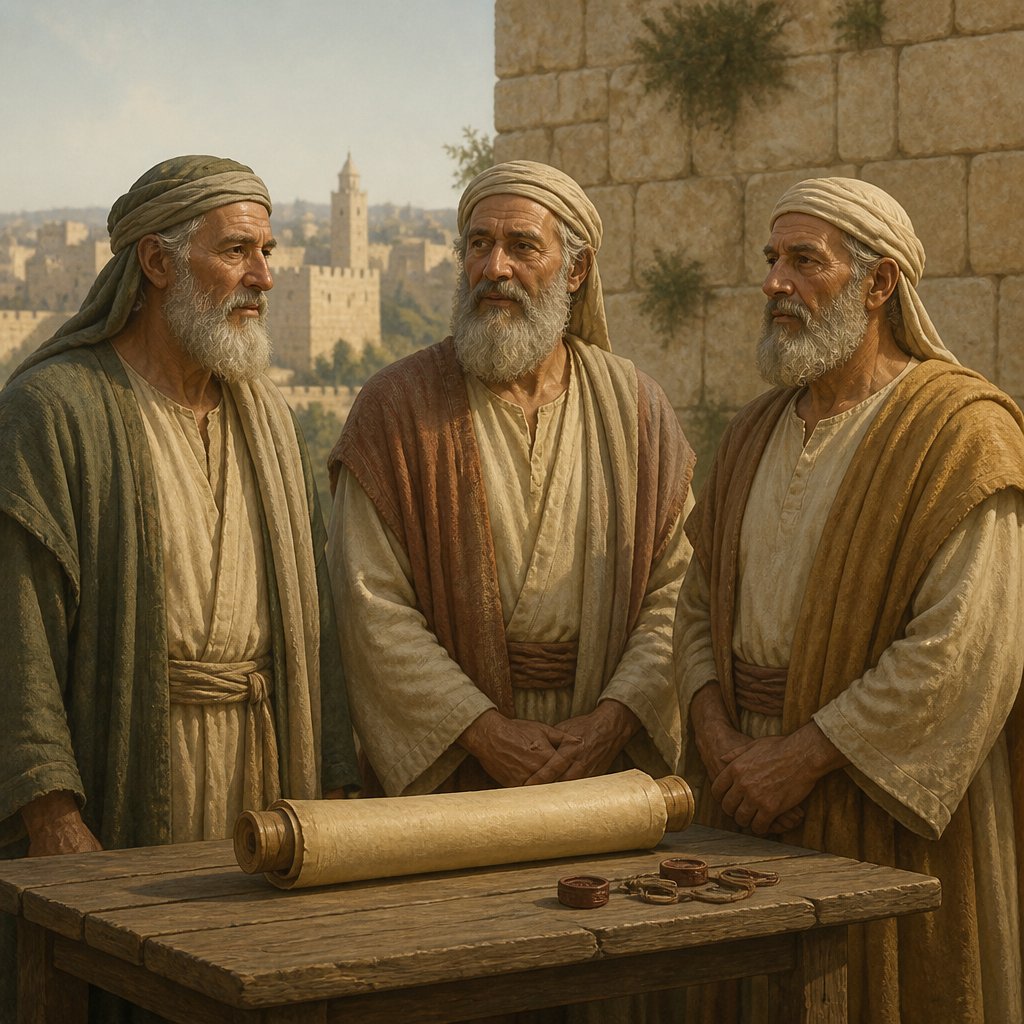
As we look into the depth of Nehemiah 10:17 which mentions “Ater, Hizkijah, Azzur,” and the broader context of Nehemiah’s time, we uncover a profound lesson about commitment and community in our spiritual walk. This verse comes from a significant moment in Israel’s history, where the people were renewing their covenant with God after returning from exile. It paints a vivid picture of the importance of remembering one’s roots, acknowledging past failures, and committing anew to faithfulness in their relationship with God.
To understand this passage, we must first examine the historical context. The Israelites had just returned to Jerusalem after years of Babylonian captivity. Their identity as a nation was in ruins; their temple lay in shambles; moral degradation was rampant. Nehemiah, inspired by God, led the effort to rebuild not just the walls of the city but the spirits of the people. In this moment of renewal, the Israelites came together to confess their sins, recount their God's faithfulness, and pledge their loyalty—that is, their covenant to follow the ways of God with their hearts and actions.
Names hold significant value in Scripture. Ater, Hizkijah, Azzur are not merely names on a list; they represent the faithful men who stood together during this renewal process. They symbolize the remnant of Israel who were willing to assert their claim to God’s promises and stand against the tide of despair that could easily swallow them. Their names remind us that in community, there is strength. When we come together in faith, we are bolstered in our commitments to live according to God’s decrees.
In the cycle of life, we usually find ourselves in a relentless battle between commitment and distraction. Whether it be in our personal lives, our families, or our communities, commitments tend to fade amidst the chaos of day-to-day existence. The Israelites, however, demonstrate that renewal does not only entail turning away from sin but also involves a conscious turning towards God and His ways. This is the essence of repentance—realigning our lives toward God’s purposes for us. As they said in Nehemiah 10:29, “They clave to their brethren, their nobles, and entered into a curse, and into an oath, to walk in God’s Law, which was given by Moses the servant of God, and to observe and do all the commandments of the Lord our God, and His judgments and His statutes.”
This act of commitment was public, communal, and binding. It was made to God, yes, but the fabric of their community was woven tightly through mutual promise. Can we take lessons from this unity? It emphasizes that our Christian walk is not an isolated venture. We must engage in community, hold each other accountable, and commit together to living out God’s Word.
In a spiritual sense, when we invoke the names like Ater, Hizkijah, Azzur, we recognize key components of our collective body—the Church. Each of us carries our name into our communities. Each of us has a role in the body of Christ, and together, we breathe life into our faith. Are we fostering that communal spirit?
In conclusion, as we remember Nehemiah 10:17, let it remind us of our need for faithful remembrance and commitment as we journey forward. Let us recommit ourselves not only to God but to each other. Let us gather strength in our stories and in our prayers. Let us willingly take a stand for the truth of God’s word, encouraging one another and building our lives on His foundation. Together, we can reclaim our promises and navigate our paths with resolve, inspired by those faithful names that remind us of a shared mission of repentance and allegiance to our Lord.
Get our apps


Artwork for Nehemiah 10:17

Nehemiah 10:17 - "Ater, Hizkijah, Azzur,"
"Ater, Hizkijah, Azzur," - Nehemiah 10:17

Nehemiah 10:1 - "Now those that sealed were, Nehemiah, the Tirshatha, the son of Hachaliah, and Zidkijah,"

Nehemiah 10:10 - "And their brethren, Shebaniah, Hodijah, Kelita, Pelaiah, Hanan,"

Nehemiah 8:10

Nehemiah 8:10

Nehemiah 8:10

Nehemiah 12:17 - "Of Abijah, Zichri; of Miniamin, of Moadiah, Piltai;"

Nehemiah 10:22 - "Pelatiah, Hanan, Anaiah,"

Nehemiah 10:24 - "Hallohesh, Pileha, Shobek,"

Nehemiah 10:5 - "Harim, Meremoth, Obadiah,"

Nehemiah 10:21 - "Meshezabeel, Zadok, Jaddua,"

Nehemiah 10:23 - "Hoshea, Hananiah, Hashub,"

Nehemiah 10:7 - "Meshullam, Abijah, Mijamin,"

Nehemiah 10:25 - "Rehum, Hashabnah, Maaseiah,"

Nehemiah 10:11 - "Micha, Rehob, Hashabiah,"

Nehemiah 10:27 - "Malluch, Harim, Baanah."

Nehemiah 10:19 - "Hariph, Anathoth, Nebai,"

Nehemiah 10:6 - "Daniel, Ginnethon, Baruch,"

Nehemiah 10:26 - "And Ahijah, Hanan, Anan,"

Nehemiah 10:16 - "Adonijah, Bigvai, Adin,"

Nehemiah 10:18 - "Hodijah, Hashum, Bezai,"

Nehemiah 10:4 - "Hattush, Shebaniah, Malluch,"

Nehemiah 10:2 - "Seraiah, Azariah, Jeremiah,"

Nehemiah 10:20 - "Magpiash, Meshullam, Hezir,"

Nehemiah 10:3 - "Pashur, Amariah, Malchijah,"

Nehemiah 10:15 - "Bunni, Azgad, Bebai,"

Nehemiah 10:13 - "Hodijah, Bani, Beninu."

Nehemiah 10:12 - "Zaccur, Sherebiah, Shebaniah,"

Nehemiah 11:10 - "Of the priests: Jedaiah the son of Joiarib, Jachin."