Sacrificial Commitment: A Call to Service
“Also we made ordinances for us, to charge ourselves yearly with the third part of a shekel for the service of the house of our God;” — Nehemiah 10:32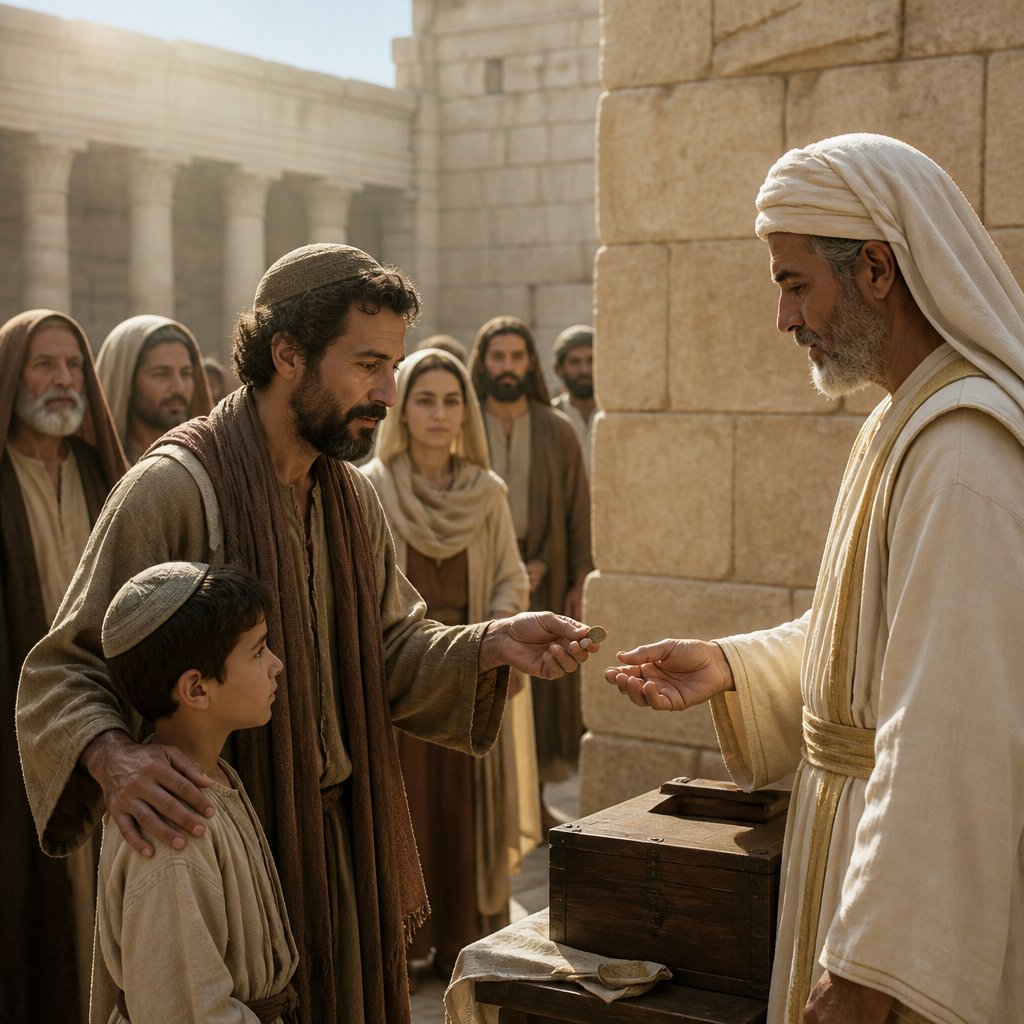
The verse taken from Nehemiah 10:32 reads: "Also we made ordinances for us, to charge ourselves yearly with the third part of a shekel for the service of the house of our God." This ancient decree speaks to us through the ages, calling us to reflect on our commitment to God's work and the communal responsibilities we shoulder as members of His body.
As we dive into this scripture, it is pivotal to understand the historical backdrop of this verse. After years of exile, the Israelites had returned to Jerusalem, and under Nehemiah's leadership, they were rebuilding not just the physical walls of the city but also the spiritual walls of their community. The people recognized that to restore their city and their relationship with God, they needed to establish structures that would ensure the proper worship and service of their Lord.
The ordinance to charge themselves a third part of a shekel yearly was more than just a tax; it was a commitment to fund the ongoing needs of the temple. The temple was not only a building but the very center of their spiritual life—the dwelling place of God's presence among them. They understood that the benefits of a thriving spiritual community required personal sacrifice and financial support. Each individual had to take responsibility for ensuring the sustainability of their worship and service to God.
By taking ownership of this financial responsibility, the Israelites were participating in a communal act that reinforced their identity as God's chosen people. Their commitment symbolizes their understanding that worship requires resources, including time, talent, and treasure. Similarly, as modern believers, we are called to contribute to the growth and sustenance of our churches and ministries, involving ourselves in both spiritual and material ways.
This idea of commitment also extends to our personal devotional practices. Are we charged to give not only monetarily but in our prayer lives, our time serving others, and engaging in fellowship? The third part of a shekel, while it may seem like a small amount, represents a significant commitment over time when multiplied by the entire community. God doesn’t just look at the largeness of our gifts; He looks at the heart behind the gift (2 Corinthians 9:7). In sharing what we have, whether materially or spiritually, we demonstrate our trust in God as our provider.
Moreover, in today's world, where individualism often prevails, Nehemiah's call is a potent reminder of the importance of community. In our churches, we often govern ourselves with preference rather than obligation. However, this scripture urges us to reflect on our contributions—are we merely attending services, or are we engaged in the ministry of the house of God? Or, more importantly, how are our lives marked by sacrificial service? In our unity and shared learning, we can accomplish much more for the Kingdom of God together than we can alone.
The act of setting ordinances for ourselves can also serve to remind us that spiritual disciplines are not just variations of personal goals but acts of allegiance grounded in love and reverence toward God. As we engage in these commitments, may we be driven by the desire for His house to flourish and our lives to be intricately woven into the fabric of His purpose.
Therefore, as you ponder this scripture today, consider what ordinances you might establish in your life to support the service of God. Perhaps it is a commitment to regular tithing, volunteering within your community, or simply praying for the ministries you care for. Let us lead lives that reflect this ancient call, pledging not just a portion but our very selves, transformed and empowered for active service in honor of the God who saved and sustains us.
Get our apps


Artwork for Nehemiah 10:32

Nehemiah 10:32 - "Also we made ordinances for us, to charge ourselves yearly with the third part of a shekel for the service of the house of our God;"
"Also we made ordinances for us, to charge ourselves yearly with the third part of a shekel for the service of the house of our God;" - Nehemiah 10:32

Nehemiah 11:32 - "And at Anathoth, Nob, Ananiah,"

Nehemiah 7:32 - "The men of Beth-el and Ai, an hundred twenty and three."

Nehemiah 12:32 - "And after them went Hoshaiah, and half of the princes of Judah,"

"And at Anathoth, Nob, Ananiah," - Nehemiah 11:32

Nehemiah 3:32 - "And between the going up of the corner unto the sheep gate repaired the goldsmiths and the merchants."

Nehemiah 10:1 - "Now those that sealed were, Nehemiah, the Tirshatha, the son of Hachaliah, and Zidkijah,"

Nehemiah 10:10 - "And their brethren, Shebaniah, Hodijah, Kelita, Pelaiah, Hanan,"

Nehemiah 8:10

Nehemiah 8:10

Nehemiah 8:10

Nehemiah 10:24 - "Hallohesh, Pileha, Shobek,"

Nehemiah 10:22 - "Pelatiah, Hanan, Anaiah,"

Nehemiah 10:5 - "Harim, Meremoth, Obadiah,"

Nehemiah 10:23 - "Hoshea, Hananiah, Hashub,"

Nehemiah 10:21 - "Meshezabeel, Zadok, Jaddua,"

Nehemiah 10:7 - "Meshullam, Abijah, Mijamin,"

Nehemiah 10:11 - "Micha, Rehob, Hashabiah,"

Nehemiah 10:27 - "Malluch, Harim, Baanah."

Nehemiah 10:25 - "Rehum, Hashabnah, Maaseiah,"

Nehemiah 10:19 - "Hariph, Anathoth, Nebai,"

Nehemiah 10:6 - "Daniel, Ginnethon, Baruch,"

Nehemiah 10:26 - "And Ahijah, Hanan, Anan,"

Nehemiah 10:16 - "Adonijah, Bigvai, Adin,"

Nehemiah 10:18 - "Hodijah, Hashum, Bezai,"

Nehemiah 10:20 - "Magpiash, Meshullam, Hezir,"

Nehemiah 10:3 - "Pashur, Amariah, Malchijah,"

Nehemiah 10:17 - "Ater, Hizkijah, Azzur,"

Nehemiah 10:4 - "Hattush, Shebaniah, Malluch,"