The Sacred Responsibility of Giving: A Reflection on Nehemiah 10:38
“And the priest the son of Aaron shall be with the Levites, when the Levites take tithes: and the Levites shall bring up the tithe of the tithes unto the house of our God, to the chambers, into the treasure house.” — Nehemiah 10:38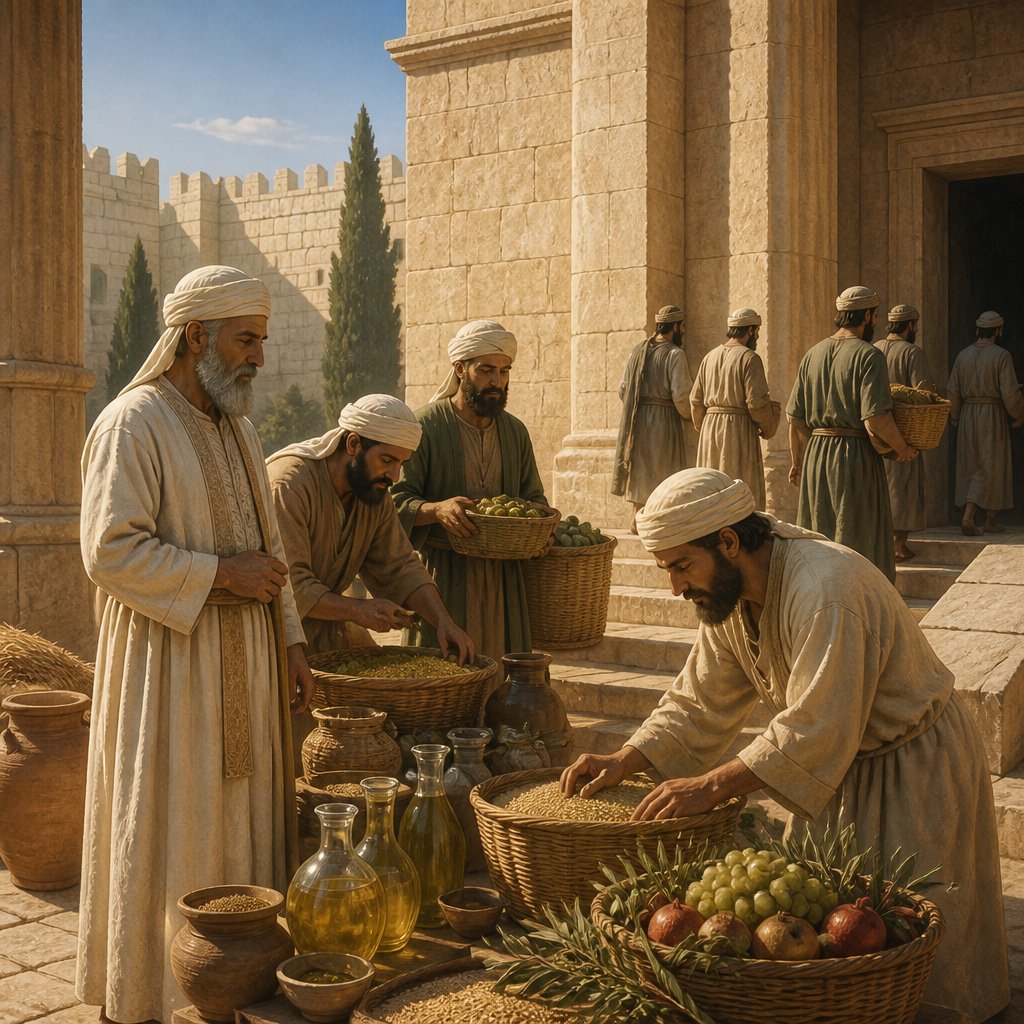
In the bustling narrative of Nehemiah, we encounter a vibrant community of exiles returning from captivity, led by Nehemiah himself, a cupbearer turned governor who dedicated his life to rebuilding Jerusalem—both its walls and its people. Within this significant scroll in the Hebrew Scriptures, we find Nehemiah 10:38: "And the priest the son of Aaron shall be with the Levites, when the Levites take tithes: and the Levites shall bring up the tithe of the tithes unto the house of our God, to the chambers, into the treasure house."
This verse opens a window into the heart of ancient Israel’s worship and community life regarding stewardship and accountability. The act of tithing—a practice deeply rooted in obedience to God—is here encapsulated within a communal and sacred framework. Tithing, typically the giving of a tenth of one’s income, serves multiple purposes: it supports the physical needs of spiritual leaders, facilitates the work of the temple, and reminds the community of God’s provision.
The first segment of the verse introduces us to the priests, descendants of Aaron, who had a unique role in the spiritual life of Israel. As they assist the Levites, we see the confluence of functions that makes the act of worship holistic. The priests represent God to the people; they are the intermediaries who facilitate communion between the divine and humanity. The Levites, tasked with care for the temple and the management of the worship space, are equally important—acting in service to fulfill God’s commands. The interplay between these roles underscores that worship is not merely a personal endeavor but also a communal act that necessitates cooperation and shared responsibilities.
When the Levites receive tithes, they are not simply collecting resources; they are orchestrating a vital channel of God’s provision. As we read, “the Levites shall bring up the tithe of the tithes,” we see the principle of accountability taking shape. The Levites themselves are to give back a portion of their received tithes. This act reminds them and the community that everything they possess comes from God. They are stewards, chosen not just to receive but to also reflect a life of gratitude and service to God.
This practice teaches us significantly about giving in our own lives. It invites us to consider the posture of our hearts toward what we possess. Are we merely consumers of God’s blessings, or do we reciprocate with gratitude through our resources—time, talent, and treasure? Tithing teaches us not only to give but to cultivate a habit of recognizing God’s hand in every aspect of our lives. It positions us to remember that God owns the cattle on a thousand hills (Psalm 50:10), and even within our provisions, we are to honor Him with the first and best, just as the Levites were to do.
Moreover, the practice is contextualized within the house of the Lord, emphasizing the importance of community worship and centralized gathering for spiritual nourishment. In our modern Christian walk, we must reflect on our own ‘treasure houses’—the local churches, ministries, or outreach programs through which God’s work is carried out. How are we contributing to these initiatives? Are we supporting our church leaders? Are we uplifting ministries that reflect the kingdom of God?
As we meditate on Nehemiah 10:38, we must embrace a commitment to diligent stewardship—both in giving and receiving. We are called to support those God has placed in spiritual authority and nurture the community of believers as a testament to our faith in action. Let this verse challenge us to examine our relationship with our resources, our attitudes towards giving, and the way we build up the body of Christ. May we bring our 'tithes of tithes' into the treasure house of God, reflecting His glory in our lives.
Get our apps


Artwork for Nehemiah 10:38

Nehemiah 10:38 - "And the priest the son of Aaron shall be with the Levites, when the Levites take tithes: and the Levites shall bring up the tithe of the tithes unto the house of our God, to the chambers, into the treasure house."
"And the priest the son of Aaron shall be with the Levites, when the Levites take tithes: and the Levites shall bring up the tithe of the tithes unto the house of our God, to the chambers, into the treasure house." - Nehemiah 10:38

Nehemiah 7:38 - "The children of Senaah, three thousand nine hundred and thirty."

Nehemiah 9:38 - "And because of all this we make a sure covenant, and write it; and our princes, Levites, and priests, seal unto it."

Nehemiah 10:1 - "Now those that sealed were, Nehemiah, the Tirshatha, the son of Hachaliah, and Zidkijah,"

"The children of Senaah, three thousand nine hundred and thirty." - Nehemiah 7:38

Nehemiah 10:10 - "And their brethren, Shebaniah, Hodijah, Kelita, Pelaiah, Hanan,"

Nehemiah 8:10

Nehemiah 8:10

Nehemiah 8:10

Nehemiah 10:24 - "Hallohesh, Pileha, Shobek,"

Nehemiah 10:22 - "Pelatiah, Hanan, Anaiah,"

Nehemiah 10:5 - "Harim, Meremoth, Obadiah,"

Nehemiah 10:23 - "Hoshea, Hananiah, Hashub,"

Nehemiah 10:21 - "Meshezabeel, Zadok, Jaddua,"

Nehemiah 10:7 - "Meshullam, Abijah, Mijamin,"

Nehemiah 10:11 - "Micha, Rehob, Hashabiah,"

Nehemiah 10:27 - "Malluch, Harim, Baanah."

Nehemiah 10:25 - "Rehum, Hashabnah, Maaseiah,"

Nehemiah 10:19 - "Hariph, Anathoth, Nebai,"

Nehemiah 10:6 - "Daniel, Ginnethon, Baruch,"

Nehemiah 10:26 - "And Ahijah, Hanan, Anan,"

Nehemiah 10:16 - "Adonijah, Bigvai, Adin,"

Nehemiah 10:18 - "Hodijah, Hashum, Bezai,"

Nehemiah 10:20 - "Magpiash, Meshullam, Hezir,"

Nehemiah 10:3 - "Pashur, Amariah, Malchijah,"

Nehemiah 10:17 - "Ater, Hizkijah, Azzur,"

Nehemiah 10:4 - "Hattush, Shebaniah, Malluch,"

Nehemiah 10:2 - "Seraiah, Azariah, Jeremiah,"

Nehemiah 10:12 - "Zaccur, Sherebiah, Shebaniah,"