The Duty of Thanksgiving: A Reflection on Nehemiah 11:17
“And Mattaniah the son of Micha, the son of Zabdi, the son of Asaph, was the principal to begin the thanksgiving in prayer: and Bakbukiah the second among his brethren, and Abda the son of Shammua, the son of Galal, the son of Jeduthun.” — Nehemiah 11:17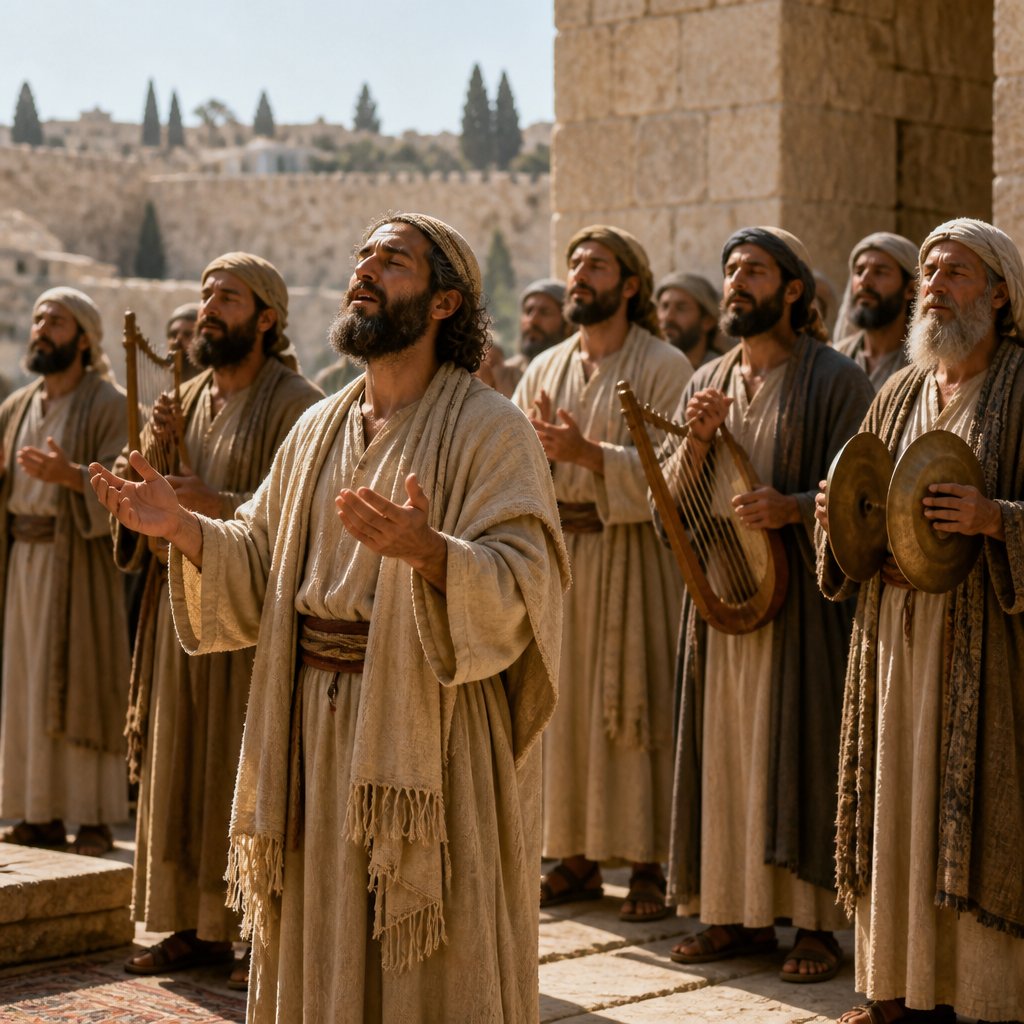
In the sacred narrative of Nehemiah, we are introduced to a remarkable moment of devotion and recognition of leadership—the act of thanksgiving through prayer. Nehemiah 11:17, as rendered in the King James Version (KJV), proclaims: "And Mattaniah the son of Micha, the son of Zabdi, the son of Asaph, was the principal to begin the thanksgiving in prayer: and Bakbukiah the second among his brethren, and Abda the son of Shammua, the son of Galal, the son of Jeduthun." This verse unlocks a treasure trove of wisdom that extends far beyond mere historical recounting; it challenges us to reflect on our posture of gratitude and the crucial role it plays in our relationship with God.
As we delve into the background, we find ourselves in a pivotal period following the return of the Israelites from Babylonian exile. With the walls of Jerusalem rebuilt and the city starting to pulsate with life again, it was imperative to establish spiritual continuity amid physical restoration. Nehemiah, a man of keen leadership and divine vision, orchestrates the rebuilding not only of the city's walls but also of the people’s hearts. In this context, the mention of Mattaniah is significant: he is described as the principal officer who would initiate thanksgiving in prayer.
Firstly, we notice that thanksgiving is intentional. Mattaniah was not merely a participant in worship; he took leadership in thanksgiving. In our contemporary worship practices, we often sing songs of gratitude and offer prayers, but how often do we step forward to lead others in thanksgiving? Mattaniah’s example serves as a call to reflect on our own disposition—are we merely spectators in our community's worship, or are we actively participating and inspiring others to express their gratitude?
Furthermore, thanksgiving is rooted in remembrance. The title "Asaph" connected to Mattaniah signifies lineage of worship and remembrance. Asaph was a prominent figure in the history of Israel, known for his psalms and the establishment of worship practices that anchored the nation in history and tradition. When we engage in thanksgiving, we are reminded of God’s faithfulness throughout our lives—His provision, protection, and love. It's a moment to pause and remember that every good and perfect gift comes from above (James 1:17). Let us not skip over the innumerable blessings that have crafted our lives into a canvas of grace.
As we assess our own lives, how frequently do we cultivate a habit of thanksgiving? With the chaos and distractions around us, it’s easy to become preoccupied with our needs, our struggles, and our desires, leading to an attitude of complaint rather than gratitude. The principle of thanksgiving should not come as a reaction to our circumstances; rather, it should be a proactive stance. By actively expressing gratitude, we shift our focus from our challenges to the goodness of God, illuminating His sovereignty in our everyday lives.
The text also mentions another leader, Bakbukiah, reinforcing the notion of communal involvement in worship. Abda, linked further to Jeduthun, emphasizes that thanksgiving is not just a solitary act; it is a communal endeavor, a family practice passed through generations. In our current society, we must encourage family, friends, and our church community to engage in thanksgiving. Let it be part of our daily conversations, our gatherings, and our prayers.
In conclusion, Nehemiah 11:17 exemplifies the beauty of organized worship through thanksgiving led by those like Mattaniah. It teaches us that gratitude is a practice, a leadership role, and an act of remembrance. Let us, therefore, commit to being leaders in thanksgiving within our spheres of influence—reflecting on our blessings, inspiring others, and lifting our voices in prayerful gratitude to the Lord. In doing so, we will honor God and bring our lives into fuller alignment with His will, glorifying Him as we recount His faithfulness and provision.
Get our apps


Artwork for Nehemiah 11:17
Nehemiah 11:17 - "And Mattaniah the son of Micha, the son of Zabdi, the son of Asaph, was the principal to begin the thanksgiving in prayer: and Bakbukiah the second among his brethren, and Abda the son of Shammua, the son of Galal, the son of Jeduthun."
"And Mattaniah the son of Micha, the son of Zabdi, the son of Asaph, was the principal to begin the thanksgiving in prayer: and Bakbukiah the second among his brethren, and Abda the son of Shammua, the son of Galal, the son of Jeduthun." - Nehemiah 11:17

Nehemiah 11:11-14

Nehemiah 11:13

Nehemiah 11:1-19

Nehemiah 10:17 - "Ater, Hizkijah, Azzur,"

Nehemiah 12:17 - "Of Abijah, Zichri; of Miniamin, of Moadiah, Piltai;"

Nehemiah 11:34 - "Hadid, Zeboim, Neballat,"

Nehemiah 10:11 - "Micha, Rehob, Hashabiah,"

Nehemiah 11:33 - "Hazor, Ramah, Gittaim,"

Nehemiah 11:32 - "And at Anathoth, Nob, Ananiah,"

Nehemiah 11:26 - "And at Jeshua, and at Moladah, and at Beth-phelet,"

Nehemiah 11:29 - "And at En-rimmon, and at Zareah, and at Jarmuth,"

Nehemiah 11:35 - "Lod, and Ono, the valley of craftsmen."

Nehemiah 11:28 - "And at Ziklag, and at Mekonah, and in the villages thereof,"
"Ater, Hizkijah, Azzur," - Nehemiah 10:17

Nehemiah 11:36 - "And of the Levites were divisions in Judah, and in Benjamin."

Nehemiah 11:10 - "Of the priests: Jedaiah the son of Joiarib, Jachin."

Nehemiah 7:17 - "The children of Azgad, two thousand three hundred twenty and two."

Nehemiah 12:11 - "And Joiada begat Jonathan, and Jonathan begat Jaddua."

Nehemiah 11:27 - "And at Hazar-shual, and at Beer-sheba, and in the villages thereof,"

Nehemiah 2:11 - "So I came to Jerusalem, and was there three days."

Nehemiah 11:11 - "Seraiah the son of Hilkiah, the son of Meshullam, the son of Zadok, the son of Meraioth, the son of Ahitub, was the ruler of the house of God."

"And at Anathoth, Nob, Ananiah," - Nehemiah 11:32

Nehemiah 4:17 – "Those who carried materials did their work with one hand and held a weapon in the other."

"Hadid, Zeboim, Neballat," - Nehemiah 11:34

"Hazor, Ramah, Gittaim," - Nehemiah 11:33

"Micha, Rehob, Hashabiah," - Nehemiah 10:11

Nehemiah 11:21 - "But the Nethinims dwelt in Ophel: and Ziha and Gispa were over the Nethinims."

Nehemiah 11:8 - "And after him Gabbai, Sallai, nine hundred twenty and eight."