The Harmonious Provision: God's Design for Worship and Service
“For it was the king’s commandment concerning them, that a certain portion should be for the singers, due for every day.” — Nehemiah 11:23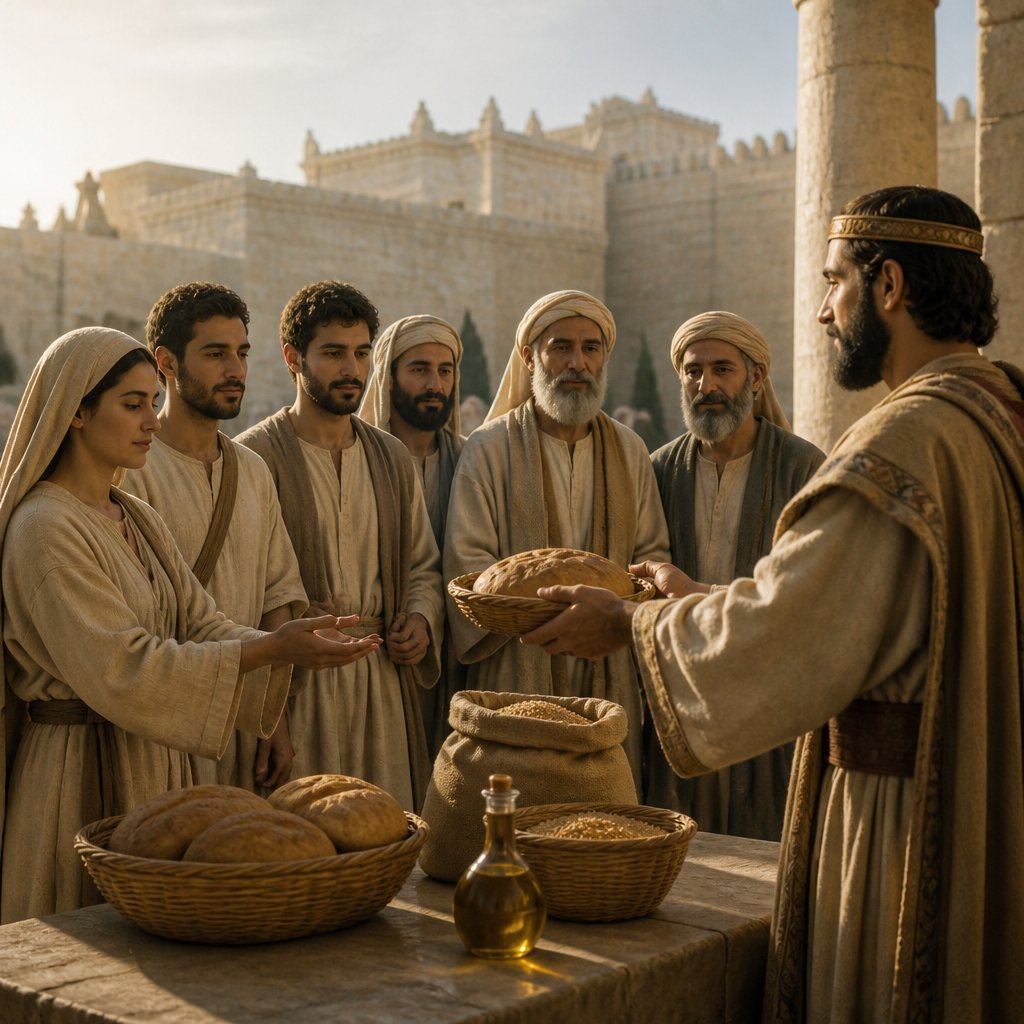
When we reflect on Nehemiah 11:23, where it says, "For it was the king's commandment concerning them, that a certain portion should be for the singers, due for every day," we enter a rich tapestry of culture, community, and divine calling. In this seemingly simple command, we find layers of significance that speak to God's intentions for worship, community, and the sustenance of those who lead us in praising Him.
Nehemiah was a servant of God with a divine mission to restore Jerusalem. After the Babylonian exile, the city lay in ruins, and Nehemiah was called to rebuild both the walls and the spiritual life of the community. In this context, singers, or Levites, held an essential role in the life of the Israelites. They were not merely entertainers; they were gatekeepers of worship, responsible for leading the people in songs of praise, lament, and worship, which were integral to their national identity and spiritual integrity.
The commandment from the king highlights an important aspect of spiritual and communal life: provision for those who serve. In the Old Testament, we see a clear pattern of how God cares for His servants. The singers and the Levites were to receive a portion daily, ensuring that their basic needs for sustenance were met. This reflects God's heart for those who dedicate their lives to ministry, that they be relieved of worries about their daily bread, so they can focus wholeheartedly on leading others in worship.
To dive deeper, we consider how this principle applies to our lives today. Worship leaders, musicians, and all those who serve in ecclesiastical roles should be surrounded by support, not only spiritually but also physically and materially. The principle that underlies this commandment raises questions of how we, as a community, honor those who dedicate their lives to leading us into the presence of God. This might prompt us to consider our approach to those serving in our churches and ministries—are they supported? Are we ensuring that they have what they need to thrive?
In addition to material support, let us reflect on the significance of daily portions in our lives. The passage emphasizes the importance of a steady, consistent provision, rather than sporadic gifts or acknowledgments. We, too, require daily bread—not just physical sustenance but spiritual nourishment. Jesus taught us to pray for this when He said, "Give us this day our daily bread" (Matthew 6:11). This goes beyond food; it speaks about a habitual return to God for our sustenance and strength.
Moreover, this commandment brings to light the significance of music and praise in our faith. The act of singing is not merely an artistic expression; it is a powerful act of worship that aligns our hearts with God. When we gather in worship, the songs we sing are not just melodies but declarations of truth, spaces where individual and communal voices combine in exaltation of the Creator. They usher in God's presence, and as they rise up, they not only glorify Him but also remind us of His faithfulness and goodness.
Nehemiah 11:23 thus becomes a reminder for us to be intentional about our worship, to honor those who lead us, and to recognize our need for daily sustenance in all areas of our lives. It challenges us to advocate for the financial and spiritual well-being of our church leaders and encourages us to cultivate a personal habit of returning to God for our daily needs, whether they are physical, emotional, or spiritual.
In conclusion, let us commit ourselves to this supportive relationship within our communities, ensuring that we create an environment where worship can flourish, and where those who lead us are cared for with the reverence that their calling deserves. In doing so, we heed not only the dictates of Nehemiah’s era but also reflect the heart of God, who provides for His people in every season.
Get our apps


Artwork for Nehemiah 11:23

Nehemiah 11:23 - "For it was the king's commandment concerning them, that a certain portion should be for the singers, due for every day."
"For it was the king's commandment concerning them, that a certain portion should be for the singers, due for every day." - Nehemiah 11:23

Nehemiah 11:11-14

Nehemiah 11:13

Nehemiah 10:23 - "Hoshea, Hananiah, Hashub,"

Nehemiah 11:1-19

Nehemiah 7:23 - "The children of Bezai, three hundred twenty and four."

Nehemiah 11:34 - "Hadid, Zeboim, Neballat,"

Nehemiah 10:11 - "Micha, Rehob, Hashabiah,"

"Hoshea, Hananiah, Hashub," - Nehemiah 10:23

Nehemiah 11:33 - "Hazor, Ramah, Gittaim,"

Nehemiah 11:32 - "And at Anathoth, Nob, Ananiah,"

Nehemiah 11:26 - "And at Jeshua, and at Moladah, and at Beth-phelet,"

Nehemiah 11:29 - "And at En-rimmon, and at Zareah, and at Jarmuth,"

Nehemiah 11:35 - "Lod, and Ono, the valley of craftsmen."

Nehemiah 11:28 - "And at Ziklag, and at Mekonah, and in the villages thereof,"

Nehemiah 11:36 - "And of the Levites were divisions in Judah, and in Benjamin."

Nehemiah 11:10 - "Of the priests: Jedaiah the son of Joiarib, Jachin."

Nehemiah 12:11 - "And Joiada begat Jonathan, and Jonathan begat Jaddua."

Nehemiah 11:27 - "And at Hazar-shual, and at Beer-sheba, and in the villages thereof,"

Nehemiah 2:11 - "So I came to Jerusalem, and was there three days."

Nehemiah 11:11 - "Seraiah the son of Hilkiah, the son of Meshullam, the son of Zadok, the son of Meraioth, the son of Ahitub, was the ruler of the house of God."

Nehemiah 13:23 - "¶ In those days also saw I Jews that had married wives of Ashdod, of Ammon, and of Moab:"

"And at Anathoth, Nob, Ananiah," - Nehemiah 11:32

"Hadid, Zeboim, Neballat," - Nehemiah 11:34

"Hazor, Ramah, Gittaim," - Nehemiah 11:33

"Micha, Rehob, Hashabiah," - Nehemiah 10:11

Nehemiah 11:21 - "But the Nethinims dwelt in Ophel: and Ziha and Gispa were over the Nethinims."

Nehemiah 11:8 - "And after him Gabbai, Sallai, nine hundred twenty and eight."

Nehemiah 11:2 - "And the people blessed all the men, that willingly offered themselves to dwell at Jerusalem."