What does Nehemiah 11:23 mean?
“For it was the king’s commandment concerning them, that a certain portion should be for the singers, due for every day.” — Nehemiah 11:23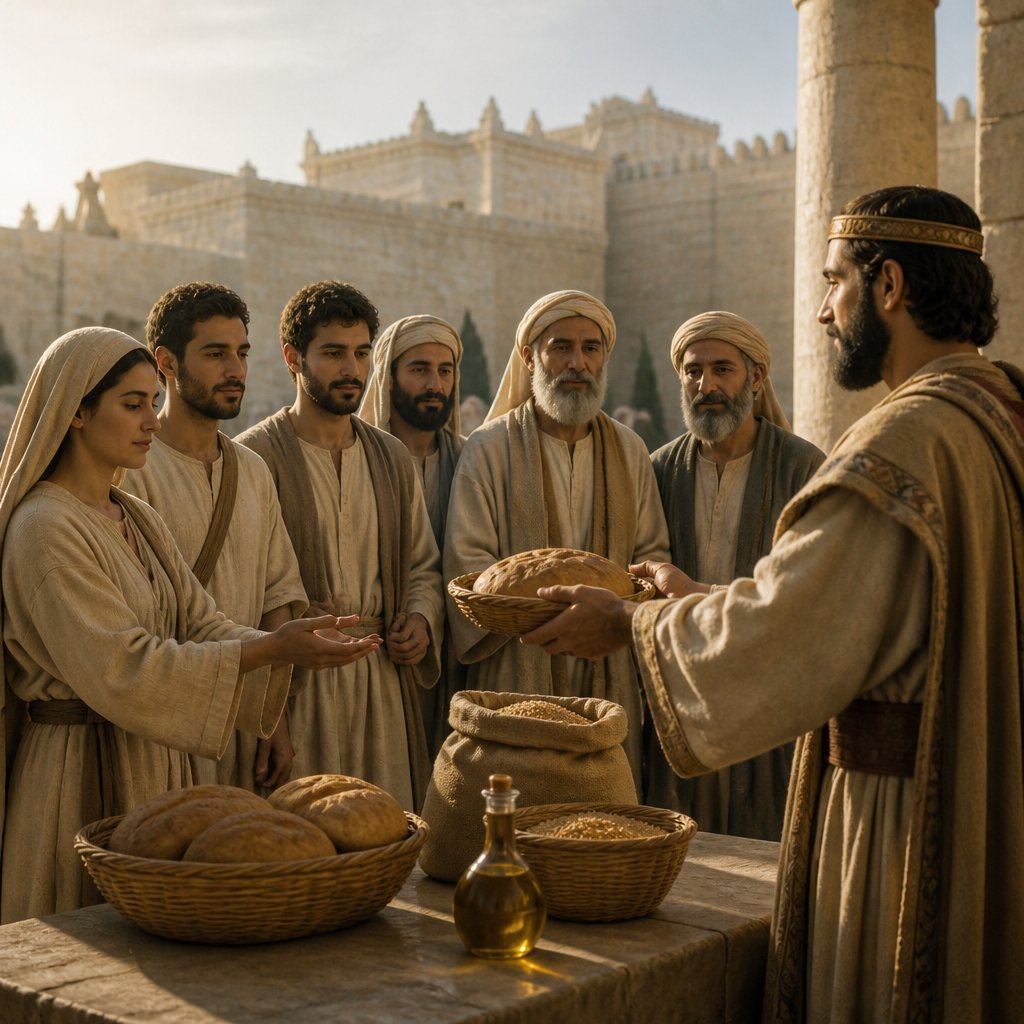
Nehemiah 11:23 (KJV) "For it was the king's commandment concerning them, that a certain portion should be for the singers, due for every day."
The Book of Nehemiah is an important historical and spiritual book in the Old Testament. It tells the story of Nehemiah, a Jewish man who serves as cupbearer to the Persian King Artaxerxes. Nehemiah receives news that the walls of Jerusalem have been destroyed, and he is filled with a desire to rebuild them. He gains the king's permission to return to Jerusalem and oversee the rebuilding of the city, which had fallen into disrepair following the Babylonian exile.
In Nehemiah 11:23, the verse speaks of the allocation of a portion for the singers as per the king's commandment. This verse highlights the importance of music and worship in the life of the Jewish people. The singers were an integral part of the religious and cultural life of the community. They were responsible for leading the people in worship, offering praise and thanks to God, and preserving the traditions and spiritual heritage of the nation.
One of the key themes in this verse is the concept of obedience to authority and the fulfillment of certain obligations. The king's commandment regarding the allocation for the singers demonstrates the importance of following the directives of those in positions of authority. This principle is reflective of the social and political structure of the ancient world, where the king's decrees carried great weight and were to be obeyed without question.
The verse also highlights the significance of music and worship in the life of the Jewish people. The allocation of a certain portion for the singers indicates that their role was not only valued but also essential in the daily life and spiritual functioning of the community. Music and singing were central to the expression of faith and the collective identity of the Jewish nation. The act of setting aside a portion for the singers acknowledges their unique contribution to the religious and cultural life of the people.
Furthermore, the verse underscores the idea of daily provision and sustenance for the singers. The phrase "due for every day" suggests that the allocation was a regular and consistent provision, ensuring that the singers were adequately supported in their role. This speaks to the importance of caring for those who are dedicated to the service of God and the community. It also reflects the principle of stewardship and the recognition of the value of those who offer their gifts and talents in service to God.
Symbolically, the allocation for the singers can be seen as a representation of the broader concept of allocating resources for the support of spiritual and cultural practices. It highlights the need for intentional and deliberate provision for the maintenance and flourishing of religious traditions and expressions of faith. The setting aside of a certain portion for the singers serves as a reminder of the importance of investing in the arts, music, and worship in the life of the faith community.
In conclusion, Nehemiah 11:23 provides valuable insights into the significance of music, worship, and obedience to authority in the life of the Jewish community. The verse underscores the importance of supporting and honoring those who are dedicated to the service of God, and it highlights the central role of music and singing in the expression of faith and the preservation of religious traditions. It serves as a reminder of the ongoing need to prioritize and sustain the spiritual and cultural practices that define and shape the faith community.
Get our apps


Artwork for Nehemiah 11:23

Nehemiah 11:23 - "For it was the king's commandment concerning them, that a certain portion should be for the singers, due for every day."
"For it was the king's commandment concerning them, that a certain portion should be for the singers, due for every day." - Nehemiah 11:23

Nehemiah 11:11-14

Nehemiah 11:13

Nehemiah 10:23 - "Hoshea, Hananiah, Hashub,"

Nehemiah 11:1-19

Nehemiah 7:23 - "The children of Bezai, three hundred twenty and four."

Nehemiah 11:34 - "Hadid, Zeboim, Neballat,"

Nehemiah 10:11 - "Micha, Rehob, Hashabiah,"

"Hoshea, Hananiah, Hashub," - Nehemiah 10:23

Nehemiah 11:33 - "Hazor, Ramah, Gittaim,"

Nehemiah 11:32 - "And at Anathoth, Nob, Ananiah,"

Nehemiah 11:26 - "And at Jeshua, and at Moladah, and at Beth-phelet,"

Nehemiah 11:29 - "And at En-rimmon, and at Zareah, and at Jarmuth,"

Nehemiah 11:35 - "Lod, and Ono, the valley of craftsmen."

Nehemiah 11:28 - "And at Ziklag, and at Mekonah, and in the villages thereof,"

Nehemiah 11:36 - "And of the Levites were divisions in Judah, and in Benjamin."

Nehemiah 11:10 - "Of the priests: Jedaiah the son of Joiarib, Jachin."

Nehemiah 12:11 - "And Joiada begat Jonathan, and Jonathan begat Jaddua."

Nehemiah 11:27 - "And at Hazar-shual, and at Beer-sheba, and in the villages thereof,"

Nehemiah 2:11 - "So I came to Jerusalem, and was there three days."

Nehemiah 11:11 - "Seraiah the son of Hilkiah, the son of Meshullam, the son of Zadok, the son of Meraioth, the son of Ahitub, was the ruler of the house of God."

Nehemiah 13:23 - "¶ In those days also saw I Jews that had married wives of Ashdod, of Ammon, and of Moab:"

"And at Anathoth, Nob, Ananiah," - Nehemiah 11:32

"Hadid, Zeboim, Neballat," - Nehemiah 11:34

"Hazor, Ramah, Gittaim," - Nehemiah 11:33

"Micha, Rehob, Hashabiah," - Nehemiah 10:11

Nehemiah 11:21 - "But the Nethinims dwelt in Ophel: and Ziha and Gispa were over the Nethinims."

Nehemiah 11:8 - "And after him Gabbai, Sallai, nine hundred twenty and eight."

Nehemiah 11:2 - "And the people blessed all the men, that willingly offered themselves to dwell at Jerusalem."