Rooted in Community: God’s Design for His People
“Now these are the chief of the province that dwelt in Jerusalem: but in the cities of Judah dwelt every one in his possession in their cities, to wit, Israel, the priests, and the Levites, and the Nethinims, and the children of Solomon’s servants.” — Nehemiah 11:3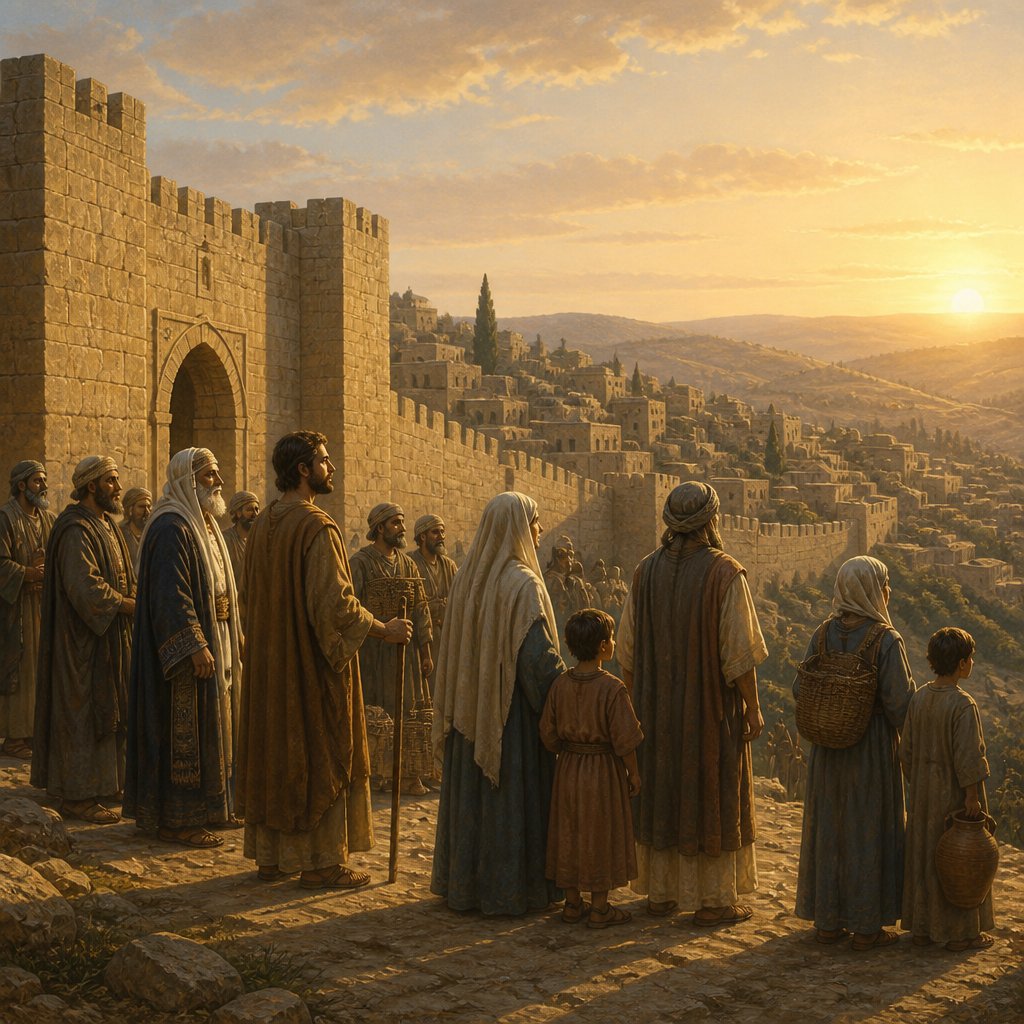
In our fast-paced, individualistic world, gathering into community can often feel like a daunting challenge. Yet, the Scripture passage of Nehemiah 11:3 invites us to reflect deeply on the essence of community and belonging: "Now these are the chief of the province that dwelt in Jerusalem: but in the cities of Judah dwelt every one in his possession in their cities, to wit, Israel, the priests, and the Levites, and the Nethinims, and the children of Solomon's servants."
As we read this verse, we find a vibrant picture of the people of Israel, freshly returned from exile, resettling and rebuilding Jerusalem after years of devastation. Their return to Jerusalem was not merely a geographical relocation; it represented a renewed identity and a restoration of communal life centered around God.
**Understanding Our Roles**
Each group mentioned in this verse had a distinct role and purpose within the community. The priests and Levites were called to spiritual leadership, serving the people through the temple and the rituals that guided their worship. The Nethinims, often viewed as temple servants, contributed significantly to the labor necessary for maintaining the sanctuary. Even the children of Solomon’s servants had a legacy of serving in the temple, linking them to the heritage of God’s established order.
This teaches us that we all have unique God-given roles to play within our communities. The question each of us must ask is: "What is my contribution?" It challenges us to evaluate how we use our gifts, talents, and resources for the flourishing of others in our spiritual and social communities. Whether as a leader, helper, or support, these roles sustain the life and health of the church, just as they did in Nehemiah’s time.
**Dwelling Together**
The verb "dwelt" carries a richer meaning than just residing in a place; it speaks to a shared existence and mutual support. The people didn't merely occupy space; they intentionally chose to live within proximity to one another, fostering relationships and supporting one another. This communal dwelling underscores a biblical principle: God desires His people to live in community. The apostles in the New Testament illustrate this beautifully; they did not just teach but lived together, shared their resources, worshipped, and prayed in unity.
In our digital age where interactions are often limited to screens, how do we reclaim the power of physical and spiritual community? How do we ensure that within our congregations, there is authentic connection and encouragement? The answer lies in engaging in each other's lives, showing up for one another in both joy and sorrow, and creating environments where we can worship and serve alongside one another.
**Possessions and Purpose**
The verse hints at the importance of 'possessions,' shedding light on stewardship. Each individual dwelt in their city and their possession, suggesting that God entrusts each person with material resources, not merely for personal gain but for communal benefit. Our possessions are tools for ministry and outreach. Therefore, living in community encourages us to share our blessings with others, be it our time, expertise, or finances, ensuring that needs are met within the body of Christ.
As believers, we must deliberate on how we can be more generous within our communities. Reflect on how our possessions can serve to uplift, equip, or empower those around us. Our willingness to share reflects the heart of Christ and embodies the very mission of the church.
**Conclusion: Calling to Community**
The life of Jesus exemplifies what it means to dwell in community: He chose and invested in a group of people, teaching them about His kingdom. Similarly, Nehemiah’s account reminds us of our calling to community that God desires—a community marked not by isolation but by mutual dependence, support, and love.
As we ponder Nehemiah 11:3, let us embrace the beautiful truth that God has crafted us intentionally for community. Let us strive to dwell with one another, understand our unique roles, and steward our resources for the good of others. In doing so, we fulfill the divine purpose for our lives and become instruments of His love and grace.
Get our apps


Artwork for Nehemiah 11:3

Nehemiah 11:3 - "¶ Now these are the chief of the province that dwelt in Jerusalem: but in the cities of Judah dwelt every one in his possession in their cities, to wit, Israel, the priests, and the Levites, and the Nethinims, and the children of Solomon's servants."
"¶ Now these are the chief of the province that dwelt in Jerusalem: but in the cities of Judah dwelt every one in his possession in their cities, to wit, Israel, the priests, and the Levites, and the Nethinims, and the children of Solomon's servants." - Nehemiah 11:3

Nehemiah 3:11 - "Malchijah the son of Harim, and Hashub the son of Pahath-moab, repaired the other piece, and the tower of the furnaces."

Nehemiah 11:11-14

Nehemiah 11:13

Nehemiah 11:1-19

Nehemiah 11:34 - "Hadid, Zeboim, Neballat,"

Nehemiah 10:11 - "Micha, Rehob, Hashabiah,"
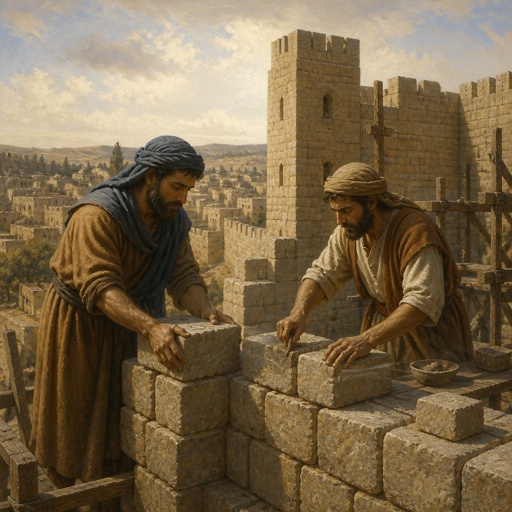
"Malchijah the son of Harim, and Hashub the son of Pahath-moab, repaired the other piece, and the tower of the furnaces." - Nehemiah 3:11

Nehemiah 11:33 - "Hazor, Ramah, Gittaim,"

Nehemiah 11:32 - "And at Anathoth, Nob, Ananiah,"

Nehemiah 11:26 - "And at Jeshua, and at Moladah, and at Beth-phelet,"

Nehemiah 11:29 - "And at En-rimmon, and at Zareah, and at Jarmuth,"

Nehemiah 11:35 - "Lod, and Ono, the valley of craftsmen."

Nehemiah 11:28 - "And at Ziklag, and at Mekonah, and in the villages thereof,"

Nehemiah 11:36 - "And of the Levites were divisions in Judah, and in Benjamin."

Nehemiah 11:10 - "Of the priests: Jedaiah the son of Joiarib, Jachin."

Nehemiah 12:3 - "Shechaniah, Rehum, Meremoth,"

Nehemiah 12:11 - "And Joiada begat Jonathan, and Jonathan begat Jaddua."

Nehemiah 10:3 - "Pashur, Amariah, Malchijah,"

Nehemiah 11:27 - "And at Hazar-shual, and at Beer-sheba, and in the villages thereof,"

Nehemiah 2:11 - "So I came to Jerusalem, and was there three days."

Nehemiah 11:11 - "Seraiah the son of Hilkiah, the son of Meshullam, the son of Zadok, the son of Meraioth, the son of Ahitub, was the ruler of the house of God."

"And at Anathoth, Nob, Ananiah," - Nehemiah 11:32

"Hadid, Zeboim, Neballat," - Nehemiah 11:34

"Hazor, Ramah, Gittaim," - Nehemiah 11:33

"Micha, Rehob, Hashabiah," - Nehemiah 10:11

Nehemiah 11:21 - "But the Nethinims dwelt in Ophel: and Ziha and Gispa were over the Nethinims."

Nehemiah 11:8 - "And after him Gabbai, Sallai, nine hundred twenty and eight."

Nehemiah 11:2 - "And the people blessed all the men, that willingly offered themselves to dwell at Jerusalem."