What does Nehemiah 11:3 mean?
“Now these are the chief of the province that dwelt in Jerusalem: but in the cities of Judah dwelt every one in his possession in their cities, to wit, Israel, the priests, and the Levites, and the Nethinims, and the children of Solomon’s servants.” — Nehemiah 11:3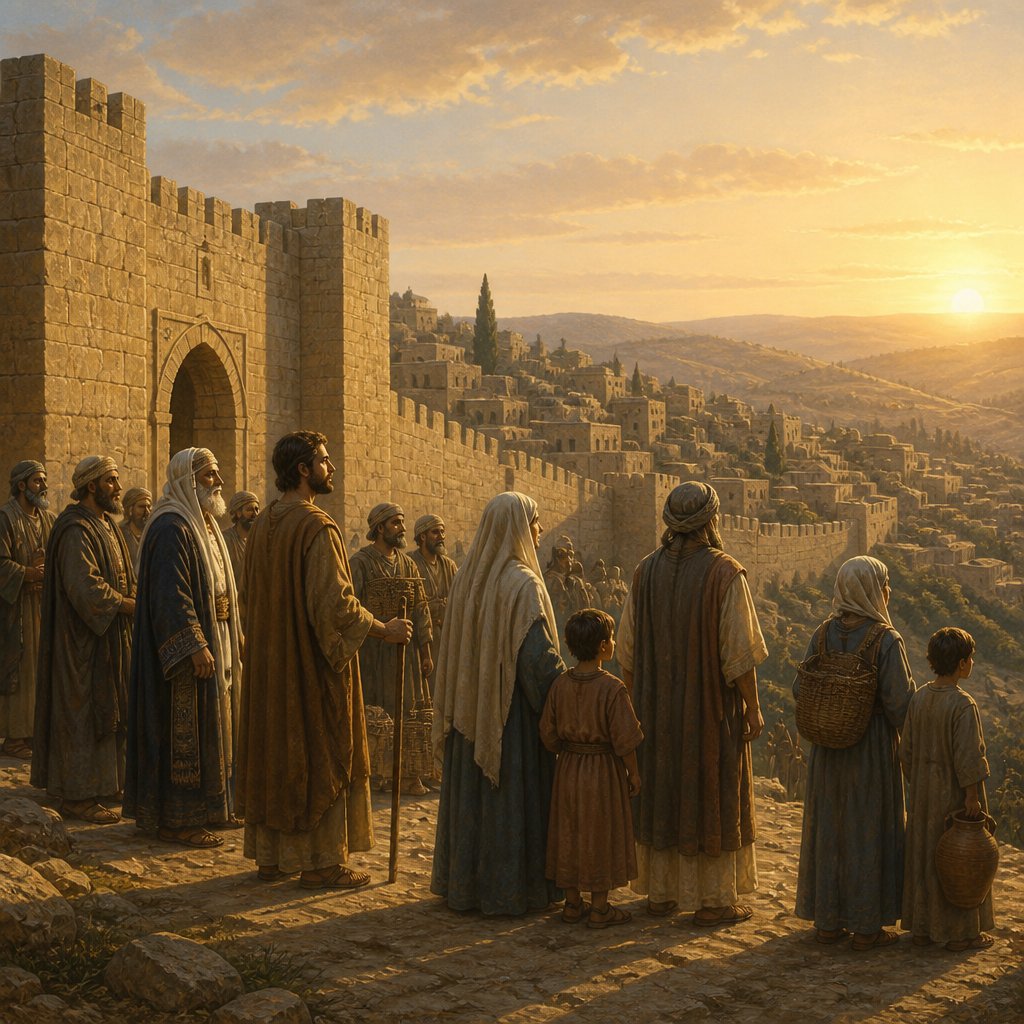
Nehemiah 11:3 in the King James Version (KJV) of the Bible reads, "Now these are the chief of the province that dwelt in Jerusalem: but in the cities of Judah dwelt every one in his possession in their cities, to wit, Israel, the priests, and the Levites, and the Nethinims, and the children of Solomon's servants."
The book of Nehemiah is part of the historical books of the Old Testament, which recounts the story of the Jewish people rebuilding the city of Jerusalem after their return from exile in Babylon. The verse comes at a crucial point in the narrative, as Nehemiah is tasked with repopulating the city of Jerusalem in order to reestablish it as the center of Jewish religious and political life.
The verse specifically mentions the "chief of the province" that dwelt in Jerusalem, as well as various groups of people who lived in the cities of Judah. This indicates a clear distinction between the leadership and the general population, and points to the importance of organizing and governing the newly established community in Jerusalem.
One of the key themes of this verse is the restoration of the Jewish community. After years of exile and foreign rule, the Jews were finally able to return to their homeland and rebuild their capital city. The mention of different groups such as Israelites, priests, Levites, Nethinims, and the children of Solomon's servants highlights the diversity of the returning population and the importance of each group in the reconstruction of Jerusalem.
The verse also reflects the establishment of social order and governance in the newly repopulated Jerusalem. The mention of "chief of the province" suggests the presence of leadership and administration, crucial for the functioning of a thriving community. This organization of the population and the allocation of cities to tribes or families was a significant step in the restoration of Jewish life in the promised land.
Another important aspect of this verse is the symbolism of the return to Jerusalem. For the Jewish people, Jerusalem is not just a physical city, but a symbol of their religious and cultural identity. The return to Jerusalem represents a spiritual homecoming and the fulfillment of God's promise to restore and bless his people. It signifies a renewal of faith and a recommitment to the covenant between God and his chosen people.
Furthermore, the verse emphasizes the unity and solidarity of the Jewish people as they resettled in Jerusalem. Despite their diverse backgrounds and roles within the community, they all came together to rebuild and revitalize the city. This sense of unity and purpose was essential for the successful rebuilding of Jerusalem and the reestablishment of Jewish religious and cultural life.
In conclusion, Nehemiah 11:3 is a pivotal verse in the narrative of the Jewish people's return to Jerusalem. It highlights the themes of restoration, social order, governance, and unity, all of which are crucial for the rebuilding of the city and the revitalization of the Jewish community. The verse also carries deep symbolic significance, representing a spiritual and cultural homecoming for the Jewish people. It serves as a reminder of the resilience, faith, and determination of God's chosen people in the face of adversity, and their ultimate triumph in rebuilding their ancient homeland.
Get our apps


Artwork for Nehemiah 11:3

Nehemiah 11:3 - "¶ Now these are the chief of the province that dwelt in Jerusalem: but in the cities of Judah dwelt every one in his possession in their cities, to wit, Israel, the priests, and the Levites, and the Nethinims, and the children of Solomon's servants."
"¶ Now these are the chief of the province that dwelt in Jerusalem: but in the cities of Judah dwelt every one in his possession in their cities, to wit, Israel, the priests, and the Levites, and the Nethinims, and the children of Solomon's servants." - Nehemiah 11:3

Nehemiah 3:11 - "Malchijah the son of Harim, and Hashub the son of Pahath-moab, repaired the other piece, and the tower of the furnaces."

Nehemiah 11:11-14

Nehemiah 11:13

Nehemiah 11:1-19

Nehemiah 11:34 - "Hadid, Zeboim, Neballat,"

Nehemiah 10:11 - "Micha, Rehob, Hashabiah,"
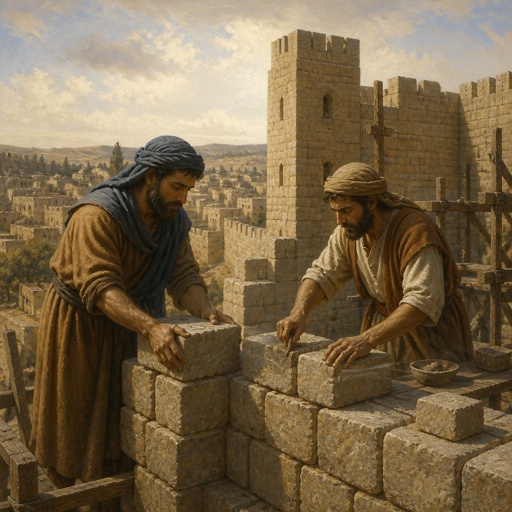
"Malchijah the son of Harim, and Hashub the son of Pahath-moab, repaired the other piece, and the tower of the furnaces." - Nehemiah 3:11

Nehemiah 11:33 - "Hazor, Ramah, Gittaim,"

Nehemiah 11:32 - "And at Anathoth, Nob, Ananiah,"

Nehemiah 11:26 - "And at Jeshua, and at Moladah, and at Beth-phelet,"

Nehemiah 11:29 - "And at En-rimmon, and at Zareah, and at Jarmuth,"

Nehemiah 11:35 - "Lod, and Ono, the valley of craftsmen."

Nehemiah 11:28 - "And at Ziklag, and at Mekonah, and in the villages thereof,"

Nehemiah 11:36 - "And of the Levites were divisions in Judah, and in Benjamin."

Nehemiah 11:10 - "Of the priests: Jedaiah the son of Joiarib, Jachin."

Nehemiah 12:3 - "Shechaniah, Rehum, Meremoth,"

Nehemiah 12:11 - "And Joiada begat Jonathan, and Jonathan begat Jaddua."

Nehemiah 10:3 - "Pashur, Amariah, Malchijah,"

Nehemiah 11:27 - "And at Hazar-shual, and at Beer-sheba, and in the villages thereof,"

Nehemiah 2:11 - "So I came to Jerusalem, and was there three days."

Nehemiah 11:11 - "Seraiah the son of Hilkiah, the son of Meshullam, the son of Zadok, the son of Meraioth, the son of Ahitub, was the ruler of the house of God."

"And at Anathoth, Nob, Ananiah," - Nehemiah 11:32

"Hadid, Zeboim, Neballat," - Nehemiah 11:34

"Hazor, Ramah, Gittaim," - Nehemiah 11:33

"Micha, Rehob, Hashabiah," - Nehemiah 10:11

Nehemiah 11:21 - "But the Nethinims dwelt in Ophel: and Ziha and Gispa were over the Nethinims."

Nehemiah 11:8 - "And after him Gabbai, Sallai, nine hundred twenty and eight."

Nehemiah 11:2 - "And the people blessed all the men, that willingly offered themselves to dwell at Jerusalem."