The Joyful Sound of Restoration
“And Maaseiah, and Shemaiah, and Eleazar, and Uzzi, and Jehohanan, and Malchijah, and Elam, and Ezer. And the singers sang loud, with Jezrahiah their overseer.” — Nehemiah 12:42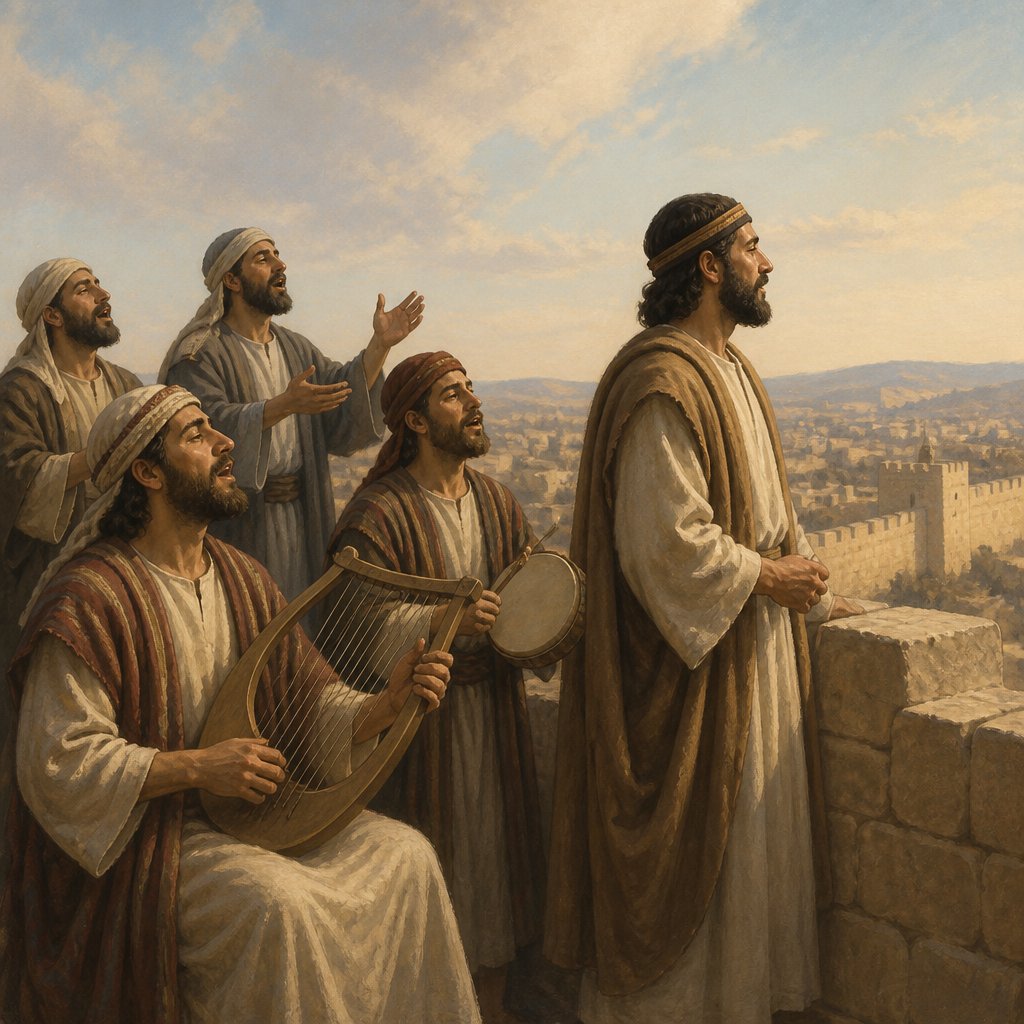
The book of Nehemiah is a testament to the power of collective effort and divine assistance in restoring not just physical structures, but also the spiritual and communal identity of a people. Nehemiah 12:42 reads, "And Maaseiah, and Shemaiah, and Eleazar, and Uzzi, and Jehohanan, and Malchijah, and Elam, and Ezer. And the singers sang loud, with Jezrahiah their overseer." This verse, while seemingly straightforward, encapsulates a moment of profound significance in the life of the Israelites as they rejoiced in the recovery of their homeland and worship.
### The Power of Names
First, we must pause to appreciate the names listed in verse 42. Each name carries history and heritage; they represent individuals who contributed to the collective experience of Israel's restoration. Names in Hebrew culture often signify roles, characteristics, or the hope of one's lineage. For instance, "Maaseiah" might mean "the work of Yahweh," reflecting God’s involvement in their restoration. These names symbolize the people who have gone through trials and tribulations yet emerged to participate in God's redemptive plan.
In our lives, reflection upon our names and the stories they tell can encourage us to remember our roots and the heritage of faith we carry. Just like the names mentioned in Nehemiah, we are called to honor the legacy of those who have prayed, worked, and sacrificed for our communities. This acknowledgment sets the foundation for understanding our place within God’s narrative.
### Celebrating the Return
The verse emphasizes a celebration, marked by the singers who "sang loud" under the oversight of Jezrahiah. Singing represents joy, gratitude, and worship—essential elements of a thriving spiritual community. The act of singing, especially in a group, elevates emotions and fosters unity among believers. Here, the return to Jerusalem after years of exile is not simply a physical return; it is an invitation to rejoice in God's faithfulness. As they sang, they bore testimony to God's promises being fulfilled and His merciful presence among them.
In our modern context, the act of singing in worship can heal collective wounds. Whether through a powerful hymn of praise or the sweet voices raised in unison during church gatherings, music elevates our spirits and connects us with God and one another. This communal experience of worship unites us, echoing the sentiments felt by the people of Nehemiah’s era.
### The Role of Leadership
Jezrahiah, the overseer of the singers, highlights the importance of leadership in worship. Just as he guided the singers, leaders today carry the responsibility to shepherd and cultivate an atmosphere of worship and celebration. They remind us that worship is not merely a ritual; it is the lifeblood of our relationship with God. Leaders set the tone for our gatherings—they encourage vulnerability, spirituality, and joy.
As we consider who leads our worship—be it pastors, musicians, or lay leaders—it’s essential to recognize their role in fostering an environment where the congregation can express joy freely. Each person involved in leading worship contributes to the experience, much like the singers in Jerusalem came together to create a symphony of praise.
### A Call to Praise
Ultimately, Nehemiah 12:42 invites us to reflect on the importance of joyful praise in our lives today. Just as the Israelites rejoiced loudly, we too are called to celebrate God’s goodness and grace. Our lives should resonate with melodies of thankfulness, reminding ourselves—and others—of what God has done. In the rhythms of our daily lives, let us not forget to pause and sing a song of gratitude, acknowledging His presence and provision in our lives.
In conclusion, may the loud singing of the Israelites inspire us to raise our voices in joyful worship, to remember our heritage, honor our leaders, and celebrate the restoration of our communities. Let each song we sing reflect not just our love for God but also our commitment to one another as a united body of believers—with every note a testament to His unwavering faithfulness.
Get our apps


Artwork for Nehemiah 12:42

Nehemiah 12:42 - "And Maaseiah, and Shemaiah, and Eleazar, and Uzzi, and Jehohanan, and Malchijah, and Elam, and Ezer. And the singers sang loud, with Jezrahiah their overseer."
"And Maaseiah, and Shemaiah, and Eleazar, and Uzzi, and Jehohanan, and Malchijah, and Elam, and Ezer. And the singers sang loud, with Jezrahiah their overseer." - Nehemiah 12:42

Nehemiah 7:42 - "The children of Harim, a thousand and seventeen."

"The children of Harim, a thousand and seventeen." - Nehemiah 7:42

Nehemiah 12:26 - "These were in the days of Joiakim the son of Jeshua, the son of Jozadak, and in the days of Nehemiah the governor, and of Ezra the priest, the scribe."

Nehemiah 12:5 - "Miamin, Maadiah, Bilgah,"

Nehemiah 12:33 - "And Azariah, Ezra, and Meshullam,"

Nehemiah 12:4 - "Iddo, Ginnetho, Abijah,"

Nehemiah 12:2 - "Amariah, Malluch, Hattush,"

Nehemiah 12:3 - "Shechaniah, Rehum, Meremoth,"

Nehemiah 10:12 - "Zaccur, Sherebiah, Shebaniah,"

Nehemiah 12:6 - "Shemaiah, and Joiarib, Jedaiah,"

Nehemiah 12:12 - "And in the days of Joiakim were priests, the chief of the fathers: of Seraiah, Meraiah; of Jeremiah, Hananiah;"

Nehemiah 12:13 - "Of Ezra, Meshullam; of Amariah, Jehohanan;"

Nehemiah 12:16 - "Of Iddo, Zechariah; of Ginnethon, Meshullam;"

Nehemiah 12:20 - "Of Sallai, Kallai; of Amok, Eber;"

Nehemiah 12:19 - "And of Joiarib, Mattenai; of Jedaiah, Uzzi;"

Nehemiah 12:34 - "Judah, and Benjamin, and Shemaiah, and Jeremiah,"

Nehemiah 12:15 - "Of Harim, Adna; of Meraioth, Helkai;"

Nehemiah 12:18 - "Of Bilgah, Shammua; of Shemaiah, Jehonathan;"

Nehemiah 12:21 - "Of Hilkiah, Hashabiah; of Jedaiah, Nethaneel."

Nehemiah 12:14 - "Of Melicu, Jonathan; of Shebaniah, Joseph;"

Nehemiah 12:17 - "Of Abijah, Zichri; of Miniamin, of Moadiah, Piltai;"

Nehemiah 12:11 - "And Joiada begat Jonathan, and Jonathan begat Jaddua."

Genesis 42:12 - "And he said unto them, Nay, but to see the nakedness of the land ye are come."

Isaiah 42:12 - "Let them give glory unto the LORD, and declare his praise in the islands."

Nehemiah 7:12 - "The children of Elam, a thousand two hundred fifty and four."

Nehemiah 12:32 - "And after them went Hoshaiah, and half of the princes of Judah,"

"Miamin, Maadiah, Bilgah," - Nehemiah 12:5

"Shemaiah, and Joiarib, Jedaiah," - Nehemiah 12:6