The Songs of Renewal: Building Community Around Worship
“Also from the house of Gilgal, and out of the fields of Geba and Azmaveth: for the singers had builded them villages round about Jerusalem.” — Nehemiah 12:29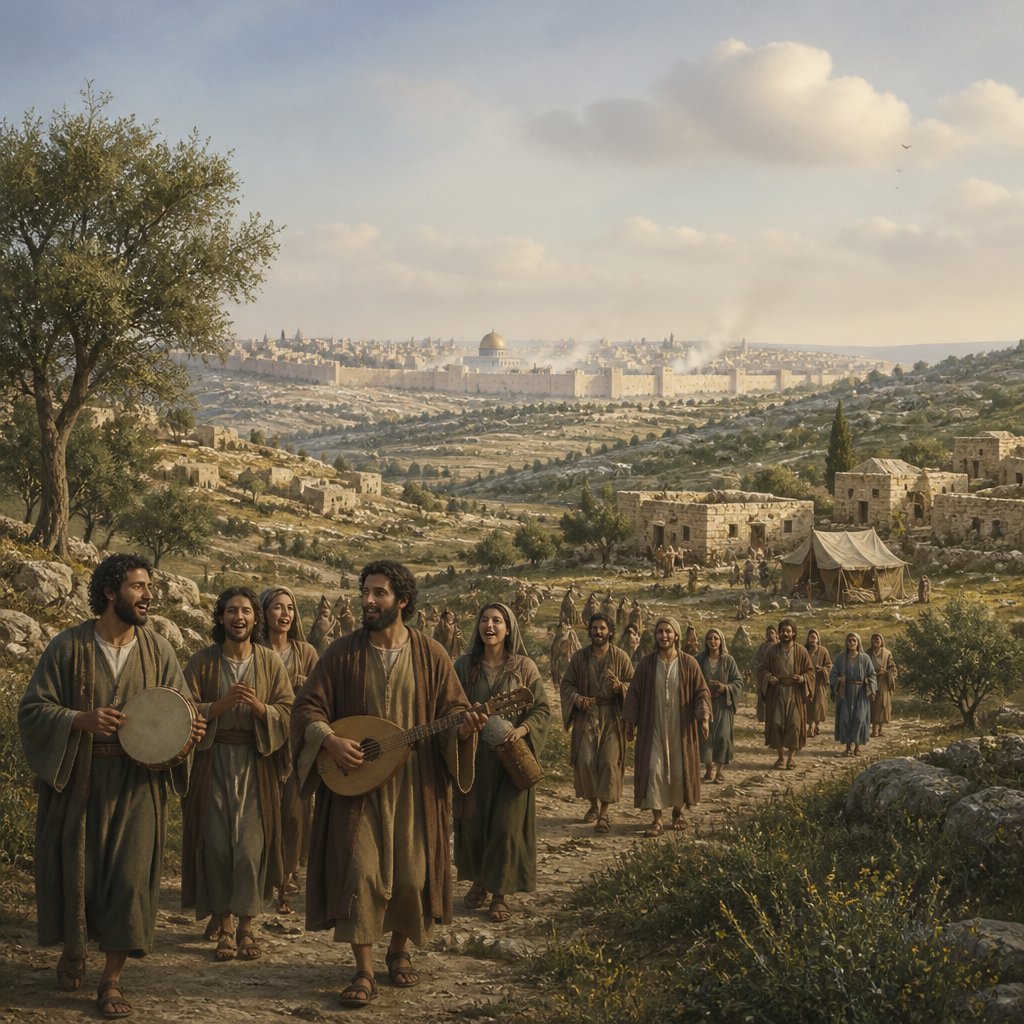
As we delve into Nehemiah 12:29, which states, "Also from the house of Gilgal, and out of the fields of Geba and Azmaveth: for the singers had builded them villages round about Jerusalem," we uncover profound layers of meaning that resonate with our contemporary lives. This verse centers on the singers of Israel, those tasked with leading worship and celebrating God's goodness, who were established in communities surrounding Jerusalem. Let us explore the significance of this scripture in the context of worship, community, and spiritual renewal.
In this passage, we observe a moment of restoration in Israel's history. The context is critical; after years of exile and the destruction of their beloved temple, the people of Israel returned to Jerusalem to rebuild. Nehemiah emerged as a leader who not only focused on repairing the walls of the city but also on reinstating the worship that had been lost during their captivity. What might we learn from this commitment to revive worship in the community?
Firstly, we see the importance of worship in rebuilding a community after hardship. The singers built villages around Jerusalem, indicating that worship was not merely a duty but a central part of life. For the people of Israel, their identity was closely tied to their worship practices. When they sang, they reminded themselves of God's faithfulness, His mighty acts, and their covenant relationship with Him. This restoration of singing signifies a return to joy, purpose, and unity. In our lives, especially in times of struggle or transition, gathering for worship can act as a restorative balm. It strengthens our communal ties and reaffirms our shared faith, just as the singers did for their towns.
Moreover, the mention of specific locations—Gilgal, Geba, and Azmaveth—serves to illustrate the diverse origins of those who came together in worship. Each of these places carries its own significance, and collectively, they represent the unity of God's people from various walks of life. In the New Testament, we see a similar theme as the early church formed a uniquely diverse community, uniting Jew and Gentile under the banner of Christ. This principle calls us to evaluate our church and the communities we inhabit. Are we fostering inclusivity and allowing various voices to contribute to our worship experiences? Just as the singers built places of refuge and joy, we too are called to create spaces where every voice can harmonize in praise.
Additionally, the act of building villages around Jerusalem underscores the idea of creating a strong infrastructure for worship. These were not spontaneous gatherings; they were established communities dedicated to worship—a reminder that sustained worship requires commitment and effort. Theologian Henri Nouwen once wrote, "Community is a place where the person you least want to be with always lives." Building a worship community means inviting all aspects of life to coalesce around a common purpose: glorifying God. Are we willing to welcome others, even those with whom we may struggle to connect? Can we commit to creating a community that thrives on both individuality and unity?
Finally, as modern believers, we can reflect on what it means to be 'singers' in our own right, creating a culture of worship in our homes and cities. Our worship can take many forms: through songs, acts of kindness, service, justice, or love. Just as the singers strengthened the wall of faith around Jerusalem, we too possess the power to uplift and fortify our community through acts of worship in everyday life.
As we meditate on Nehemiah 12:29, let us commit ourselves to cultivate a life of worship that not only transforms our hearts but also strengthens our communities. Embrace the call to build 'villages' where the gatherings around glorifying God become a safe haven. Whether singing with joy or serving with love, let's dedicate ourselves to renewing worship at the heart of our identity, just as the people of Nehemiah's time did. In the words of the psalmist, "Let everything that hath breath praise the Lord!" (Psalm 150:6). May our lives resonate with this divine song of renewal.
Get our apps


Artwork for Nehemiah 12:29

Nehemiah 12:29 - "Also from the house of Gilgal, and out of the fields of Geba and Azmaveth: for the singers had builded them villages round about Jerusalem."
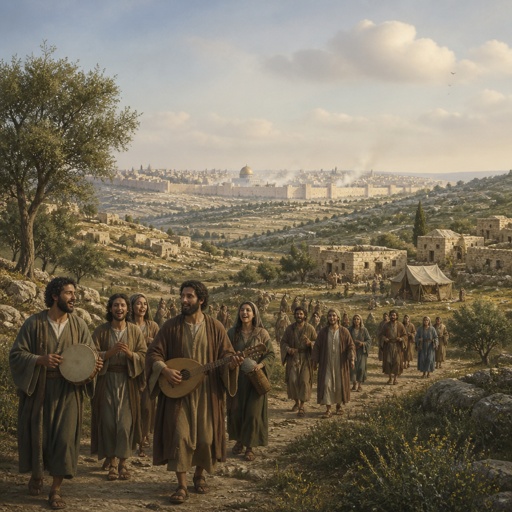
"Also from the house of Gilgal, and out of the fields of Geba and Azmaveth: for the singers had builded them villages round about Jerusalem." - Nehemiah 12:29

Nehemiah 11:29 - "And at En-rimmon, and at Zareah, and at Jarmuth,"

Nehemiah 7:29 - "The men of Kirjath-jearim, Chephirah, and Beeroth, seven hundred forty and three."

"And at En-rimmon, and at Zareah, and at Jarmuth," - Nehemiah 11:29

Nehemiah 12:26 - "These were in the days of Joiakim the son of Jeshua, the son of Jozadak, and in the days of Nehemiah the governor, and of Ezra the priest, the scribe."

Nehemiah 12:33 - "And Azariah, Ezra, and Meshullam,"

Nehemiah 12:5 - "Miamin, Maadiah, Bilgah,"

Nehemiah 12:2 - "Amariah, Malluch, Hattush,"

Nehemiah 12:4 - "Iddo, Ginnetho, Abijah,"

Nehemiah 12:3 - "Shechaniah, Rehum, Meremoth,"

Nehemiah 10:12 - "Zaccur, Sherebiah, Shebaniah,"

Nehemiah 12:6 - "Shemaiah, and Joiarib, Jedaiah,"

Nehemiah 13:29 - "Remember them, O my God, because they have defiled the priesthood, and the covenant of the priesthood, and of the Levites."

Nehemiah 12:12 - "And in the days of Joiakim were priests, the chief of the fathers: of Seraiah, Meraiah; of Jeremiah, Hananiah;"

Nehemiah 12:16 - "Of Iddo, Zechariah; of Ginnethon, Meshullam;"

Nehemiah 12:13 - "Of Ezra, Meshullam; of Amariah, Jehohanan;"

Nehemiah 12:20 - "Of Sallai, Kallai; of Amok, Eber;"

Nehemiah 12:19 - "And of Joiarib, Mattenai; of Jedaiah, Uzzi;"

Nehemiah 12:34 - "Judah, and Benjamin, and Shemaiah, and Jeremiah,"

Nehemiah 12:15 - "Of Harim, Adna; of Meraioth, Helkai;"

Nehemiah 12:18 - "Of Bilgah, Shammua; of Shemaiah, Jehonathan;"

Nehemiah 12:14 - "Of Melicu, Jonathan; of Shebaniah, Joseph;"

Nehemiah 12:21 - "Of Hilkiah, Hashabiah; of Jedaiah, Nethaneel."

Nehemiah 12:17 - "Of Abijah, Zichri; of Miniamin, of Moadiah, Piltai;"

Nehemiah 12:11 - "And Joiada begat Jonathan, and Jonathan begat Jaddua."

Nehemiah 7:12 - "The children of Elam, a thousand two hundred fifty and four."

Nehemiah 12:32 - "And after them went Hoshaiah, and half of the princes of Judah,"

"Miamin, Maadiah, Bilgah," - Nehemiah 12:5

"Shemaiah, and Joiarib, Jedaiah," - Nehemiah 12:6