The Language of Our Heritage: A Devotional on Nehemiah 13:24
“And their children spake half in the speech of Ashdod, and could not speak in the Jews’ language, but according to the language of each people.” — Nehemiah 13:24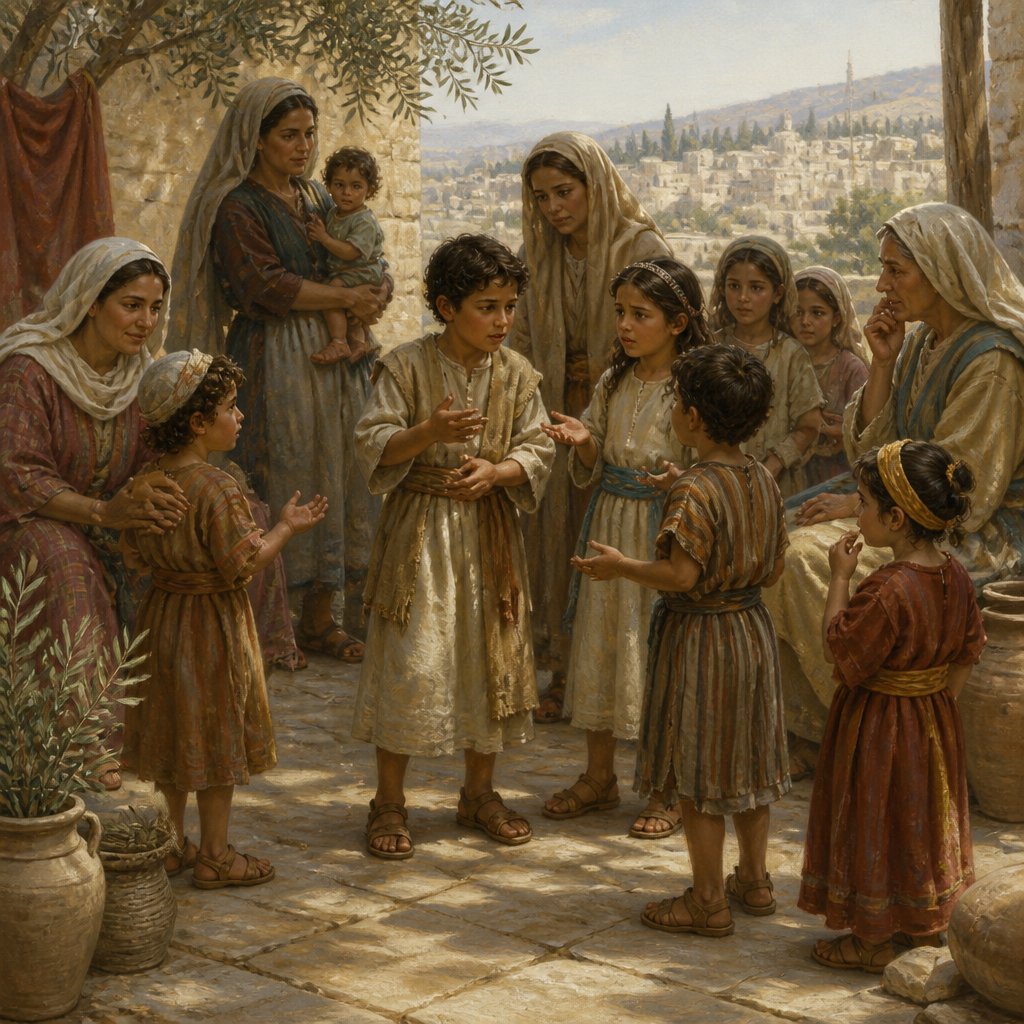
In Nehemiah 13:24, we read, "And their children spake half in the speech of Ashdod, and could not speak in the Jews' language, but according to the language of each people." This verse, rich in its historical context, speaks to us profoundly about the implications of cultural dilution and the preservation of heritage. As we engage with this passage, we must consider what it means not only to ourselves but to our families and the generations to come.
At the time of Nehemiah, the Jews returned from Babylonian captivity to resettle in Jerusalem and rebuild their city and their lives. However, upon their return, the influence of foreign cultures had seeped into their community. The children spoke the language of Ashdod, the language representative of their captors, instead of their own heritage—the Jews' language. This was not an insignificant detail; it was symptomatic of a deeper, more insidious problem.
Language is more than a means of communication; it is a profound connector to one's identity and culture. The failure of the children to speak their ancestral tongue represented a critical disconnect from their heritage and the values that defined them as God's chosen people. This scenario prompts us to ask ourselves, how often do we let the voices of this world drown out the truths of our faith? How easily do we accommodate the languages of our contemporary culture at the expense of the sacred language of our spiritual heritage?
In today’s world, pressures from societal norms and values can lead to a similar erosion of cultural and spiritual identity. Many believers find themselves caught between the tradition of their faith and the allure of modernity, resulting in a dilution of their faith practices. Just as the children in Nehemiah’s time faced the influences of Ashdod, we too face various influences that challenge our commitment to God’s truth.
Brethren, there is a call here for discernment and intentionality. Just as Nehemiah took steps to address the language barriers in the community, we must also be vigilant about what we allow into our lives and the lives of our children. Parents and leaders must function as gatekeepers, ensuring that their homes are places where the language of faith—spoken in prayer, scripture, and fellowship—is celebrated and revered.
As believers, we are called to be a voice in the wilderness, preserving the language of truth in a world that often promotes lies. How do we instill the ‘language of the Jews’ in our modern lives? First, we must prioritize Scripture in our homes. The Bible is our foundational text, the language of our faith. It teaches us to articulate our beliefs clearly and boldly. Make it a regular part of your family's routine—read it, discuss it, and live by it.
Additionally, we must cultivate community within our church. Find ways to engage with others who share your values and beliefs. Surround your children with mentors and leaders who speak the same language of faith, guiding them in the ways of God and cultivating a rich understanding of His word.
Finally, develop a deep appreciation for your spiritual heritage—understand the history, the struggles, and the victories of those who came before us in our faith. Let these stories inspire and shape the identity of the next generation. We must not lose sight of our language, lest we find ourselves, like those children of Ashdod, speaking only in the tongues of this world, disconnected from the heritage that has shaped us.
In conclusion, let us reflect on Nehemiah’s insight into the consequences of cultural assimilation. Let this serve as an encouragement to nurture the ‘language of the Jews’—our faith, our cultural identity, and our relationship with God—so that our children will speak with clarity, purpose, and strength the language that binds us to Him.
Get our apps


Artwork for Nehemiah 13:24

Nehemiah 13:24 - "And their children spake half in the speech of Ashdod, and could not speak in the Jews' language, but according to the language of each people."
"And their children spake half in the speech of Ashdod, and could not speak in the Jews' language, but according to the language of each people." - Nehemiah 13:24

Nehemiah 10:24 - "Hallohesh, Pileha, Shobek,"

Nehemiah 7:24 - "The children of Hariph, an hundred and twelve."

Nehemiah 11:13

"Hallohesh, Pileha, Shobek," - Nehemiah 10:24

Nehemiah 10:13 - "Hodijah, Bani, Beninu."

Nehemiah 12:13 - "Of Ezra, Meshullam; of Amariah, Jehohanan;"

"The children of Hariph, an hundred and twelve." - Nehemiah 7:24

Nehemiah 7:13 - "The children of Zattu, eight hundred forty and five."

"Hodijah, Bani, Beninu." - Nehemiah 10:13

Nehemiah 11:24 - "And Pethahiah the son of Meshezabeel, of the children of Zerah the son of Judah, was at the king's hand in all matters concerning the people."

"Of Ezra, Meshullam; of Amariah, Jehohanan;" - Nehemiah 12:13

Nehemiah 13:12 - "Then brought all Judah the tithe of the corn and the new wine and the oil unto the treasuries."

Nehemiah 13:31 - "And for the wood offering, at times appointed, and for the firstfruits. Remember me, O my God, for good."

Nehemiah 13:20 - "So the merchants and sellers of all kind of ware lodged without Jerusalem once or twice."

Nehemiah 3:24 - "After him repaired Binnui the son of Henadad another piece, from the house of Azariah unto the turning of the wall, even unto the corner."

Nehemiah 13:4 - "¶ And before this, Eliashib the priest, having the oversight of the chamber of the house of our God, was allied unto Tobiah:"

Nehemiah 13:23 - "¶ In those days also saw I Jews that had married wives of Ashdod, of Ammon, and of Moab:"

Nehemiah 13:29 - "Remember them, O my God, because they have defiled the priesthood, and the covenant of the priesthood, and of the Levites."

Nehemiah 13:8 - "And it grieved me sore: therefore I cast forth all the household stuff of Tobiah out of the chamber."

Nehemiah 13:3 - "Now it came to pass, when they had heard the law, that they separated from Israel all the mixed multitude."

Nehemiah 13:9 - "Then I commanded, and they cleansed the chambers: and thither brought I again the vessels of the house of God, with the meat offering and the frankincense."

Nehemiah 13:7 - "And I came to Jerusalem, and understood of the evil that Eliashib did for Tobiah, in preparing him a chamber in the courts of the house of God."

"The children of Zattu, eight hundred forty and five." - Nehemiah 7:13

Luke 13:24
Genesis 24-13

Nehemiah 13:13 - "And I made treasurers over the treasuries, Shelemiah the priest, and Zadok the scribe, and of the Levites, Pedaiah: and next to them was Hanan the son of Zaccur, the son of Mattaniah: for they were counted faithful, and their office was to distribute unto their brethren."

Nehemiah 13:30 - "Thus cleansed I them from all strangers, and appointed the wards of the priests and the Levites, every one in his business;"

Nehemiah 13:17 - "Then I contended with the nobles of Judah, and said unto them, What evil thing is this that ye do, and profane the sabbath day?"