A Time Away: Trusting in God’s Providence
“But in all this time was not I at Jerusalem: for in the two and thirtieth year of Artaxerxes king of Babylon came I unto the king, and after certain days obtained I leave of the king:” — Nehemiah 13:6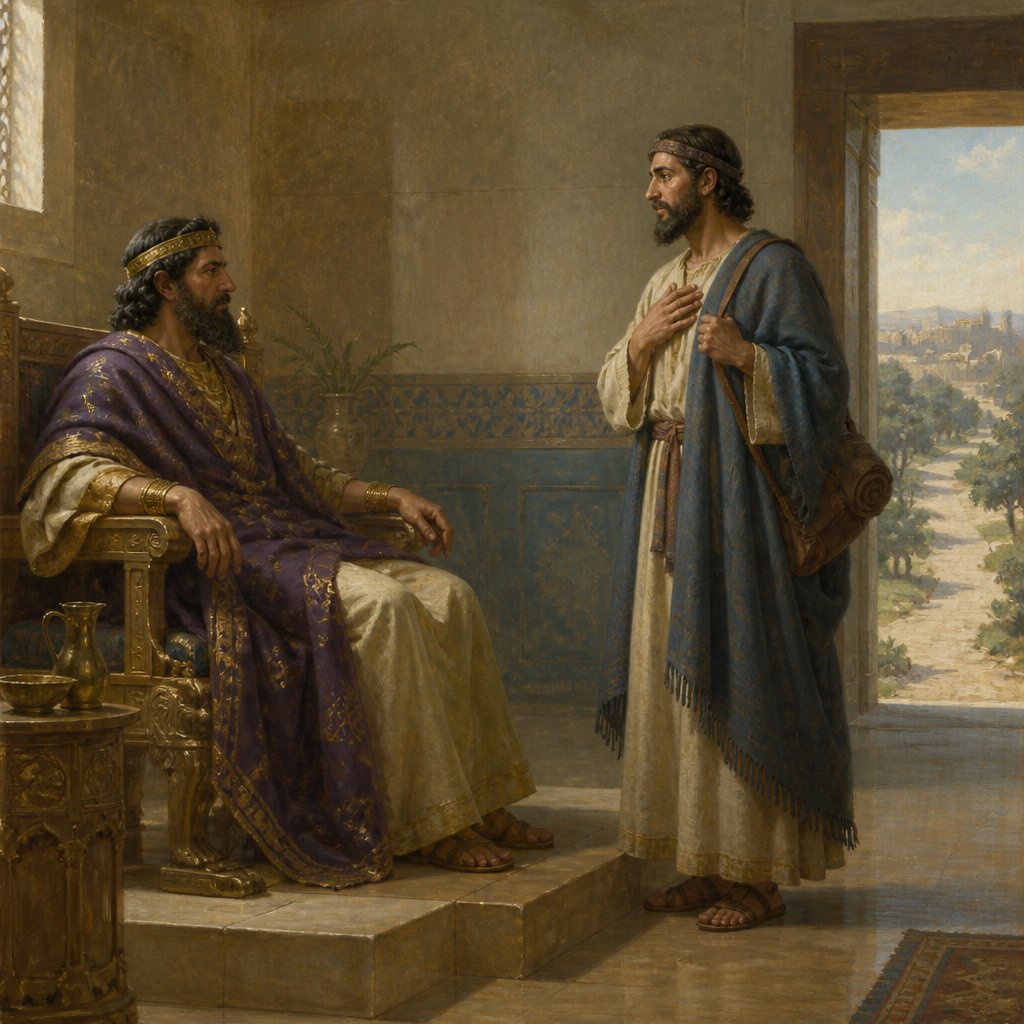
Nehemiah 13:6 states, "But in all this time was not I at Jerusalem: for in the two and thirtieth year of Artaxerxes king of Babylon came I unto the king, and after certain days obtained I leave of the king." This verse comes towards the end of the book of Nehemiah, where we are reminded of Nehemiah’s crucial role in the rebuilding of Jerusalem's walls and his leadership among the people. However, this specific verse reveals a period of absence, leading us to consider the themes of leadership, God’s providential timing, and the reliance on His plan even when circumstances seem challenging.
First, let us explore the scenario surrounding Nehemiah’s departure from Jerusalem. After returning to Jerusalem to rebuild the city’s walls and restore the people spiritually, Nehemiah faces a leadership challenge. His absence during a critical time poses a question: what happens to the community when its leader is gone? The people had worked diligently, but with Nehemiah away, the potential for relapse into old habits and sins was tangible. This reflects a broader reality: leadership can often feel like a tenuous thread. Engaging in the work of rebuilding might evoke a sense of immediate presence, yet true leadership recognizes that we can only lead others effectively when we are connected to the One who ultimately guides us. Nehemiah’s account reminds us that God alone holds the authority over all situations, regardless of our presence.
This moment leads us to contemplate the nature of God’s providence. Nehemiah does not simply depart without reason. Instead, he spends time before the king, seeking permission to leave. Here lies an important principle: trusting in God’s timing. In life, we often find ourselves caught in situations that demand patience. Nehemiah’s journey shows us that waiting for God’s direction is just as essential as taking action in moments of leadership. Throughout our lives, we face moments where we must step back, perhaps for reasons beyond our understanding, and in that waiting, we can cultivate a deeper trust in God’s sovereign hand.
Nehemiah’s leadership embodies a crucial lesson in delegation and trust. It suggests that while we may have specific roles in God’s kingdom, our impact is not limited to our presence alone. It is a call to empower others, raise up leaders, and strengthen the community. The foundations Nehemiah laid did not solely rely on himself but also on the people around him — those whose lives kept turning in faithfulness even if he was not personally there to guide each step.
Moreover, consider the emotional and spiritual implications of Nehemiah’s absence. The Israelites had gone through intense rebuilding, both physically and spiritually. His departure does not signal abandonment but rather trust in what is established. For those of us who lead in various capacities — whether in our families, workplaces, or churches — this teaches that sometimes the greatest act we can show is trust. We must trust those we lead to walk in faith and continue God’s work even when we cannot be physically present to guide them day by day.
Nehemiah’s absence leads to a significant opportunity for introspection regarding our trust in God’s overarching plan. It encourages reliance on the Holy Spirit, who is continuously at work, shaping the hearts and minds of those we influence. Our role, then, is to pray fervently and remain connected to God's purposes.
Lastly, as we reflect on Nehemiah’s journey, we’re reminded to seek God’s guidance in our own lives. Important decisions may require leave, retracing steps, or a change in plans. But like Nehemiah, we are called not to fear our absence, for it often allows God to work in ways we might not expect. Just as Nehemiah found favor with the king, so too can we trust God to lead us into fruitful seasons, even beyond our immediate reach.
In conclusion, the time away from Jerusalem serves as an invitation for all of us to consider what trust in God's providence looks like in our own lives. May we be leaders who recognize that true leadership extends beyond presence and involves empowering others to carry on the mission of God’s kingdom. Let us embrace the lessons in Nehemiah 13:6 as we navigate the ebbs and flows of life, anchoring our hearts in the faithful promise that God is always in control.
Get our apps


Artwork for Nehemiah 13:6

Nehemiah 13:6 - "But in all this time was not I at Jerusalem: for in the two and thirtieth year of Artaxerxes king of Babylon came I unto the king, and after certain days obtained I leave of the king:"
"But in all this time was not I at Jerusalem: for in the two and thirtieth year of Artaxerxes king of Babylon came I unto the king, and after certain days obtained I leave of the king:" - Nehemiah 13:6

Nehemiah 6:13 - "Therefore was he hired, that I should be afraid, and do so, and sin, and that they might have matter for an evil report, that they might reproach me."

Nehemiah 11:13

Nehemiah 4:6

Nehemiah 4:6

Nehemiah 4:6

Nehemiah 6:9

Nehemiah 10:13 - "Hodijah, Bani, Beninu."

Nehemiah 12:13 - "Of Ezra, Meshullam; of Amariah, Jehohanan;"

Nehemiah 10:6 - "Daniel, Ginnethon, Baruch,"

Nehemiah 12:6 - "Shemaiah, and Joiarib, Jedaiah,"

Nehemiah 7:13 - "The children of Zattu, eight hundred forty and five."

"Hodijah, Bani, Beninu." - Nehemiah 10:13

"Shemaiah, and Joiarib, Jedaiah," - Nehemiah 12:6

"Daniel, Ginnethon, Baruch," - Nehemiah 10:6

"Of Ezra, Meshullam; of Amariah, Jehohanan;" - Nehemiah 12:13
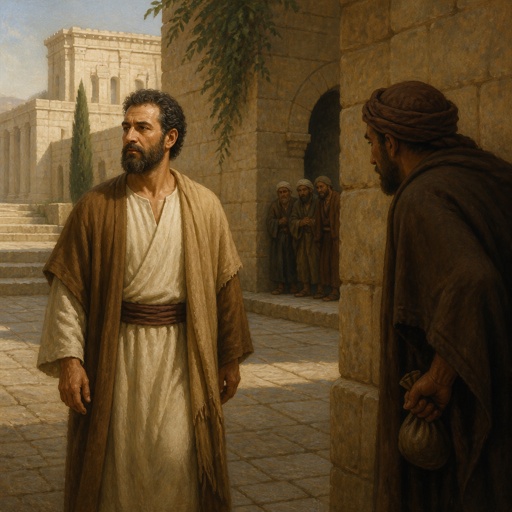
"Therefore was he hired, that I should be afraid, and do so, and sin, and that they might have matter for an evil report, that they might reproach me." - Nehemiah 6:13

Nehemiah 5:6 - "¶ And I was very angry when I heard their cry and these words."

Nehemiah 6:15 – "So the wall was completed on the twenty-fifth of Elul, in fifty-two days."
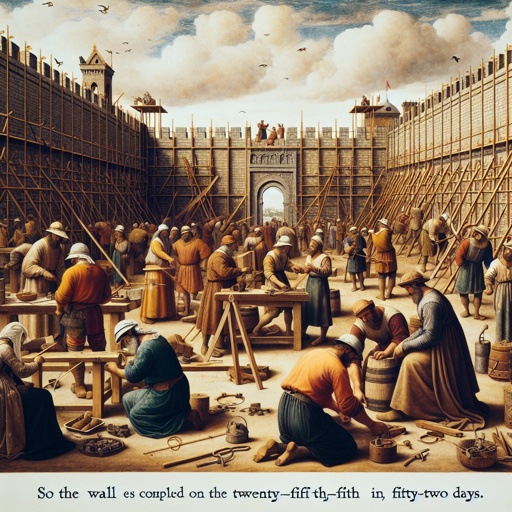
Nehemiah 6:15 – "So the wall was completed on the twenty-fifth of Elul, in fifty-two days."

Nehemiah 13:12 - "Then brought all Judah the tithe of the corn and the new wine and the oil unto the treasuries."

Nehemiah 13:31 - "And for the wood offering, at times appointed, and for the firstfruits. Remember me, O my God, for good."

Nehemiah 13:20 - "So the merchants and sellers of all kind of ware lodged without Jerusalem once or twice."

Nehemiah 13:4 - "¶ And before this, Eliashib the priest, having the oversight of the chamber of the house of our God, was allied unto Tobiah:"

Nehemiah 13:23 - "¶ In those days also saw I Jews that had married wives of Ashdod, of Ammon, and of Moab:"

Nehemiah 13:29 - "Remember them, O my God, because they have defiled the priesthood, and the covenant of the priesthood, and of the Levites."

Nehemiah 13:24 - "And their children spake half in the speech of Ashdod, and could not speak in the Jews' language, but according to the language of each people."

Nehemiah 13:8 - "And it grieved me sore: therefore I cast forth all the household stuff of Tobiah out of the chamber."

Nehemiah 13:3 - "Now it came to pass, when they had heard the law, that they separated from Israel all the mixed multitude."