Finding Solitude in the Wait: Lessons from Nehemiah’s Arrival
“So I came to Jerusalem, and was there three days.” — Nehemiah 2:11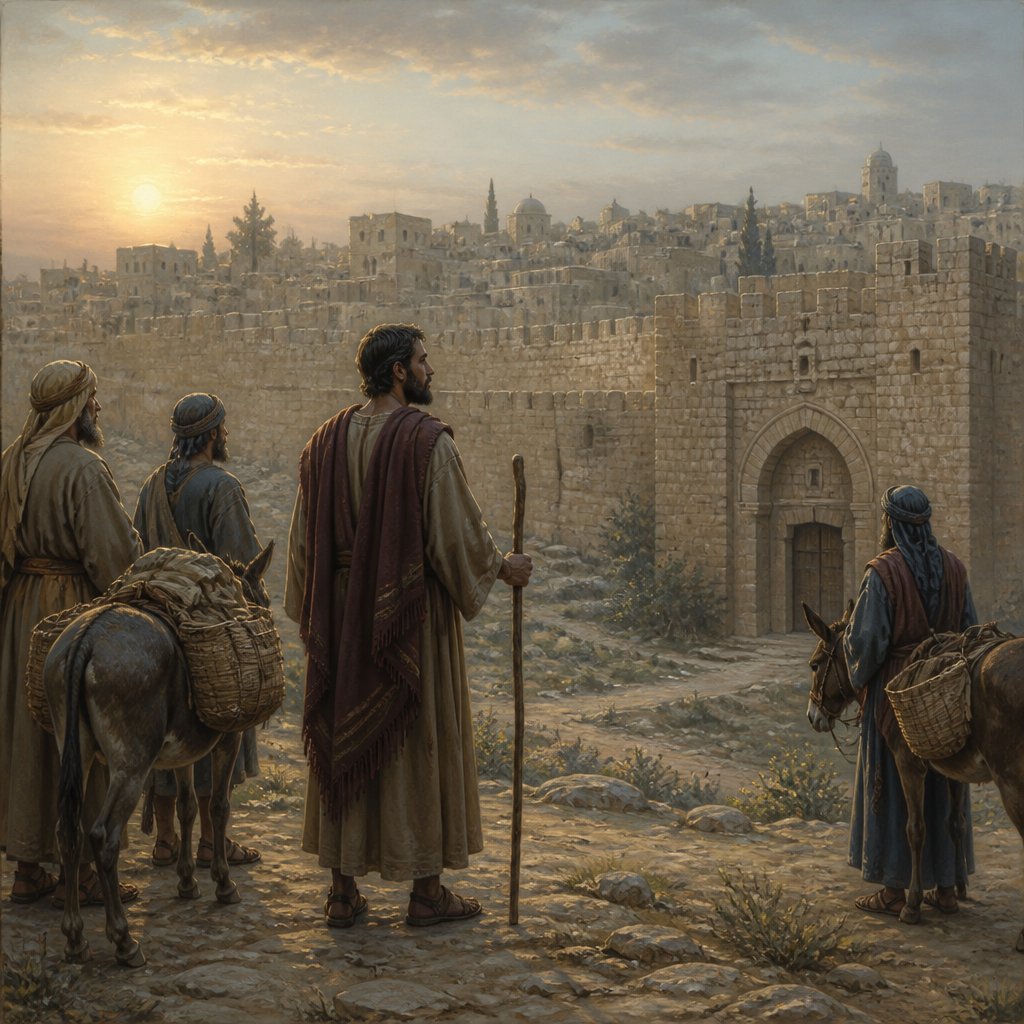
As we delve into the life of Nehemiah, we encounter a leader who exemplifies faith, patience, and strategic planning. Nehemiah 2:11 states, "So I came to Jerusalem, and was there three days." This seemingly simple verse unfolds layers of meaning critical to understanding the life of Nehemiah and the work he was appointed to do.
Let us first recount the context surrounding Nehemiah’s journey to Jerusalem. As the cupbearer to the king, Nehemiah held a position of considerable influence and privilege, yet his heart was burdened for his ancestral homeland. He learned of the dire state of Jerusalem, where the walls lay in ruins and the people were in utter distress. Fueled by a divine calling and deep compassion, he sought permission from King Artaxerxes to go to his people and rebuild the city.
When Nehemiah arrived in Jerusalem, he did not dive immediately into action. Instead, he settled in for three days of observing and praying. In an age where we frequently feel compelled to act and react immediately, Nehemiah’s patience sets a profound example for us. It illustrates the importance of taking time to understand a situation fully before making decisions.
In these three days, Nehemiah likely reflected on the enormity of the task ahead. The broken walls symbolized not just physical destruction but spiritual desolation. The walls represented Jerusalem’s identity, protection, and the people’s ability to thrive in a hostile environment. For those of us engaged in ministry or leadership, it serves as a reminder that we must be diligent in assessing the needs of our community, using our experiences, and tapping into God’s guidance before launching into action.
In solitude, Nehemiah could cocoon himself in prayer and reflection, seeking God’s wisdom. It is too easy in our fast-paced lives to skip the moments of reflection and petition. Nehemiah’s example leads us to ponder how often we take the necessary pauses, listen for God’s direction, and prepare our hearts for the work before us.
Moreover, Nehemiah's three-day stay signifies a critical preparatory phase. Often, in spiritual warfare or in undertaking significant challenges, we may find ourselves in periods of waiting or stillness. This waiting is not inactivity; rather, it is a season of spiritual cultivation. James 1:4 reminds us, "But let patience have her perfect work, that ye may be perfect and entire, wanting nothing." Waiting on God assures us that He is orchestrating the circumstances for His glory.
During these three days, imagine Nehemiah walking the city walls, feeling the rubble beneath his feet, and praying for strength, unity, and renewal. In that sacred space of quietness, he would draw inspiration and clarity from God, which would fortify him when he eventually began to rally the people. The call to rebuild would be met not just with human effort, but with God’s strength that Nehemiah acquired in those silent moments.
When we read Nehemiah 2:11, let us cherish the importance of intentional waiting. God often uses our times of solitude to prepare us for the challenges ahead, equipping us with the discernment we need to lead others. Let us seek to emulate Nehemiah’s focus on prayerful preparation, allowing God to refine our hearts and motives.
As we reflect on this passage, let us ask ourselves: Are we willing to wait on God, to find our strength in the quiet, to seek His wisdom before we act? May we cultivate a spirit of patience and reliance on God, allowing Him to work in our hearts as he prepared Nehemiah to rebuild the walls of Jerusalem.
Get our apps


Artwork for Nehemiah 2:11

Nehemiah 2:11 - "So I came to Jerusalem, and was there three days."

"So I came to Jerusalem, and was there three days." - Nehemiah 2:11

Nehemiah 11:2 - "And the people blessed all the men, that willingly offered themselves to dwell at Jerusalem."

Nehemiah 11:11-14

Nehemiah 11:13

"And the people blessed all the men, that willingly offered themselves to dwell at Jerusalem." - Nehemiah 11:2

Nehemiah 11:34 - "Hadid, Zeboim, Neballat,"

Nehemiah 10:11 - "Micha, Rehob, Hashabiah,"

Nehemiah 11:33 - "Hazor, Ramah, Gittaim,"

Nehemiah 11:32 - "And at Anathoth, Nob, Ananiah,"

Nehemiah 11:1-19

Nehemiah 11:26 - "And at Jeshua, and at Moladah, and at Beth-phelet,"

Nehemiah 11:29 - "And at En-rimmon, and at Zareah, and at Jarmuth,"

Nehemiah 11:35 - "Lod, and Ono, the valley of craftsmen."

Nehemiah 11:28 - "And at Ziklag, and at Mekonah, and in the villages thereof,"

Nehemiah 11:36 - "And of the Levites were divisions in Judah, and in Benjamin."

Nehemiah 11:10 - "Of the priests: Jedaiah the son of Joiarib, Jachin."

Nehemiah 12:11 - "And Joiada begat Jonathan, and Jonathan begat Jaddua."

Nehemiah 11:27 - "And at Hazar-shual, and at Beer-sheba, and in the villages thereof,"

Nehemiah 11:11 - "Seraiah the son of Hilkiah, the son of Meshullam, the son of Zadok, the son of Meraioth, the son of Ahitub, was the ruler of the house of God."

"And at Anathoth, Nob, Ananiah," - Nehemiah 11:32

"Hadid, Zeboim, Neballat," - Nehemiah 11:34

"Hazor, Ramah, Gittaim," - Nehemiah 11:33

"Micha, Rehob, Hashabiah," - Nehemiah 10:11

Nehemiah 11:21 - "But the Nethinims dwelt in Ophel: and Ziha and Gispa were over the Nethinims."

Nehemiah 11:8 - "And after him Gabbai, Sallai, nine hundred twenty and eight."

"And at Ziklag, and at Mekonah, and in the villages thereof," - Nehemiah 11:28

"And at En-rimmon, and at Zareah, and at Jarmuth," - Nehemiah 11:29

Nehemiah 11:9 - "And Joel the son of Zichri was their overseer: and Judah the son of Senuah was second over the city."

Nehemiah 11:16 - "And Shabbethai and Jozabad, of the chief of the Levites, had the oversight of the outward business of the house of God."