A Heart for the Ruins: The Burden of Nehemiah
“And said unto the king, Let the king live for ever: why should not my countenance be sad, when the city, the place of my fathers’ sepulchres, lieth waste, and the gates thereof are consumed with fire?” — Nehemiah 2:3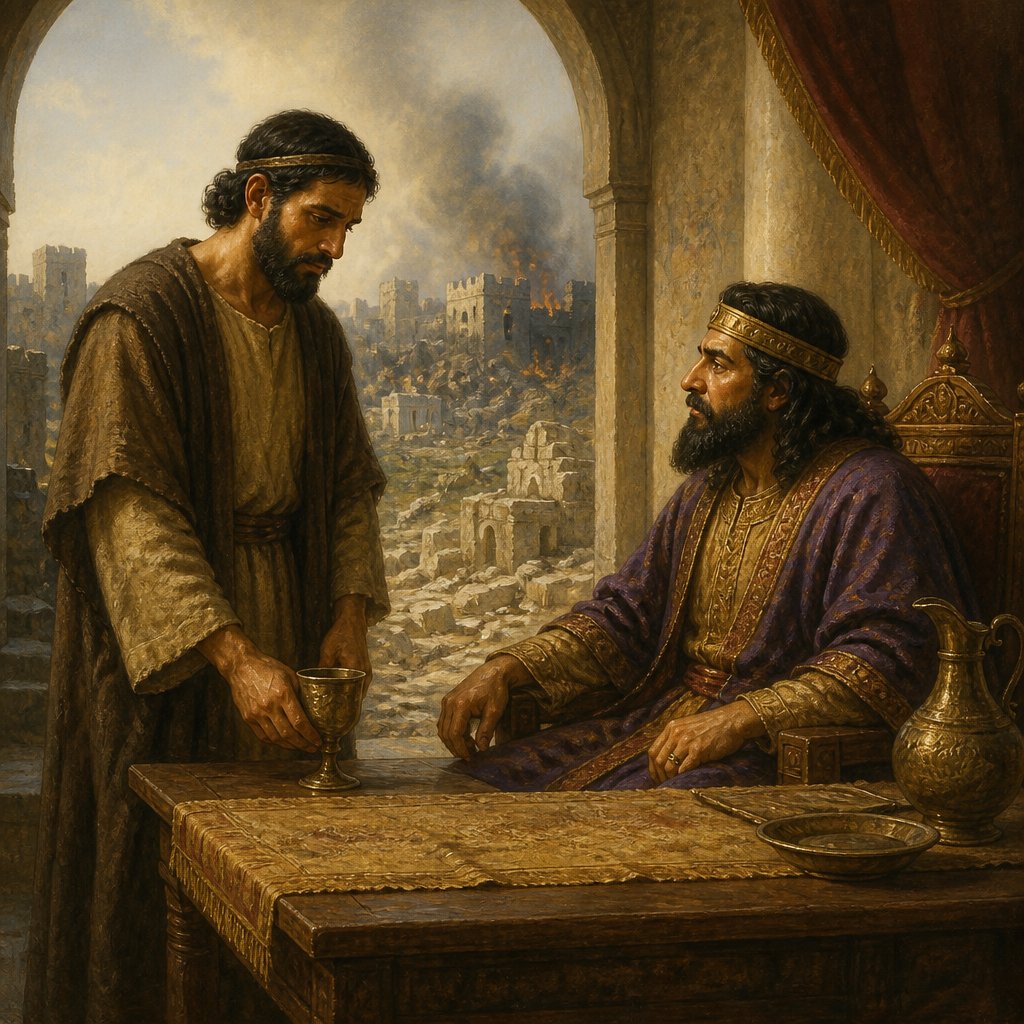
In Nehemiah 2:3, we find a poignant moment when Nehemiah stands before King Artaxerxes with a heaviness in his heart, exclaiming, "And said unto the king, Let the king live for ever: why should not my countenance be sad, when the city, the place of my fathers' sepulchres, lieth waste, and the gates thereof are consumed with fire?" This verse not only reflects Nehemiah's deep sorrow but also unveils the very essence of his calling—a burden placed upon his heart by God.
Nehemiah had been serving as the cupbearer to the king, a position of great trust and honor. However, in the midst of his royal duties, news reaches him of the desolation of Jerusalem, his homeland. As he hears of the broken walls and burned gates, Nehemiah’s heart breaks. This triggers a profound emotional response that leads him to seek permission from King Artaxerxes to return to Jerusalem to rebuild the city's defenses.
The emotion that Nehemiah displays is significant. It serves as a reminder that our hearts can be instruments of God’s will, often disturbed for noble causes. It is essential for us to reflect: What stirs our spirit? What burden pulls at our hearts? Nehemiah’s sorrow was not merely personal; it was a reflection of the spiritual and cultural devastation of his people. His passion for Jerusalem positions him as an intercessor, a leader chosen by God to restore not just walls, but hope and identity to his people.
Nehemiah's direct address to the king—"Let the king live for ever"—is crafted with respect and reverence, indicating his understanding of the king's authority. His next rhetorical question, "Why should not my countenance be sad?" is deeply revealing. It suggests the weight of responsibility Nehemiah felt for the plight of his people. His sadness was not for his own situation but for the glory of God that was being tarnished by the ruins of the city he loved. This illustrates the heart of a true leader.
In our own lives, we must ask ourselves if we display a similar concern for the ruins in our own lives or in our communities. Are we emotionally awake to the spiritual decline around us? Nehemiah did not let his sadness immobilize him; instead, it propelled him into action. His sorrow was the very catalyst for seeking change. Let this be an example to us when we face our own struggles; may we not shy away from the brokenness but confront it with both grief and resolve.
Moreover, Nehemiah’s approach serves as a lesson in prayer and preparation. Prior to approaching the king, Nehemiah spent several months in prayer and fasting (Nehemiah 1:4-11). His deep anguish led him to beseech the Lord for guidance, comfort, and ultimately for favor with the king. Before we make our petitions to others, we should also turn to God in reverent prayer, laying before Him our worries and requests.
The language in Nehemiah 2:3 is also a reflection of his roots—a profound identity tied deeply to Jerusalem and its heritage. The phrase "the place of my fathers' sepulchres" illustrates his connection to his ancestors and the weight of responsibility he feels to restore that legacy. Our identities, too, are often rooted in the history of our families and communities, calling us to uphold those values even amidst modern challenges.
As believers today, let us allow the burdens of our hearts to lead to action. Let us not be passive observers of decay—spiritual, social, or personal. Instead, let our countenances be read like Nehemiah's as indicators of our commitment to God’s purpose. May we rise above the ruins around us, leaning on the Lord as our strength and comfort, to rebuild, restore, and revive the hearts of those around us, following the noble example of Nehemiah.
Get our apps


Artwork for Nehemiah 2:3

Nehemiah 2:3 - "And said unto the king, Let the king live for ever: why should not my countenance be sad, when the city, the place of my fathers' sepulchres, lieth waste, and the gates thereof are consumed with fire?"
"And said unto the king, Let the king live for ever: why should not my countenance be sad, when the city, the place of my fathers' sepulchres, lieth waste, and the gates thereof are consumed with fire?" - Nehemiah 2:3

Nehemiah 3:2 - "And next unto him builded the men of Jericho. And next to them builded Zaccur the son of Imri."

Nehemiah 12:3 - "Shechaniah, Rehum, Meremoth,"

Nehemiah 10:3 - "Pashur, Amariah, Malchijah,"

Nehemiah 3:22 - "And after him repaired the priests, the men of the plain."
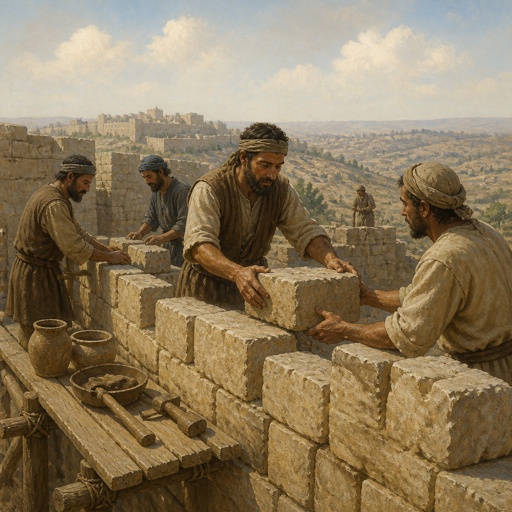
"And next unto him builded the men of Jericho. And next to them builded Zaccur the son of Imri." - Nehemiah 3:2

Nehemiah 3:16 - "After him repaired Nehemiah the son of Azbuk, the ruler of the half part of Beth-zur, unto the place over against the sepulchres of David, and to the pool that was made, and unto the house of the mighty."

"Pashur, Amariah, Malchijah," - Nehemiah 10:3

"Shechaniah, Rehum, Meremoth," - Nehemiah 12:3

Nehemiah 12:2 - "Amariah, Malluch, Hattush,"

Nehemiah 10:2 - "Seraiah, Azariah, Jeremiah,"

Nehemiah 3:32 - "And between the going up of the corner unto the sheep gate repaired the goldsmiths and the merchants."

Nehemiah 3:5 - "And next unto them the Tekoites repaired; but their nobles put not their necks to the work of their Lord."

Nehemiah 3:3 - "But the fish gate did the sons of Hassenaah build, who also laid the beams thereof, and set up the doors thereof, the locks thereof, and the bars thereof."

Nehemiah 3:9 - "And next unto them repaired Rephaiah the son of Hur, the ruler of the half part of Jerusalem."

Nehemiah 3:18 - "After him repaired their brethren, Bavai the son of Henadad, the ruler of the half part of Keilah."

Nehemiah 3:11 - "Malchijah the son of Harim, and Hashub the son of Pahath-moab, repaired the other piece, and the tower of the furnaces."

Nehemiah 3:28 - "From above the horse gate repaired the priests, every one over against his house."

Nehemiah 2:11 - "So I came to Jerusalem, and was there three days."

Nehemiah 13:3 - "Now it came to pass, when they had heard the law, that they separated from Israel all the mixed multitude."

"And after him repaired the priests, the men of the plain." - Nehemiah 3:22

Nehemiah 3:12 - "And next unto him repaired Shallum the son of Halohesh, the ruler of the half part of Jerusalem, he and his daughters."
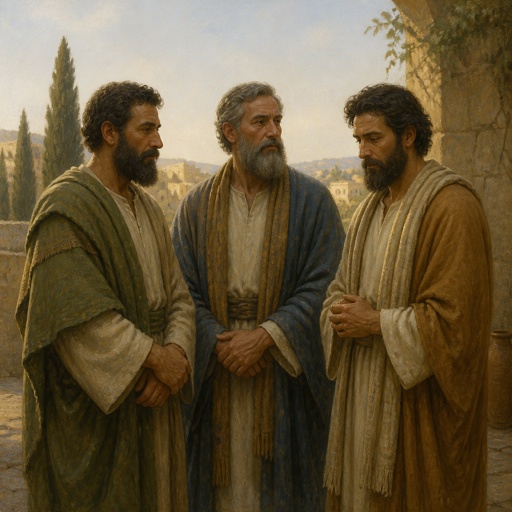
"Seraiah, Azariah, Jeremiah," - Nehemiah 10:2
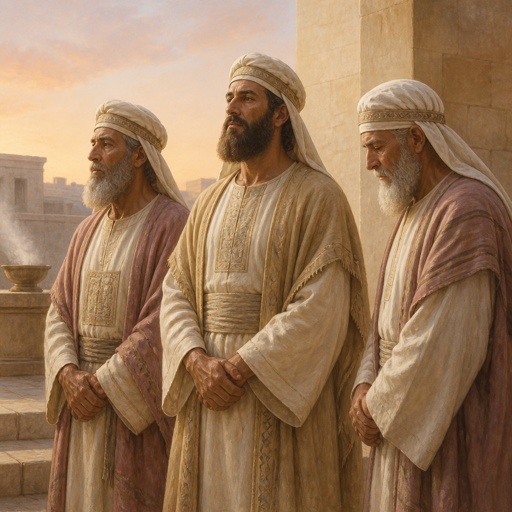
"Amariah, Malluch, Hattush," - Nehemiah 12:2

Nehemiah 3:26 - "Moreover the Nethinims dwelt in Ophel, unto the place over against the water gate toward the east, and the tower that lieth out."

Nehemiah 11:2 - "And the people blessed all the men, that willingly offered themselves to dwell at Jerusalem."

Nehemiah 3:27 - "After them the Tekoites repaired another piece, over against the great tower that lieth out, even unto the wall of Ophel."

Nehemiah 3:7 - "And next unto them repaired Melatiah the Gibeonite, and Jadon the Meronothite, the men of Gibeon, and of Mizpah, unto the throne of the governor on this side the river."

Nehemiah 3:24 - "After him repaired Binnui the son of Henadad another piece, from the house of Azariah unto the turning of the wall, even unto the corner."