Restoration Through Covenant: A Commitment to Justice
“Then said they, We will restore them, and will require nothing of them; so will we do as thou sayest. Then I called the priests, and took an oath of them, that they should do according to this promise.” — Nehemiah 5:12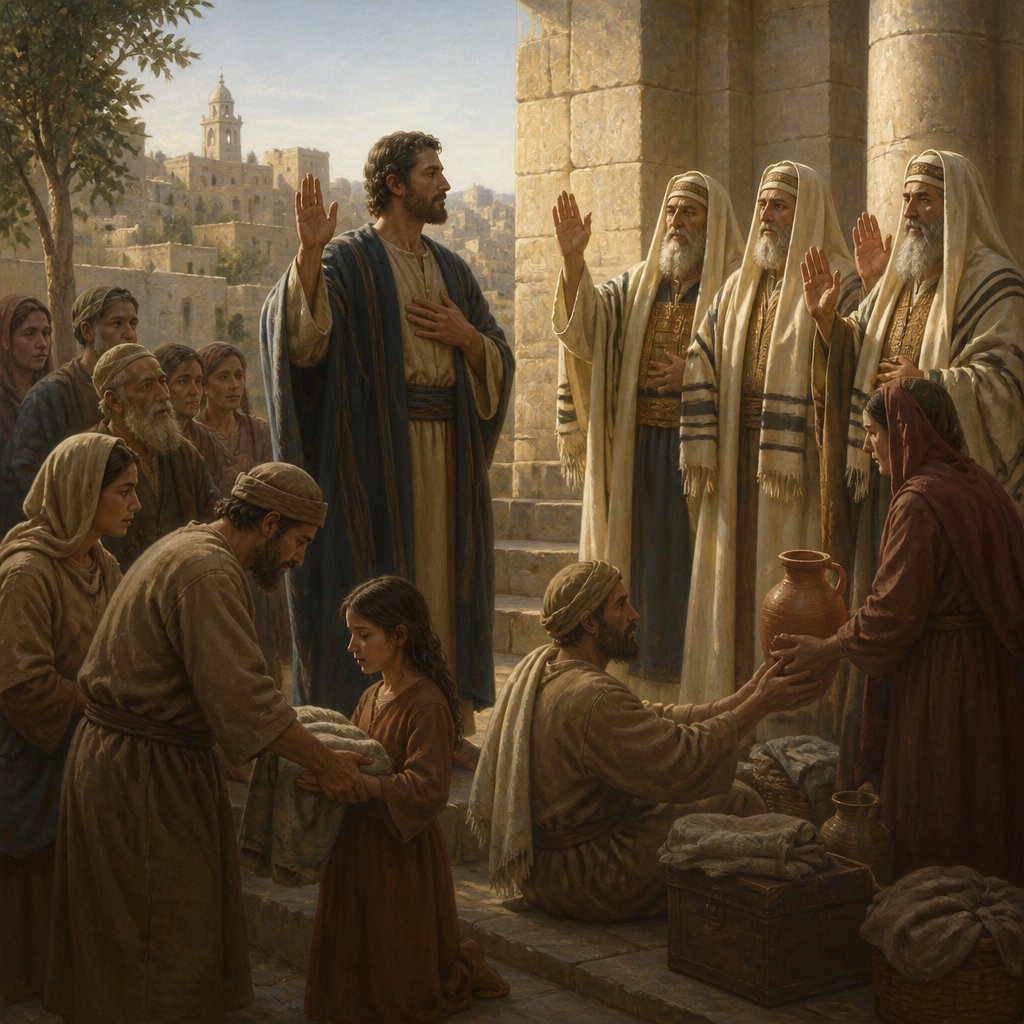
In the book of Nehemiah, we find a remarkable narrative of restoration, leadership, and the quest for justice amidst adversity. Nehemiah 5:12 presents a pivotal moment when a community, once fractured, pledges to support one another and adhere to the noble principles of equity and compassion. The verse reads: "Then said they, We will restore them, and will require nothing of them; so will we do as thou sayest. Then I called the priests, and took an oath of them, that they should do according to this promise" (KJV).
To unpack this verse meaningfully, we must first understand the context. The Jews returned from Babylonian exile to Jerusalem, faced with the monumental task of rebuilding the city and its walls. Their immediate concerns were further complicated by internal strife, as many were being exploited by fellow Jews due to debt, famine, and the pressure of taxation. Nehemiah, upon hearing the cries of the oppressed, becomes a voice for justice—he confronts the nobles and rulers who had been unjustly profiting at the expense of their brethren.
Nehemiah's leadership shines through; he calls for a radical commitment to restore what had been lost—not just the physical rebuilding of walls, but the restoration of dignity and justice within the community. When the people respond with the pledge to "restore them, and will require nothing of them," it epitomizes a profound acknowledgment of wrongdoing and a desire to make amends. This interchange reveals the heart of true repentance and social justice: recognizing our responsibilities towards one another and agreeing collectively to uphold what is right.
In a time where self-interest often trumps community welfare, their promise serves as a stark reminder of what it means to live in a covenant relationship with one another. They are not merely voicing intentions—they are committing to a covenant of integrity, a powerful oath that binds them together in purpose. In this commitment, we see echoes of God’s covenant with His people, characterized by kindness, mercy, and a relentless call to love one another.
Nehemiah’s act of calling the priests to witness this oath emphasizes the sacredness of the promise they were making. When leaders stand in front of God and their community to affirm commitments, it underscores the gravity of the situation. It is a beautiful reminder that our vows to one another, especially in matters of justice and mercy, are not mere social contracts but spiritual ones as well. They should reflect our understanding of God’s values that call for righteousness and equity for all.
As we meditate on this verse, we might ask ourselves: How do we respond to the needs of our communities? Are there ways we exploit others, knowingly or unknowingly? Is our commitment to justice merely an intention, or is it actionable and sincere?
Our world today grapples with issues of inequality, injustice, and exploitation. The spirit of Nehemiah beckons us not only to empathize with the vulnerable but also to take definitive steps toward reconciliation and restoration. Practically, this could mean advocating for those who are oppressed, being stewards of our resources, and ensuring that we foster environments where our brothers and sisters can thrive, not just survive.
Let us carry the essence of Nehemiah 5:12 into our everyday lives—a commitment to restore the dignity and worth of every individual. May our words and actions align with the voice of God’s heart beating for justice. As we reaffirm our commitments today, let us do so with integrity, inviting the divine presence to witness our oath to love and restore.
In conclusion, the promise made by the people in Nehemiah 5:12 reflects not only a moment of decision but a transformative revival rooted in community, commitment, and courage to act justly. As we pursue our own paths of justice and restoration, may we continually look back to this example and strive to embody the principles that lead to a just and equitable society for all.
Get our apps


Artwork for Nehemiah 5:12

Nehemiah 5:12 - "Then said they, We will restore them, and will require nothing of them; so will we do as thou sayest. Then I called the priests, and took an oath of them, that they should do according to this promise."
"Then said they, We will restore them, and will require nothing of them; so will we do as thou sayest. Then I called the priests, and took an oath of them, that they should do according to this promise." - Nehemiah 5:12

Nehemiah 12:5 - "Miamin, Maadiah, Bilgah,"

"Miamin, Maadiah, Bilgah," - Nehemiah 12:5

Nehemiah 12:26 - "These were in the days of Joiakim the son of Jeshua, the son of Jozadak, and in the days of Nehemiah the governor, and of Ezra the priest, the scribe."

Nehemiah 12:33 - "And Azariah, Ezra, and Meshullam,"

Nehemiah 12:4 - "Iddo, Ginnetho, Abijah,"

Nehemiah 12:2 - "Amariah, Malluch, Hattush,"

Nehemiah 12:3 - "Shechaniah, Rehum, Meremoth,"

Nehemiah 10:12 - "Zaccur, Sherebiah, Shebaniah,"

Nehemiah 12:6 - "Shemaiah, and Joiarib, Jedaiah,"

Nehemiah 12:12 - "And in the days of Joiakim were priests, the chief of the fathers: of Seraiah, Meraiah; of Jeremiah, Hananiah;"

Nehemiah 12:13 - "Of Ezra, Meshullam; of Amariah, Jehohanan;"

Nehemiah 12:16 - "Of Iddo, Zechariah; of Ginnethon, Meshullam;"

Nehemiah 12:20 - "Of Sallai, Kallai; of Amok, Eber;"

Nehemiah 10:5 - "Harim, Meremoth, Obadiah,"

Nehemiah 12:19 - "And of Joiarib, Mattenai; of Jedaiah, Uzzi;"

Nehemiah 12:34 - "Judah, and Benjamin, and Shemaiah, and Jeremiah,"

Nehemiah 12:15 - "Of Harim, Adna; of Meraioth, Helkai;"

Nehemiah 12:18 - "Of Bilgah, Shammua; of Shemaiah, Jehonathan;"

Nehemiah 12:21 - "Of Hilkiah, Hashabiah; of Jedaiah, Nethaneel."

Nehemiah 12:14 - "Of Melicu, Jonathan; of Shebaniah, Joseph;"

Nehemiah 12:17 - "Of Abijah, Zichri; of Miniamin, of Moadiah, Piltai;"

Nehemiah 12:11 - "And Joiada begat Jonathan, and Jonathan begat Jaddua."

Nehemiah 7:12 - "The children of Elam, a thousand two hundred fifty and four."

Nehemiah 12:32 - "And after them went Hoshaiah, and half of the princes of Judah,"

"Shemaiah, and Joiarib, Jedaiah," - Nehemiah 12:6

"Iddo, Ginnetho, Abijah," - Nehemiah 12:4

"Zaccur, Sherebiah, Shebaniah," - Nehemiah 10:12

"Shechaniah, Rehum, Meremoth," - Nehemiah 12:3